Smart Inspections, Safe Processes
How AI, hydrogen testing, and digital tools are changing the world of inspection
By Kapil Bansal
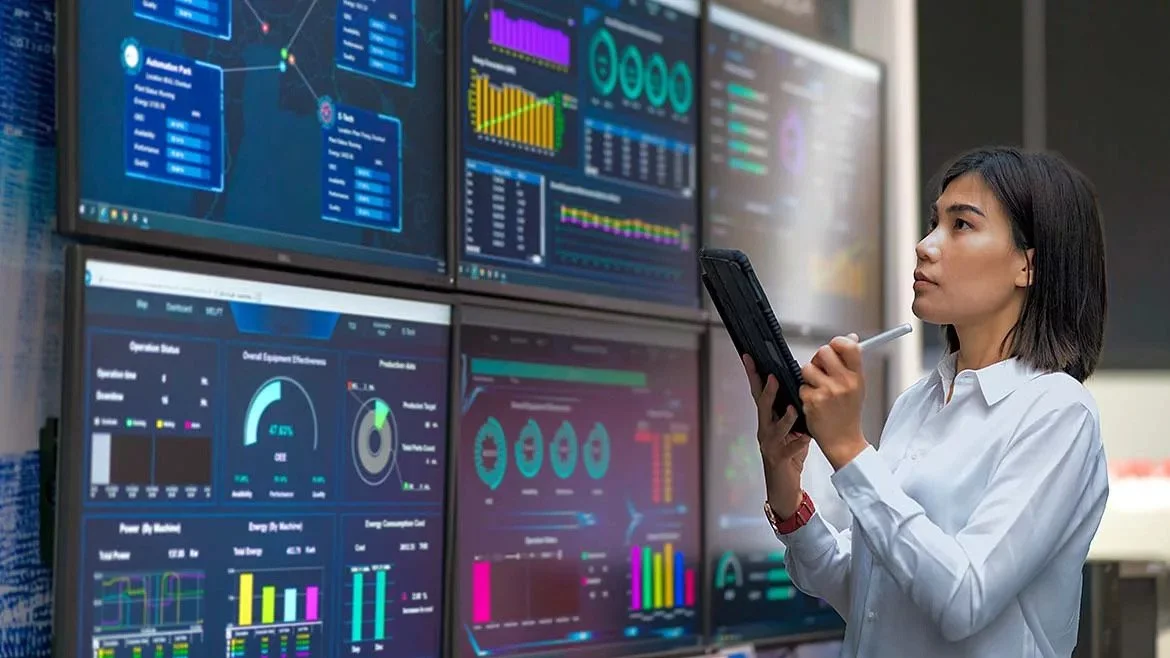
Testing and inspection procedures have always formed a core part of quality management. However, the framework conditions have changed significantly. Production processes are becoming more complex, new materials such as hydrogen-compatible metals are becoming more important, and digital technologies such as artificial intelligence (AI) and remote inspections are expanding the range of tools available to quality managers. We are keeping up with these developments in research and methodology, and practical application. This article uses selected trends to illustrate future directions and explains how companies can prepare for them.
1. AI-supported visual inspection in manufacturing
From the eye to the algorithm
Visual inspections are among the oldest testing methods in industry. Whether weld seams, printed circuit boards, or surfaces: defects are often visible to the naked eye – but not always reliably or consistently. This is exactly where AI-based visual inspection comes in. Systems capture image data with cameras or sensors, while machine learning algorithms analyze deviations from the norm. In projects such as “smart facade inspection,” we have demonstrated how AI can automatically detect defects such as cracks or corrosion. Applied to manufacturing, this methodology enables the identification of even the smallest deviations in real time while maintaining consistent inspection quality.
Methods and quality requirements
For AI systems to be suitable for inspection purposes, they must meet certain quality requirements. Important criteria include:
Data quality: Misclassifications can only be avoided if the training data is representative and correctly annotated.
Transparency: The decisions of an AI system must be traceable – keyword “explainable AI.”
Robustness: The systems must work reliably even under changing lighting conditions or surface conditions.
Compliance: European regulations such as the upcoming AI Act or international standards (e.g., ISO/IEC 24029) set the framework.
There is a trend toward the use of “synthetic data,” i.e., artificially generated image data, to map rare types of errors. Equally important is “cross-domain validation”: systems should perform reliably not only in the test environment, but also in real manufacturing scenarios.
Another aspect is the increasing role of hybrid testing strategies. This combines AI-based evaluation with traditional inspection methods to create a “double safety net.” While AI quickly searches through large amounts of data, experts perform plausibility checks and evaluate borderline cases. This interaction significantly increases reliability, especially in safety-critical industries such as the automotive industry, medical technology, and aviation.
Opportunities and limitations
The advantages are clear: faster inspection cycles, lower error rates, and the ability to use large amounts of data for continuous process optimization. Limitations arise where data is not sufficiently available or where complex components exhibit a very high degree of variability. For quality managers, this means that, when embedded in a holistic QM system, AI is not a replacement for the established inspection process, but rather a supplement to it. In the future, it will also become more important to “recertify” AI systems on a regular basis. Since algorithms can change their behavior through retraining or new data sets, continuous validation is necessary.
2. New testing methods for hydrogen components
Why hydrogen is changing the world of testing
The energy transition means that hydrogen is becoming increasingly important as an energy source in industry, transport, and aviation. For manufacturers, this means that components such as valves, tanks, pipes, and compressors must comply with conventional standards and also be tested for hydrogen compatibility. We have been developing testing methods for this challenge for years, including pressure cycle tests, permeation measurements, and long-term stress tests.
Particular focus is placed on the risks of material embrittlement, as hydrogen can attack metals and significantly reduce their service life. Added to this is the issue of tightness, as even the smallest leaks pose a considerable safety risk due to the high volatility of hydrogen. At the same time, the standards landscape is changing: international standards such as ISO 19880 and industry-specific guidelines such as SAE J2579 for the automotive sector are constantly evolving and require continuous adjustments on the part of manufacturers.
In addition, there are industry-specific characteristics. In railway technology, for example, hydrogen-powered multiple units are gaining in importance, with the focus on testing large-volume tanks and safety-relevant screw connections. In the field of stationary energy storage, too, long-term tests with cyclic loads are increasingly required to ensure reliable integration into supply networks.
Requirements for automotive and aerospace
In the automotive industry, pressure vessels and pipes play a particularly important role, while in the aerospace industry the focus is on lightweight construction and reliability under extreme conditions. In addition to classic strength and leakage tests, combined high-pressure cycles with changing temperatures are becoming increasingly important. Microscopic material characterizations, for example for analyzing crack propagation, are also increasingly being integrated into test plans.
There is also a trend towards accelerated testing: manufacturers want to obtain results in less time without reducing their significance. TÜV SÜD is developing methods that combine stress cycles in such a way that they reflect real-world operation as realistically as possible, but at an accelerated rate. This shortens development times without compromising safety.
For quality managers, this means that testing procedures for hydrogen components are not an add-on module, but an integral part of modern quality assurance. Testing at an early stage avoids costly recalls and at the same time meets sustainability and safety requirements. Our organization is involved in standardization work in international committees and can thus integrate proven procedures into testing procedures at an early stage. This is an advantage for companies that use their products globally.
3. Digitization of testing processes
Smart glasses and remote audits
The pandemic has shown that inspections and audits no longer have to take place on site. With the help of smart glasses, inspectors can carry out tests on site while experts at another location are connected live. This “remote expertise” saves travel costs, shortens testing times, and makes it possible to incorporate specialist knowledge from around the world. We are already using such technologies in practice, for example in plant engineering, where international experts can be connected spontaneously.
In addition, hybrid audit formats are being developed. Part of the inspection will continue to be carried out on site, especially where safety-critical components need to be physically assessed. In addition, digital channels can be used to check documentation or incorporate additional expertise. These hybrid forms have proven to be particularly efficient and are likely to become established in the long term.
IoT and continuous monitoring
The Internet of Things (IoT) makes it possible to carry out audits continuously rather than just selectively. Sensors monitor temperature, pressure, or vibrations and immediately report deviations to a central system. This shifts the focus from reactive testing to preventive monitoring. For quality management, this means that test cycles can be dynamically adapted to the actual load. The challenge lies in secure data integration and the evaluation of large amounts of data.
A practical example: In large industrial plants, vibration sensors on pumps and motors can continuously measure whether bearing damage is imminent. Instead of waiting for scheduled service, maintenance can be initiated in a targeted manner when the data provides the first signs of this. This results in greater plant safety and cost advantages through predictive maintenance.
Opportunities and obstacles
Digital testing methods offer greater flexibility and transparency but also require robust IT security concepts. Cybersecurity is thus becoming an integral part of the inspection process. In addition, inspectors must be trained in the use of digital tools in order to interpret data correctly and integrate it into existing QM systems. Furthermore, the question of data ethics is increasingly being raised: Who has access to inspection and operating data, how long can it be stored, and how is its integrity verified? Another issue is the human-machine interface. Systems must be designed in such a way that they support the work of inspectors rather than complicating it. Intuitive visualization and a clear distribution of roles are crucial in this regard.
Interoperability is an additional success factor. Many companies already use different systems and data sources. Only when these work together seamlessly can real added value be created. Ideally, testing processes are designed so that they can be integrated into existing IT and production environments. This is a decisive criterion for the future viability of digital quality strategies.
4.Outlook: integration instead of isolated solutions
Whether AI-supported visual inspection, testing methods for hydrogen, or digital remote technologies – all trends have one thing in common: they expand traditional inspection methods, but do not replace them completely. The future lies in the integration of different approaches. For example, AI can support visual inspection without making human expertise redundant. New testing methods for hydrogen, on the other hand, require additional technical expertise, but always complement already established standards. Finally, digital tools create more flexibility but must be embedded in a secure and robust data infrastructure in order to reach their full potential. TÜV SÜD consistently pursues this integrative approach in research, standardization, and practice. This gives quality managers the opportunity to make testing and inspection processes more efficient and future-proof in the long term.
In addition, the role of testing service providers is being redefined. They are evolving from pure control authorities to innovation partners who support companies in implementing new technologies and methods. For us, this means not only ensuring standards are met, but also actively participating in the further development of testing strategies – whether in pilot projects, through international cooperation, or by developing new certification models.
The trends in the area of testing and inspection outlined here show that quality management is evolving from selective testing to continuous, technology-supported processes. AI-based systems, new material tests for hydrogen, and digital tools are changing both testing methodology and the role of quality managers. Their task will increasingly be to combine the use of technology, compliance with standards, and data integrity. By addressing these issues at an early stage, companies can make their quality assurance more efficient and also set the course for safe and sustainable products.
Kapil Bansal, TÜV SÜD America Inc. Senior Vice President Product Service