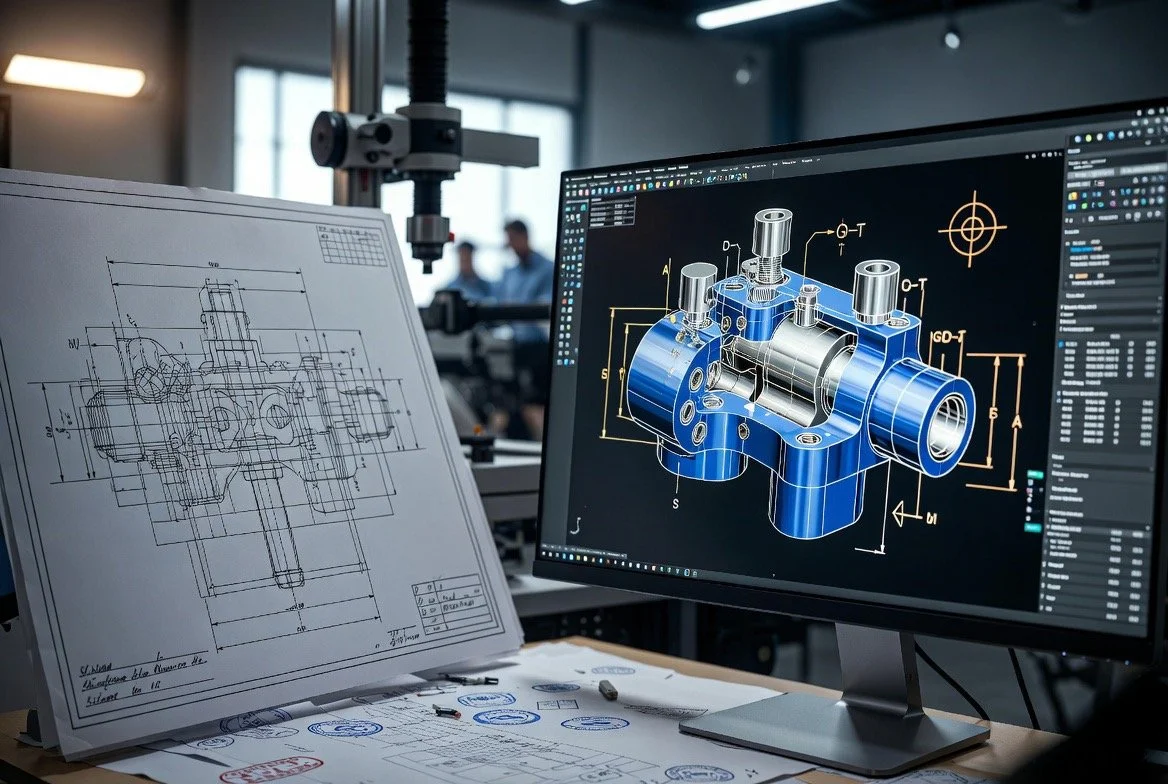
Figure 1: The evolution from traditional 2D engineering drawings to Model-Based Definition (MBD). By embedding all product data directly into the 3D model, MBD creates a single source of truth and eliminates version-control issues that plague paper-based workflows.
In today’s precision-driven manufacturing environment, where every micron counts during coordinate measuring machine (CMM) inspection, the way we communicate design intent is undergoing a fundamental transformation. Model-Based Definition (MBD) replaces or augments traditional 2D drawing-based workflows with fully annotated 3D CAD models that serve as the authoritative digital container for all product information. This shift is especially powerful for CMM teams, as it enables direct, automated generation of inspection routines from embedded product manufacturing information (PMI).
MBD is rapidly gaining traction in aerospace, automotive, and medical device manufacturing—industries where tight tolerances, regulatory compliance, and traceability are non-negotiable. By moving from static 2D drawings to dynamic, data-rich 3D models, MBD creates a seamless digital thread that connects design, manufacturing, and quality assurance, reducing errors and accelerating CMM programming and verification.
The Basics of Model-Based Definition
At its core, Model-Based Definition transforms the native 3D CAD model into a complete, self-contained source of truth. Instead of generating separate 2D drawings, engineers embed critical Product Manufacturing Information (PMI) directly into the model itself. This includes:
Geometric Dimensioning and Tolerancing (GD&T) notation
Surface finish requirements
Material specifications
Engineering notes and other annotations
Leading CAD platforms such as PTC Creo, Siemens NX, SolidWorks, and CATIA provide native support for these annotations, making MBD practical and accessible. While many organizations still maintain hybrid 2D/3D approaches for legacy suppliers, the long-term vision is a fully model-centric process where the 3D file alone defines the product.
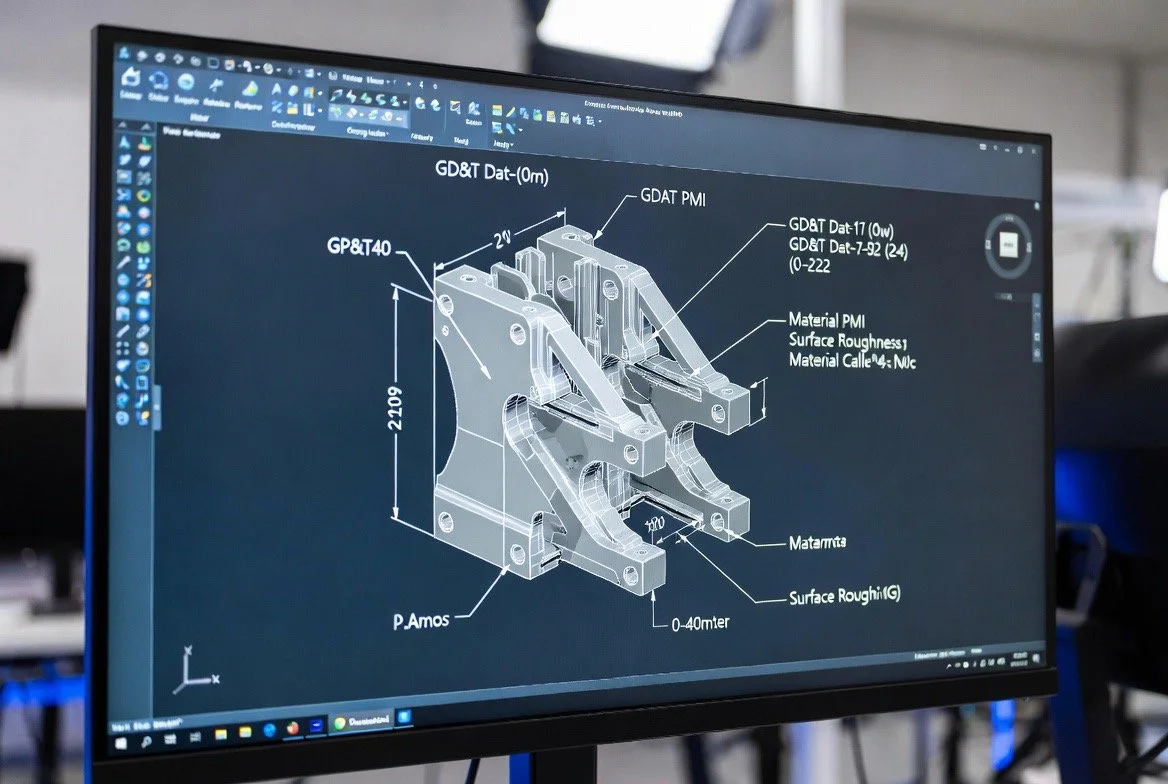
Figure 2: An annotated 3D CAD model under Model-Based Definition, showing embedded PMI including GD&T, surface finishes, and material specifications. This single model replaces multiple 2D drawings and directly drives downstream CMM inspection plans.
How MBD Works and Transforms Engineering & Inspection Workflows
MBD fundamentally changes collaboration by making the 3D model the single source of truth. Designers, machinists, and CMM inspectors all reference the same up-to-date dataset—no more hunting for the latest drawing revision or reconciling discrepancies between model and drawing.
Key advantages include drastically reduced errors from outdated information, faster design reviews, simplified change management, and improved supplier communication. For CMM professionals, the transformation is particularly impactful: semantic PMI embedded in the model allows software to automatically generate inspection routines, probe paths, and tolerance checks—eliminating manual data entry and the risk of transcription mistakes.
Key Components of MBD
Successful MBD implementation rests on four interconnected elements:
Annotated 3D Models – Rich with semantic PMI that can be read by downstream applications.
PLM Integration – Ensures version control and secure access for every stakeholder.
Interoperable Standards – Formats such as STEP AP242 and QIF preserve data integrity when sharing across systems.
Connectivity to Downstream Tools – Direct links to CAM software, simulation, and especially CMM and quality assurance systems for automated programming and reporting.
These components enable CMM teams to import the model and instantly create measurement plans that reflect the exact design intent.
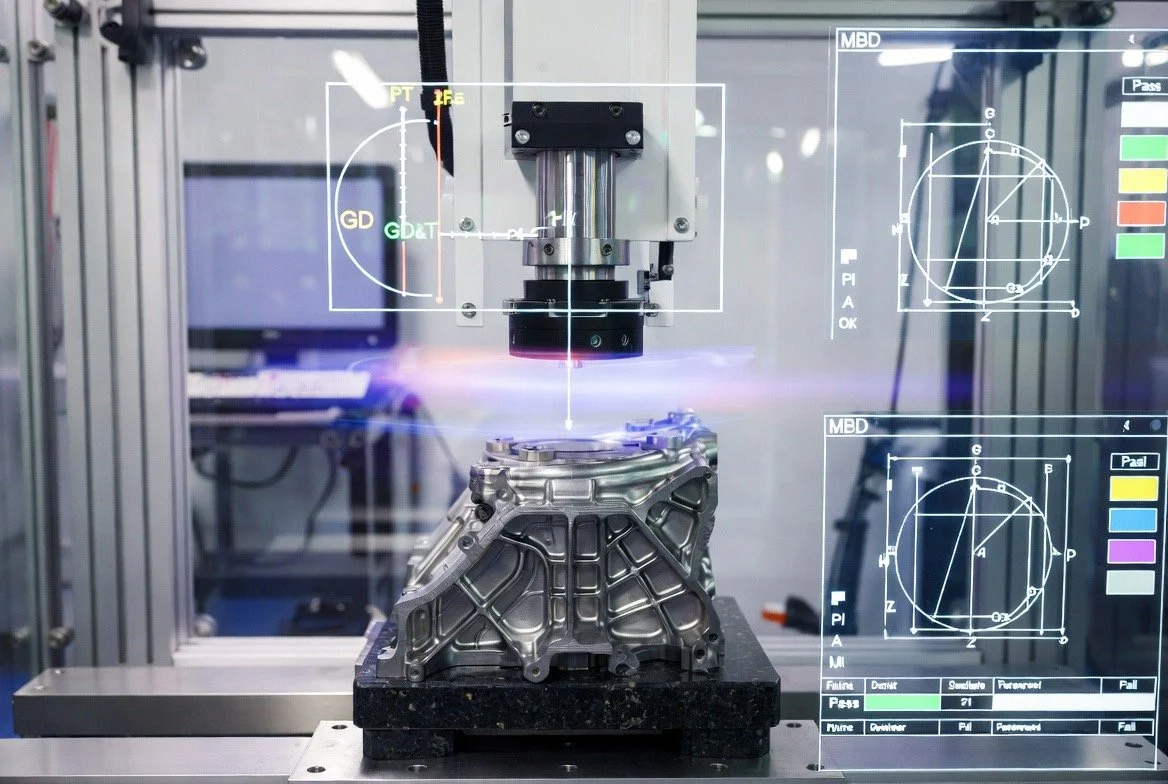
Figure 3: A Coordinate Measuring Machine (CMM) performing automated inspection driven by Model-Based Definition data. Embedded PMI allows direct generation of probe paths and real-time tolerance evaluation, dramatically improving speed and accuracy in quality assurance.
Benefits of MBD for CMM and Quality Teams
The advantages extend far beyond documentation savings:
Reduced Documentation Overhead – No more maintaining redundant drawings that can fall out of sync.
Stronger Cross-Functional Collaboration – Designers, machinists, and inspectors work from identical data.
Automation Opportunities – CMM programming, measurement execution, and reporting become largely automated, freeing metrologists for higher-value analysis.
Improved Traceability and Compliance – Full audit trails of design intent travel with the model—critical for aerospace, automotive, and medical device regulatory requirements.
By centralizing everything in the 3D model, MBD directly supports faster, more accurate CMM workflows while lowering overall production costs.
How MBD Powers the Digital Thread
MBD is the foundation of the digital thread—the continuous, unbroken flow of product data from concept through end-of-life. With PMI embedded in the model, accurate specifications move seamlessly from design to CAM programming, CNC machining, and finally to CMM inspection and quality reporting. Real-time updates propagate instantly, eliminating the confusion caused by outdated drawings and enabling a true Model-Based Enterprise (MBE).

Figure 4: The digital thread enabled by Model-Based Definition connects design, manufacturing, and CMM-based quality inspection into one cohesive, traceable process—delivering real-time data continuity across the entire product lifecycle.
Industries Where MBD Excels—and Implementation Considerations
MBD delivers the greatest value in precision-critical sectors:
Aerospace & Defense – Extreme tolerances and regulatory demands.
Automotive – High-volume global supply chains.
Medical Devices – Strict documentation and patient-safety requirements.
Challenges remain: teams must be trained to interpret 3D PMI, suppliers may require hybrid approaches during transition, and change management is essential. However, the payoff in inspection efficiency and product quality makes the investment worthwhile.
Unlocking the Future of Precision Metrology
Model-Based Definition is more than a new way to document parts—it is the gateway to smarter, faster, and more reliable manufacturing. For CMM professionals, MBD means automated inspection plans, fewer errors, and complete traceability from the very first design decision. As organizations move toward the Model-Based Enterprise, those equipped with MBD-ready processes will lead the industry in quality, speed, and innovation.
Ready to bring MBD into your CMM workflow? The transition starts with understanding the power of annotated 3D models—and the results speak for themselves in every measured part.