In today’s precision manufacturing environment, raw measurement data from coordinate measuring machines (CMMs) is only as valuable as the insights it delivers. ZEISS PiWeb transforms complex metrology data into actionable intelligence, helping quality teams track production, identify issues early, and drive continuous improvement. Whether you operate a single CMM or manage an entire fleet across multiple technologies, PiWeb serves as a powerful engineering tool for decision-making.

Figure 1: Color-coded deviation visualization on a CAD model in PiWeb – one of many interactive ways to spot issues instantly.
What Is ZEISS PiWeb?
ZEISS PiWeb is a scalable, technology-independent quality data management and reporting platform. It aggregates results from tactile CMMs, optical systems, CT scanners, manual gages, hand tools, and even third-party devices. Data flows into a central repository where users can filter, sort, group, analyze, and report with drag-and-drop ease—no metrology PhD required.
Key capabilities include:
Interactive reports with embedded CAD models, ballooned drawings, images, and QR codes
Powerful statistics (SPC, process capability, machine capability, GR&R studies)
Real-time dashboards and drill-down analysis
Manual data entry and automated imports (DMIS, QDAS, CSV, Excel, FARO, Metrolog, etc.)
Automated notifications for out-of-tolerance trends
Open API for ERP integration and custom workflows
PiWeb is modular, built around a central PiWeb Server (the communication and database hub) plus dedicated apps: PiWeb Planner (administration and test plans), PiWeb Monitor (shop-floor viewing and entry, now browser-based), and PiWeb Designer (custom report creation).
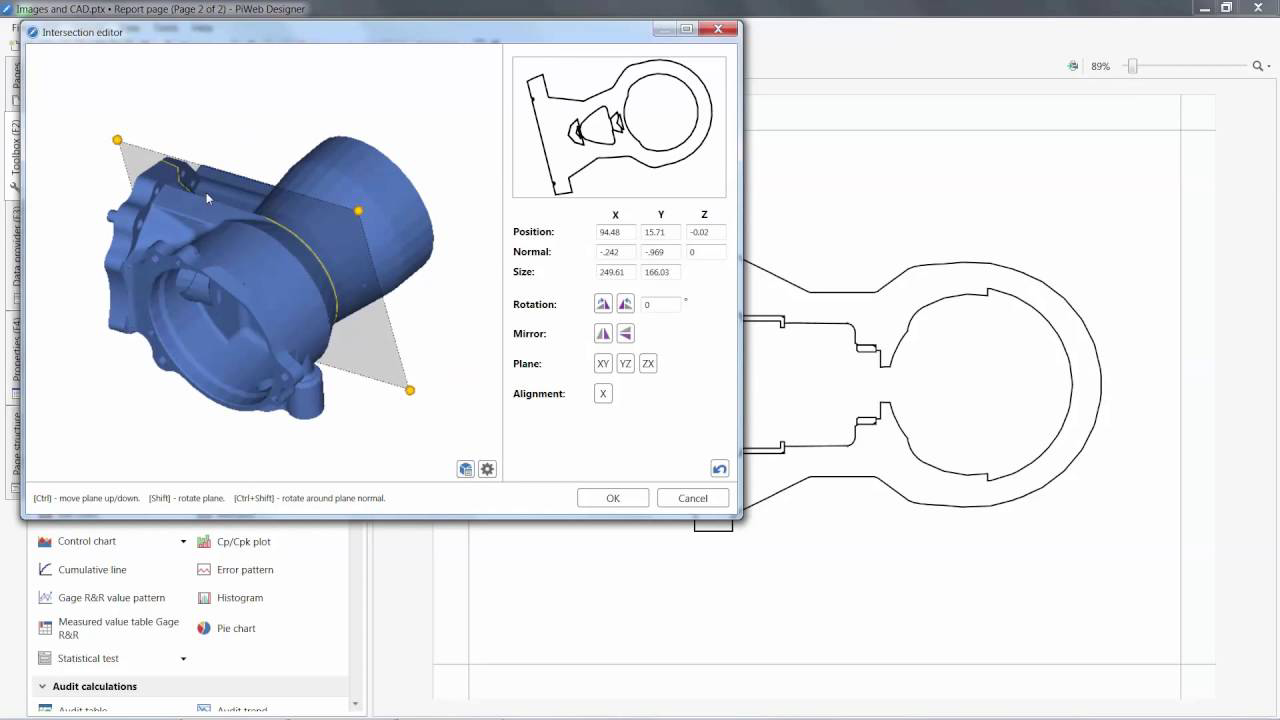
Figure 2: PiWeb Designer interface – easily integrate 3D CAD models, charts, and custom elements into professional reports.
Single-Machine vs. Networked Deployment
PiWeb offers true flexibility in deployment:
Single-machine / workstation mode: Basic reporting (included with ZEISS CALYPSO and other measuring software) or the optional Reporting Plus add-on runs locally with file-based storage. Ideal for a single CMM or small lab. All data stays on one PC; history and basic stats are available, but multi-user access and large datasets are limited.
Networked / client-server mode: The full PiWeb experience uses an on-premise central database and PiWeb Server. Multiple CMMs, manual stations, and third-party devices upload data in real time. Users access everything via floating licenses from any authorized PC or browser. This is the recommended configuration for most modern shops.
Both networked packages are fully on-premise (no cloud dependency) and integrate seamlessly into existing IT landscapes.
Levels of PiWeb: Which One Is Right for You?
ZEISS structures PiWeb in clear tiers so shops can start small and scale without losing data or relearning the interface.
Basic PiWeb Reporting (Single-Machine, Included with CALYPSO/INSPECT)
Last measurements, standard templates, simple charts.
Advantages: Zero extra cost, instant availability, perfect for quick CMM printouts.
Disadvantages: Limited to recent data (often last 10 runs), no advanced statistics or multi-machine centralization, no remote access.
Best for: Very small shops or as a starting point.PiWeb Reporting Plus (Single-Machine Add-On)
Adds full SPC, GR&R (Types 1-3), capability studies, up to ~1,000 measurement runs.
Advantages: Powerful local analysis without network infrastructure.
Disadvantages: Still workstation-bound; storage and collaboration limits remain.
Best for: One or two CMMs where advanced stats are needed but networking isn’t yet required.ZEISS PiWeb Essential (Networked Starter Package)
Central on-premise database (10 GB limit), manual data entry, third-party uploads, floating licenses, global access, interactive reports, and basic notifications.
Advantages: Affordable entry to true data management; centralizes a few machines or technologies; easy scaling from single-machine roots.
Disadvantages: 10 GB database cap (manageable with data-retention rules but requires planning for high-volume shops).
Best for: Small-to-medium businesses or measuring rooms with 2–10 stations.ZEISS PiWeb Enterprise (Full Networked Solution)
Everything in Essential + unlimited storage, individual customer configuration, integrated automated email/desktop notifications, and deeper customization.
Advantages: Handles big data and multi-site operations effortlessly; proactive alerts prevent defects before they reach the customer; maximum scalability and ERP integration.
Disadvantages: Higher initial investment and IT setup (though still on-premise and straightforward for most manufacturers).
Best for: Large enterprises, OEMs, or any operation generating high data volumes.
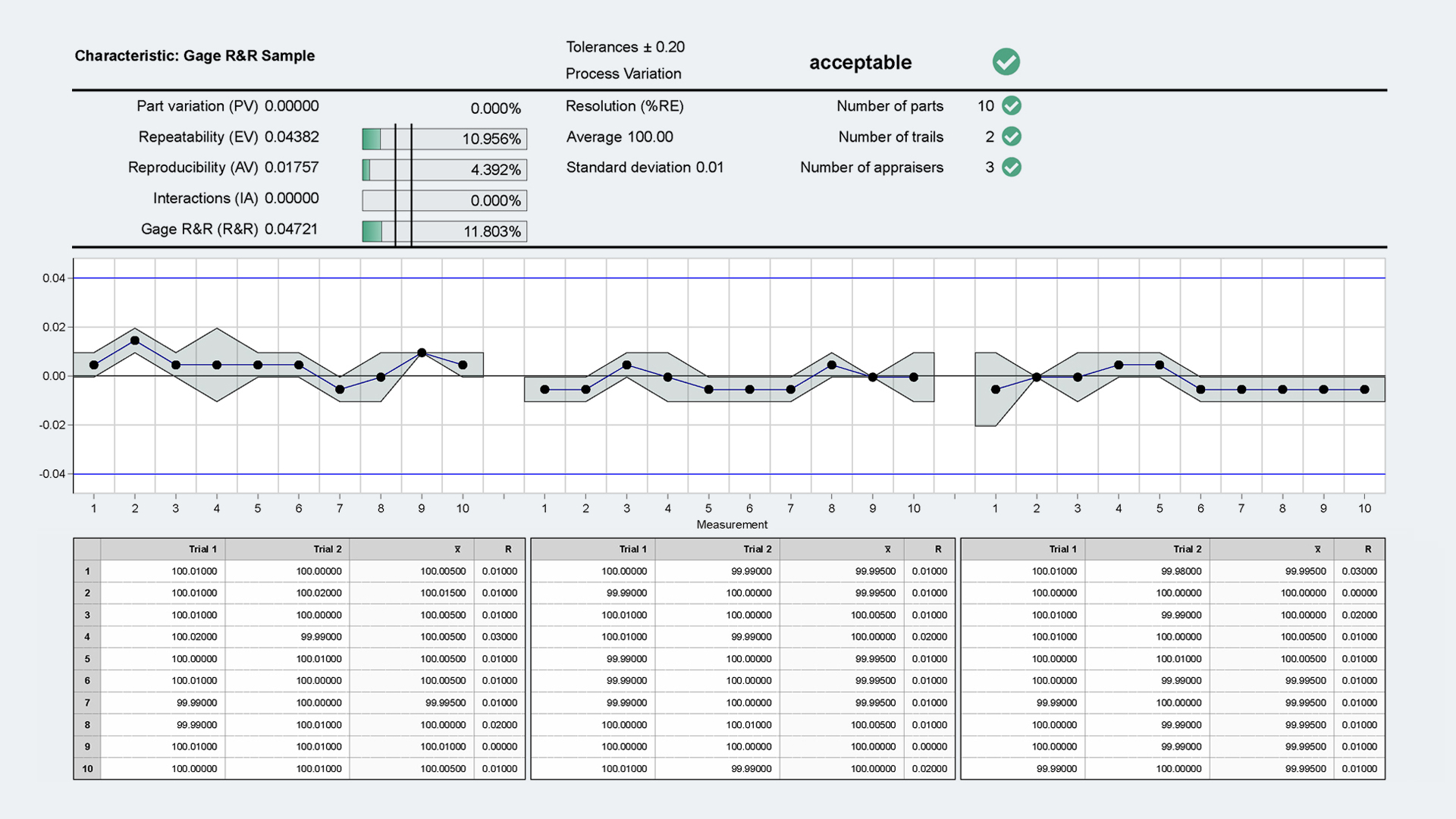
Figure 3: Gage R&R study in PiWeb – clear pass/fail indicators and detailed statistical breakdown at a glance.
Key Advantages of Adding ZEISS PiWeb
Adding PiWeb (even starting at the Essential level) delivers immediate ROI for CMM users:
Centralized, traceable data from every measuring device in one place → no more hunting spreadsheets or isolated CMM files.
Faster decision-making through interactive CAD-linked reports and drill-down analysis (click a part and see every measured point in context).
Proactive quality control via automated notifications and trend detection—fix issues before bad parts leave the shop.
Reduced reporting time—custom templates and one-click exports replace hours of manual work.
Better process optimization with powerful statistics (Cp/Cpk, histograms, run charts, error patterns) that reveal supplier differences, machine capability, or shift-to-shift variation.
Digitization of manual processes—enter caliper or visual-inspection data directly into the same database as your CMM results.
Scalability without disruption—start single-machine and upgrade to Enterprise later; all data migrates.
Compliance and audit readiness—complete measurement history, GR&R documentation, and ballooned FAI reports at your fingertips.
Collaboration across teams—shop-floor operators, quality engineers, and managers all see the same real-time truth via PiWeb Monitor.
Real-world examples from ZEISS users include dramatically faster first-article inspections, reduced scrap through early trend detection, and seamless lab-to-production data sharing.
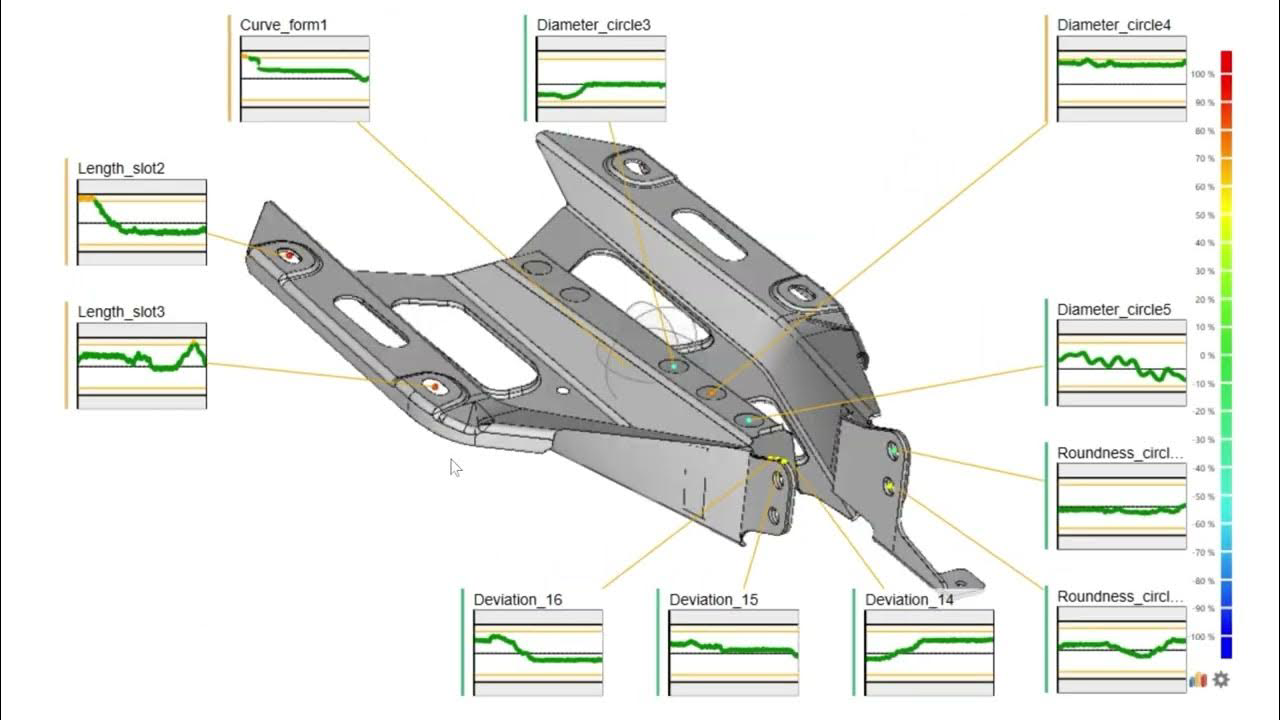
Figure 4: Interactive CAD report example – measurement results, tolerance bands, and color-coded deviations all linked directly to the 3D model.
Implementation and Getting Started
PiWeb installs on-premise and works with existing ZEISS CALYPSO, INSPECT, or third-party software. ZEISS offers training, eLearning, and a dedicated PiWeb User Group community for best practices. A free trial via the ZEISS Quality Suite lets you test the software with your own data.
Recommendation for CMM shops:
Single CMM today? Start with Reporting Plus or jump straight to Essential for future-proofing.
Multiple machines or growing data volumes? Essential (or Enterprise for high-volume) is the sweet spot.
Conclusion
ZEISS PiWeb is far more than a reporting add-on—it is the digital backbone that turns your CMM investment into a true competitive advantage. By centralizing data, enabling interactive analysis, and scaling effortlessly from one machine to enterprise-wide networks, PiWeb helps manufacturers move from reactive inspection to predictive quality excellence.
Ready to see your measurement data in a whole new light? Contact your ZEISS representative for a personalized demo and discover how PiWeb can transform your CMM operations today.
All images and information sourced from official ZEISS documentation and product interfaces (2025–2026 releases).