By Sam Jagger
What is QIF?
The Quality Information Framework (QIF) is an open, XML-based standard developed by the Dimensional Metrology Standards Consortium (DMSC) and recognized as an ANSI standard, with ongoing efforts toward ISO certification. It serves as a unified framework for exchanging quality information throughout the manufacturing lifecycle, particularly in metrology and quality control processes. QIF addresses the limitations of legacy formats like DMIS (Dimensional Measuring Interface Standard) by providing a more comprehensive, model-based approach that integrates with Model-Based Enterprise (MBE) initiatives.
At its core, QIF organizes and associates measurement data with part geometry, Product and Manufacturing Information (PMI), and other quality-related elements. It enables digital metrology by ensuring data integrity and traceability from design to inspection and beyond. Unlike proprietary formats, QIF is CAD-agnostic, meaning it works independently of specific CAD software, allowing for broader adoption across industries such as aerospace, automotive, and defense.
QIF supports various applications, including:
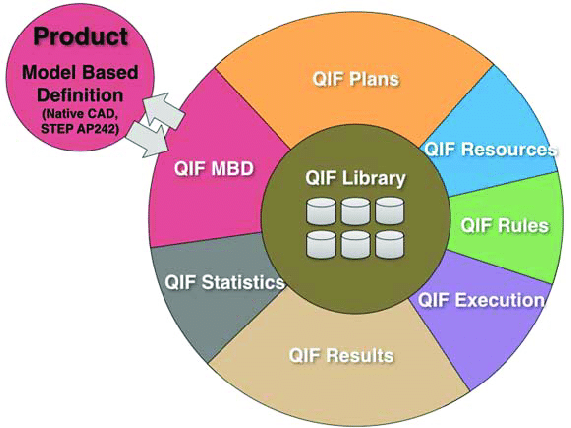
• QIF Plans: Defines measurement plans, including features to inspect, tolerances, and equipment requirements.
• QIF Results: Captures actual measurement data from devices like CMMs.
• QIF Statistics: Analyzes measurement results for trends and quality metrics.
• QIF MBD: Incorporates Model-Based Definition for traceable CAD data.
• QIF Rules and Resources: Specifies measurement rules and device capabilities.
This modular structure makes QIF versatile, supporting everything from simple data exports to complex supply chain integrations.
The QIF Format
QIF is built on XML (eXtensible Markup Language), which provides a structured, human-readable format for data exchange. The standard consists of a library of XML schemas that define the elements and relationships within quality data. These schemas ensure consistency and validation, preventing errors during data transfer.
Key components of the QIF format include:
• XML Schema Definitions (XSD): These outline the structure, such as elements for features (e.g., holes, surfaces), tolerances (GD&T), and measurement results.
• Hierarchical Data Model: Data is organized in a tree-like structure, with root elements like QIFDocument containing child elements for plans, results, and metadata.
• Versioning: QIF has evolved through versions (e.g., QIF 3.0), with backward compatibility to support legacy systems.
For example, a basic QIF file might include XML tags like <FeatureNominal> for defining nominal geometry and <MeasurementResults> for actual deviations captured by a CMM. This format’s extensibility allows for custom extensions while maintaining interoperability.
The use of XML makes QIF lightweight and platform-independent, facilitating integration with databases, ERP systems, and cloud-based analytics tools. It’s particularly advantageous in Industry 4.0 environments, where real-time data sharing is critical.
Using QIF to Pass Data Between Measuring Devices
One of QIF’s primary strengths is its ability to streamline data exchange between measuring devices, such as CMMs, laser scanners, and vision systems, and associated software. This process reduces manual data entry, minimizes errors, and enhances automation in quality workflows.
Step-by-Step Usage Guide
1. Generate QIF from Design Data:
• Start with a CAD model containing PMI (e.g., in STEP or native formats).
• Use software tools like those from Capvidia or Hexagon to export a QIF MBD file. This includes semantic PMI, ensuring traceability to the authoritative model.
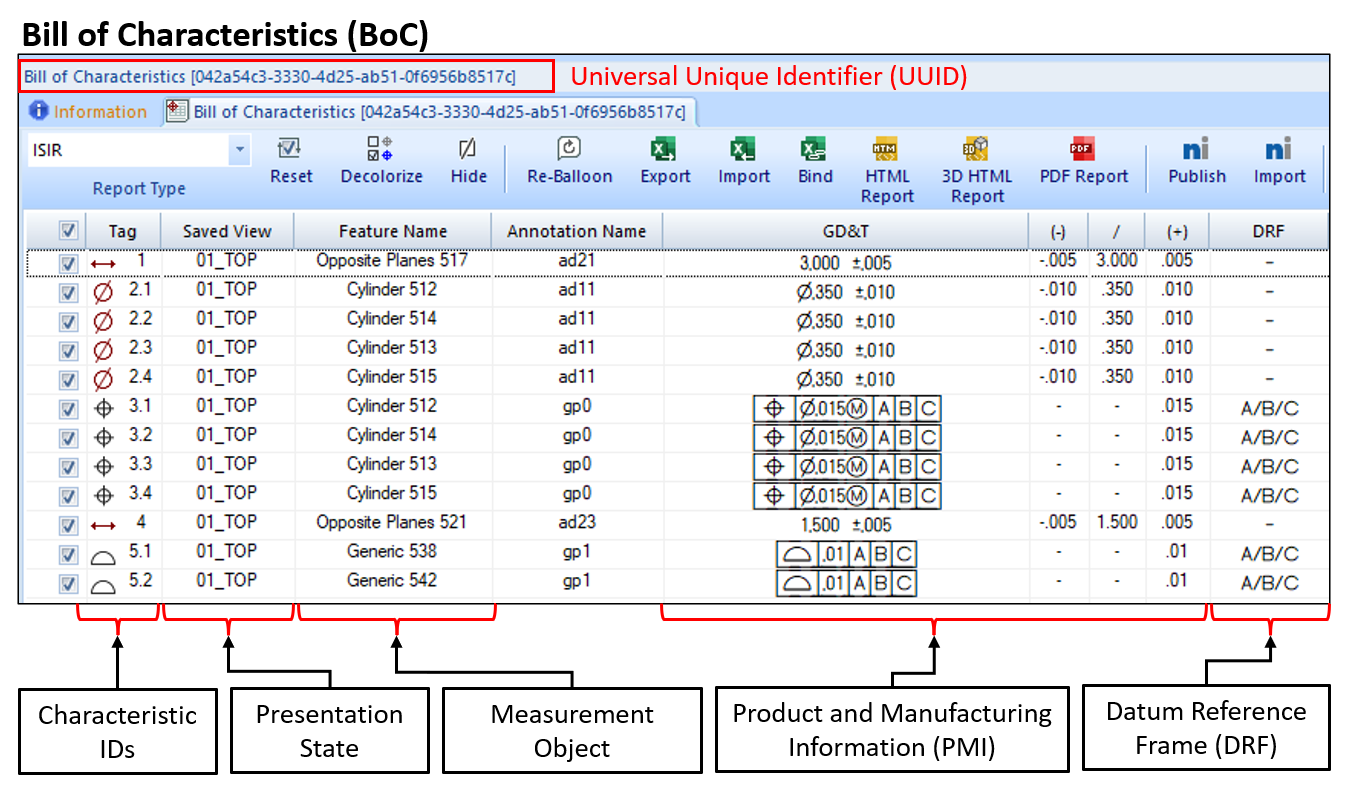
• The QIF Plan application defines what to measure, including feature IDs, tolerances, and measurement strategies.
2. Import into Measurement Software:
• Load the QIF Plan into CMM software (e.g., PC-DMIS or Calypso).
• The software interprets the plan to program the device automatically, reducing setup time by up to 81% in some cases.
3. Execute Measurements and Capture Results:
• Run the CMM or other device to collect point clouds or dimensional data.
• Evaluate against GD&T specifications defined in the QIF Plan.
• Export results as a QIF Results file, which includes actual values, deviations, and traceability links.
4. Share and Analyze Data:
• Transmit the QIF file to suppliers, customers, or analytics platforms via secure channels (e.g., email, cloud storage).
• Recipients can import the file into their systems for validation, statistical analysis (using QIF Statistics), or feedback loops.
• For supplier networks, QIF Rules ensure consistent measurement practices across organizations.
Practical Example: CMM-to-Software Data Flow
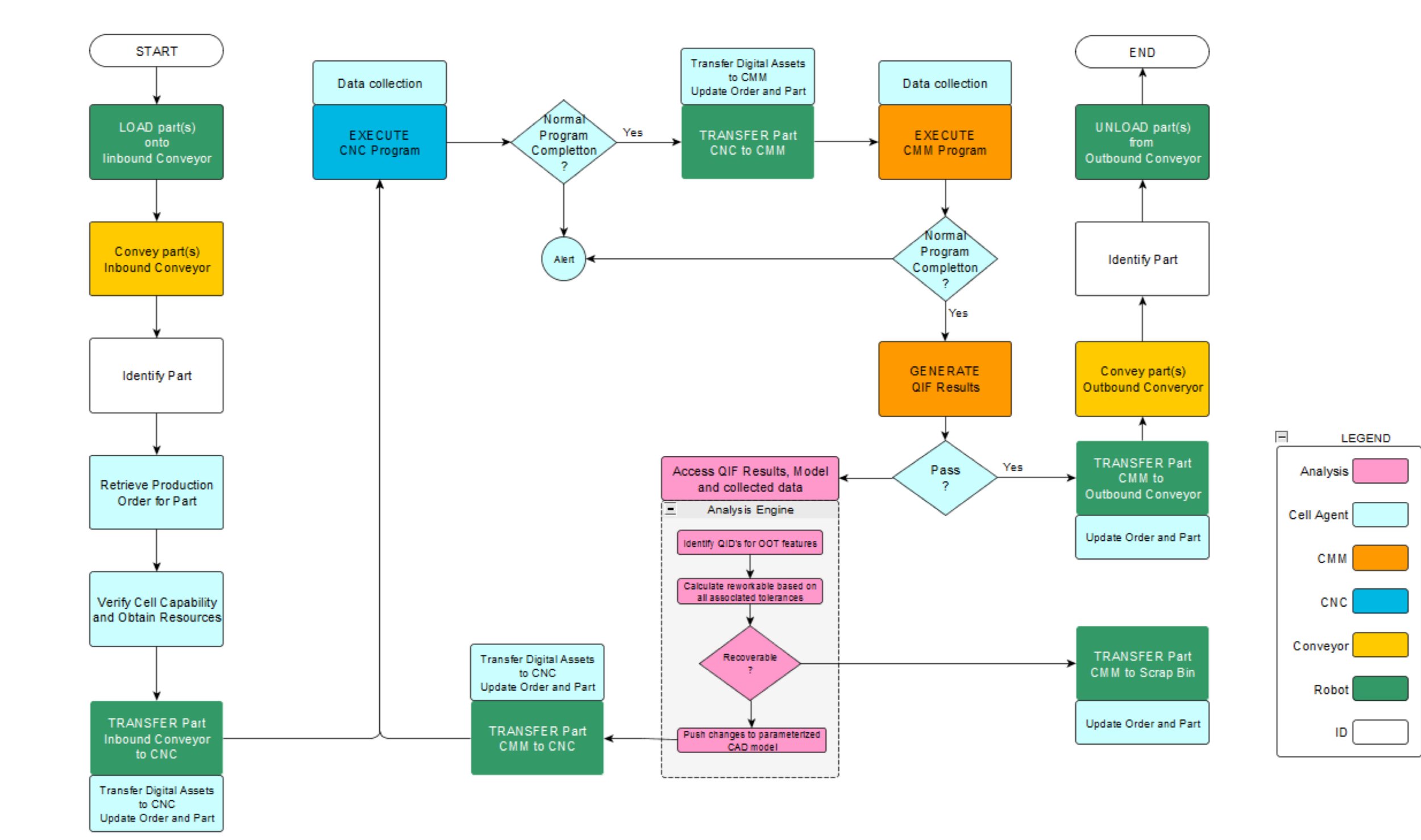
Consider a scenario in aerospace manufacturing: A part’s CAD model with PMI is exported as QIF MBD. This is imported into CMM software to create a measurement routine. After inspection, results are exported in QIF format and sent to a quality management system for SPC (Statistical Process Control) analysis. If issues arise, the data traces back to the original design, enabling rapid corrections.
QIF’s interoperability extends to feedback loops, where measurement results can inform design updates or process adjustments in real-time. Tools like QIF viewers and validators (available from DMSC) ensure data compliance before transfer.
Benefits and Challenges
Adopting QIF can automate workflows, improve data accuracy, and support digital twins in smart manufacturing. However, challenges include initial software investments and training. Organizations like NIST and DMSC offer resources, tutorials, and certification to ease adoption.
Conclusion
The Quality Information Framework represents a significant advancement in metrology data management, offering a robust, standardized method for exchanging information between measuring devices. By leveraging its XML format and modular applications, manufacturers can achieve greater efficiency, traceability, and collaboration. As CMM Quarterly readers continue to push the boundaries of precision engineering, embracing QIF will be key to thriving in a data-driven future. For more details, explore resources from the DMSC and implement pilot projects to experience its transformative potential.

