The Ministry of Science and Technology in Vietnam is implementing various solutions to support mechanical engineering businesses in technological innovation, improving precision machining capabilities, and localizing equipment. This is considered an important foundation for developing high-tech industries such as semiconductors, renewable energy, and smart device manufacturing.
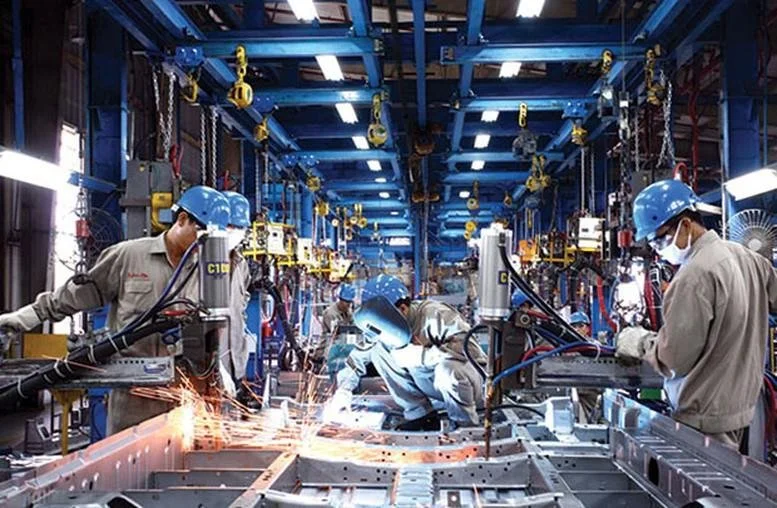
The development of precision engineering not only creates economic value but also contributes to building national technological self-reliance - Illustration.
In the context of the world's strong shift towards high-tech industries, precision engineering is identified as one of the leading fields, playing a fundamental role in the development of semiconductors, renewable energy, and smart device manufacturing.
In Vietnam, as the government aims to attract large corporations to invest in chip and electronic component manufacturing, the role of precision engineering becomes even more essential. This is because it is responsible for manufacturing foundational components with extremely high precision – a factor that determines the quality, stability, and competitiveness of high-tech equipment.
In the semiconductor value chain, precision engineering is present in almost all critical stages. From the design and fabrication of molds for circuit boards, wafer supports, and lithography machine components, to component housings and fixtures in chip packaging, all require micron-level precision, perfectly smooth machined surfaces, and high heat and vibration resistance. These are stringent requirements that most domestic businesses previously had to rely on foreign suppliers for.
In recent years, the capabilities of Vietnamese mechanical engineering businesses have improved significantly. Many businesses have boldly invested in 3-5 axis CNC systems, ultra-precision grinding and boring machines, CMM coordinate measuring machines, and advanced surface treatment technologies to meet the requirements of large FDI corporations such as Samsung, Foxconn, and Amkor.
In Hanoi, Hai Phong, and Bac Ninh, some businesses have successfully produced components with a precision of less than 10 microns, indicating the potential for deeper participation in the high-tech supply chain is gradually emerging.
Beyond semiconductors, the renewable energy sector is also opening up significant growth opportunities for precision engineering. Wind turbine components such as rotor shafts, bearings, drive systems, and blades require rigorous machining processes, high durability, and stable operation in harsh environments. Furthermore, the solar power industry creates a large demand for solar panel mounting frames, load-bearing steel components, and inverter system components.
Many domestic mechanical engineering businesses have participated in the production of components and parts for wind and solar power projects, thereby gradually increasing the localization rate in renewable energy projects. Investing in modern technology not only helps businesses meet increasingly high technical requirements but also contributes to increasing domestic added value, reducing import costs, and enhancing the self-reliance of the energy sector.
According to experts, the development of precision engineering not only brings economic value but also has strategic significance in building national technological self-reliance. To participate more deeply in the global supply chain, Vietnamese businesses need to continue researching and mastering new materials such as high-quality alloy steel, aluminum-titanium alloys, and composite materials; develop design and machining simulation software; and simultaneously improve their measurement and quality assessment capabilities according to international standards.
Furthermore, the establishment of national testing centers for precision mechanics is considered an urgent requirement. These centers will play a supporting role in businesses in quality control, durability and accuracy testing, and certification according to international standards, thereby helping Vietnamese mechanical products easily participate in global supply chains.
Human resources continue to be a key factor for the industry's development. According to surveys, the fields of mechatronics, precision mechanics, and automation need approximately 20,000 highly qualified engineers each year, but current training capacity is still insufficient to meet the demand.
Therefore, strengthening the links between research institutes, universities, and businesses needs to be further promoted in order to train human resources that closely match the practical needs of production. Technology transfer programs, business internships, and the establishment of digital practice centers are expected to contribute to improving the skills and expertise of young engineers.
From the government's perspective, perfecting the technical standards system in the field of precision mechanics, issuing preferential tax policies for high-tech investment, providing credit support for innovation activities, and simultaneously developing and implementing a program for the development of the mechanical and automation industry until 2030 will create important momentum to promote the sustainable development of the industry.

