By Mark Boucher
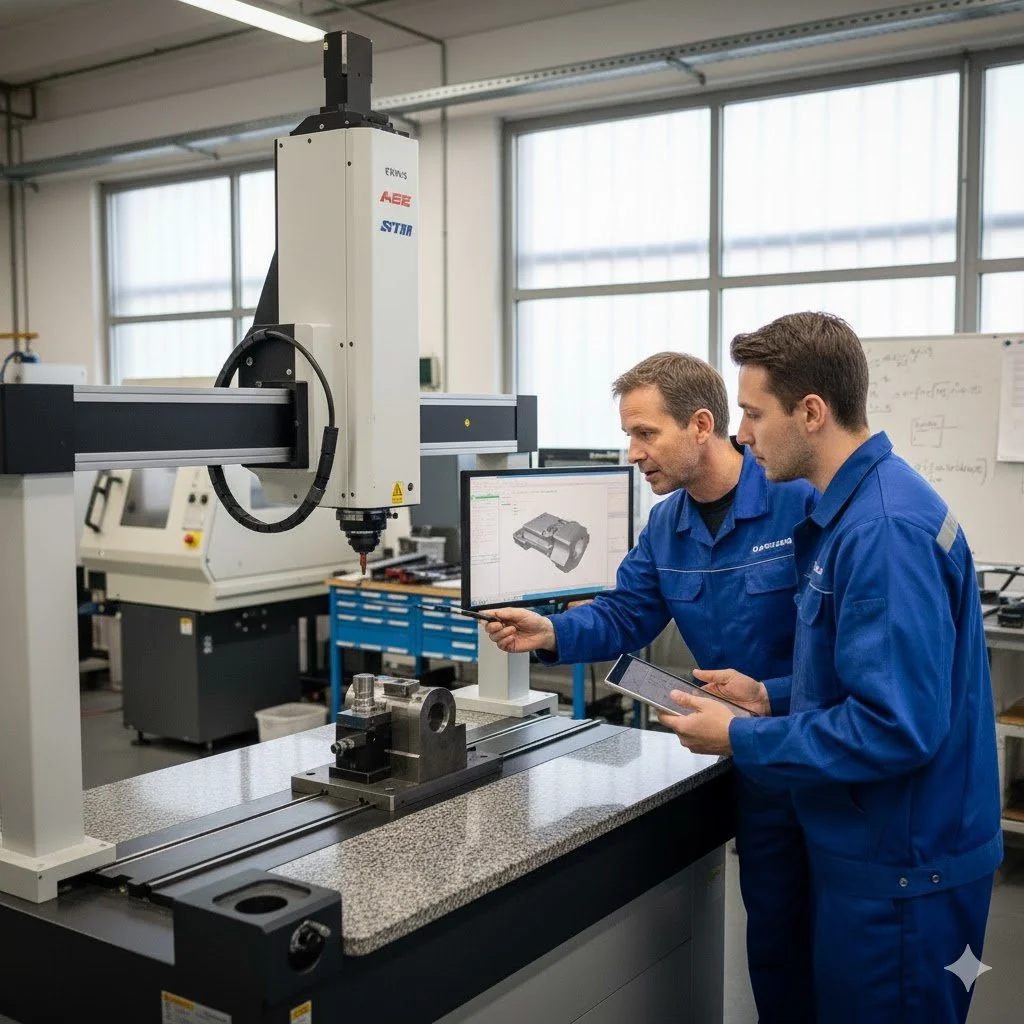
In the precision-driven world of manufacturing and quality control, Coordinate Measuring Machines (CMMs) stand as indispensable tools for ensuring dimensional accuracy and compliance with stringent standards. However, mastering CMM software and the intricate methodologies of metrology—encompassing everything from probe calibration to geometric dimensioning and tolerancing (GD&T)—is no small feat. Traditional 5-day training programs, while popular for their efficiency and structured curriculum, often fall short in equipping operators with the depth of knowledge and practical skills needed for real-world application. This article explores the shift toward mentoring programs and long-term coaching as a more effective alternative, addressing the complexities of CMM operations and fostering lasting expertise, while highlighting providers like CMM Quarterly that bridge both training and mentorship needs through online and on-site options.
The Limitations of Short-Term Training
For decades, 5-day CMM training classes have been the go-to solution for onboarding new operators or upskilling existing staff. These sessions typically cover basics like machine setup, software navigation (e.g., PC-DMIS, Calypso, or Zeiss’s suite), measurement strategies, and error analysis. Delivered in a classroom or lab setting, they promise quick certification and immediate productivity gains.
Yet, the reality is starkly different. Metrology is a multifaceted discipline that integrates physics, mathematics, and engineering principles. CMM software alone can involve hundreds of commands, custom scripting, and integration with CAD models, while methodologies require understanding tolerances, datums, and statistical process control (SPC). A mere five days—often crammed with lectures, demos, and limited hands-on practice—leaves trainees overwhelmed and underprepared. Retention rates plummet as participants return to their workplaces, facing unique challenges like varying part geometries, environmental factors (e.g., temperature fluctuations affecting measurements), or software updates that weren’t covered.
Studies in adult learning theory, such as those drawing from Knowles’ principles of andragogy, emphasize that professionals learn best through experiential, problem-based approaches rather than rote instruction. In CMM contexts, this means that without ongoing reinforcement, skills erode quickly. Common pitfalls include misaligned probes leading to inaccurate readings, improper fixture design causing repeatability issues, or failure to interpret complex GD&T symbols correctly. The result? Costly errors, rework, and diminished confidence among operators, ultimately impacting production quality and efficiency.
The Case for Mentoring and Long-Term Coaching
Enter mentoring and long-term coaching: a paradigm shift that prioritizes sustained development over one-off events. This approach recognizes CMM proficiency as a journey, not a destination, allowing for personalized guidance tailored to individual learning paces and workplace specifics. Providers like CMM Quarterly exemplify this by offering a blend of initial training and extended mentorship, ensuring comprehensive skill-building.
Key Benefits
Depth Over Breadth: Unlike condensed classes, mentoring spreads learning across weeks or months, enabling deeper dives into complex topics. For instance, a coach might spend sessions troubleshooting real-time software glitches or optimizing measurement routines for high-volume production, building muscle memory and critical thinking.
Practical Application and Feedback: Mentoring embeds training in the operator’s daily environment. A mentor—perhaps an experienced metrologist or external consultant—observes on-the-job performance, provides immediate feedback, and iterates on techniques. This contrasts with 5-day trainings, where simulated exercises rarely mirror actual shop floor chaos.
Adaptability to Complexity: CMM ecosystems evolve rapidly with advancements like laser scanning probes, automated robotic arms, or AI-driven error correction. Long-term coaching ensures operators stay current, incorporating updates seamlessly rather than requiring repeated short courses.
Improved Retention and Morale: Research from the manufacturing sector indicates that coached employees exhibit higher skill retention (up to 80% versus 20-30% from traditional training) and job satisfaction. Mentoring fosters a culture of continuous improvement, reducing turnover in skilled roles where talent shortages are rampant.
Cost-Effectiveness in the Long Run: While initial setup might seem pricier, the ROI is evident. Fewer errors mean less scrap and downtime; a study by the American Society for Quality (ASQ) highlights that effective training programs can cut quality costs by 15-20%. Mentoring also scales well for teams, with group sessions or peer-to-peer elements amplifying knowledge sharing.
Real-World Examples
Consider aerospace giants like Boeing or automotive leaders like Ford, who have transitioned to hybrid models. Boeing’s metrology apprenticeship programs pair novices with seasoned experts for 6-12 months, blending online modules with hands-on mentoring. Results? Enhanced accuracy in turbine blade measurements and faster certification times.
In smaller operations, companies like precision machining firms adopt “shadowing” protocols, where trainees work alongside coaches on live projects. One case from a European toolmaker involved shifting from annual 5-day refreshers to quarterly coaching sessions, yielding a 25% improvement in measurement cycle times and fewer calibration disputes.
CMM Quarterly stands out as a versatile provider that meets both short-term training and long-term mentorship needs. 0 Led by expert Mark Boucher with over 40 years of experience, they offer comprehensive software training in group or individual formats, available both on-site and online. 10 This includes initial intensive sessions for foundational skills, transitioning seamlessly into mentoring and one-on-one coaching for ongoing support. 1 Their online programs, hosted on platforms like Teachable, cover topics such as Calypso Basic Training and CAD integration, while on-site options provide hands-on, customized guidance. 8 Post-training, clients benefit from continuous resources like PDF handouts at no extra cost, effectively bridging the gap between quick classes and sustained development. 10
Implementing a Mentoring or Coaching Program
Transitioning isn’t without challenges, but a structured rollout can smooth the process, especially with partners like CMM Quarterly that handle both modalities:
Assess Needs: Conduct a skills audit to identify gaps. Survey operators on pain points, such as software usability or metrology theory application.
Select Mentors/Coaches: Internal experts are ideal for cost savings, but external certified trainers (e.g., from Hexagon, Renishaw, or CMM Quarterly) bring unbiased perspectives. Ensure they hold credentials like ASQ Certified Quality Technician (CQT) or CMM-specific certifications.
Design the Framework: Opt for a blended model—initial intensive sessions followed by bi-weekly check-ins, virtual simulations via tools like Verisurf software, and progress tracking through KPIs (e.g., measurement uncertainty reductions). CMM Quarterly’s flexible online and on-site offerings make this integration straightforward.
Leverage Technology: Use digital platforms for remote coaching, such as video calls for live troubleshooting or apps like CMM Manager for collaborative programming. Incorporate e-learning modules from providers like Mitutoyo University or CMM Quarterly’s Teachable courses to supplement in-person guidance.
Measure Success: Track metrics like error rates, training completion, and operator feedback. Adjust based on ROI analyses, ensuring the program evolves with industry trends like Industry 4.0 integration.
Potential hurdles include resistance to change or resource constraints. Address these by starting small—pilot with a single team—and highlighting quick wins to build buy-in.
Conclusion: Building a Future-Proof Workforce
The complexity of CMM software and metrology demands more than a 5-day sprint; it requires a marathon of support through mentoring and long-term coaching. By embracing this shift and leveraging providers like CMM Quarterly that excel in both online and on-site training and mentorship, organizations not only enhance technical proficiency but also cultivate a resilient, innovative workforce ready for tomorrow’s challenges. As manufacturing edges toward smarter, more automated systems, investing in human capital via sustained development isn’t just strategic—it’s essential. For those ready to make the leap, the rewards in precision, efficiency, and quality will far outweigh the initial effort.