In the rapidly evolving landscape of manufacturing, Quality 5.0 emerges as the human-centric evolution of quality management, perfectly aligned with the principles of Industry 5.0. Unlike the automation-heavy focus of Industry 4.0 and Quality 4.0, Quality 5.0 places skilled professionals and advanced technologies in true partnership—leveraging AI, IoT, digital twins, and collaborative systems not to replace humans, but to amplify creativity, judgment, and innovation. For CMM professionals, this shift transforms coordinate measuring machines from standalone inspection tools into intelligent, adaptive hubs that drive real-time decision-making, sustainability, resilience, and mass personalization.QdnWP“LARGE”Ec3iI“LARGE”
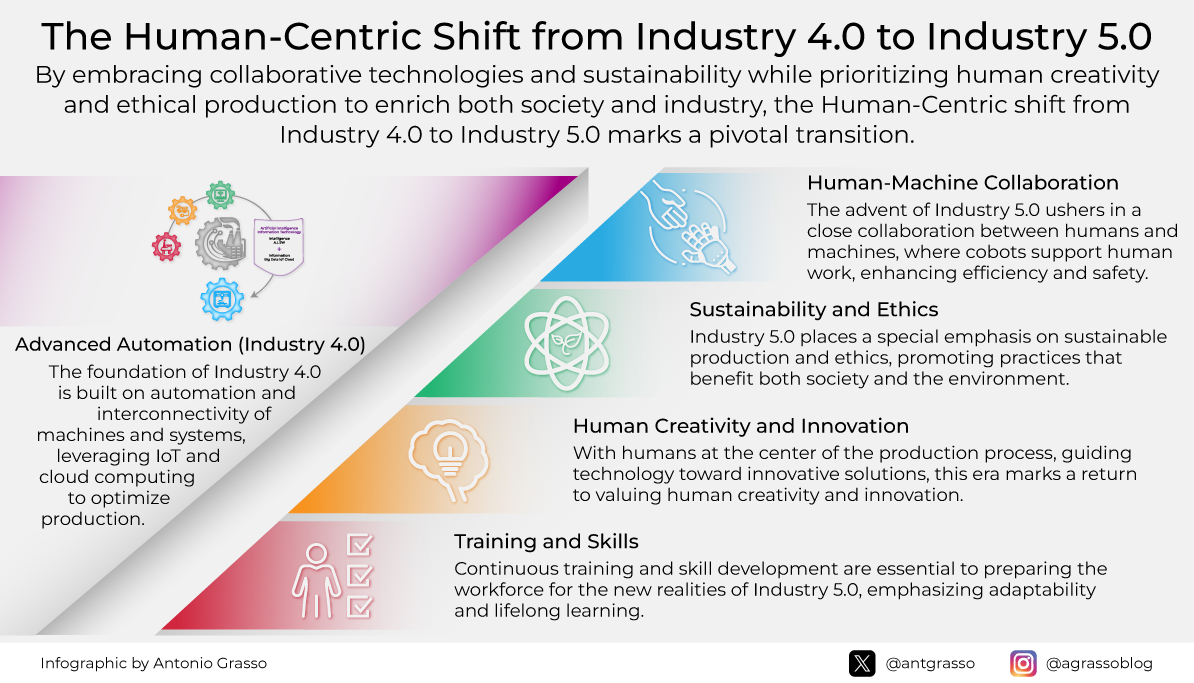
The Evolution of Quality Management: From 1.0 to 5.0
Quality management has progressed through distinct eras:
Quality 1.0 relied on post-production inspection.
Quality 2.0 introduced statistical process control (SPC) to reduce variation.
Quality 3.0 emphasized total quality management (TQM) and standards like ISO 9001 for organizational culture.
Quality 4.0 harnessed big data, IoT, machine learning, and predictive analytics for proactive, data-driven quality.
Quality 5.0 builds on this digital foundation but pivots to human-machine collaboration. Machines excel at speed, precision, and data processing; humans bring contextual understanding, emotional intelligence, creativity, and ethical oversight. The result is proactive, sustainable, resilient, and customer-centric quality that supports personalized production while addressing societal and environmental goals.
This transition mirrors Industry 5.0’s three pillars: human-centricity, sustainability, and resilience. In metrology, it means CMMs no longer operate in isolation but integrate seamlessly into cyber-physical systems, enabling adaptive measurements that respond in real time to production variations.
Core Principles and Enabling Technologies in Metrology
Quality 5.0 rests on four interconnected principles:
Human-Machine Collaboration — AI and robotics handle repetitive tasks and vast datasets, freeing inspectors for complex analysis and innovation.
Proactive & Predictive Quality — Digital twins and AI anticipate defects before they occur.
Sustainability & Resilience — Energy monitoring, waste reduction, and predictive maintenance ensure adaptable, eco-friendly operations.
Customer-Centric Personalization — Flexible systems support mass customization without compromising precision.
Key technologies transforming CMM workflows include:
AI/ML and Computer Vision for anomaly detection and automated program generation.
Digital Twins for virtual simulation, offline programming, and real-time optimization.
IoT & Remote Monitoring Platforms like Metrology Gate, which centralizes CMM data, provides SPC metrics (Cp/Cpk), predictive alerts, multi-site visibility, and energy tracking (airflow, pressure, consumption) to support sustainability goals.
Collaborative Robotics (Cobots) and automated cells for hands-off inspection.
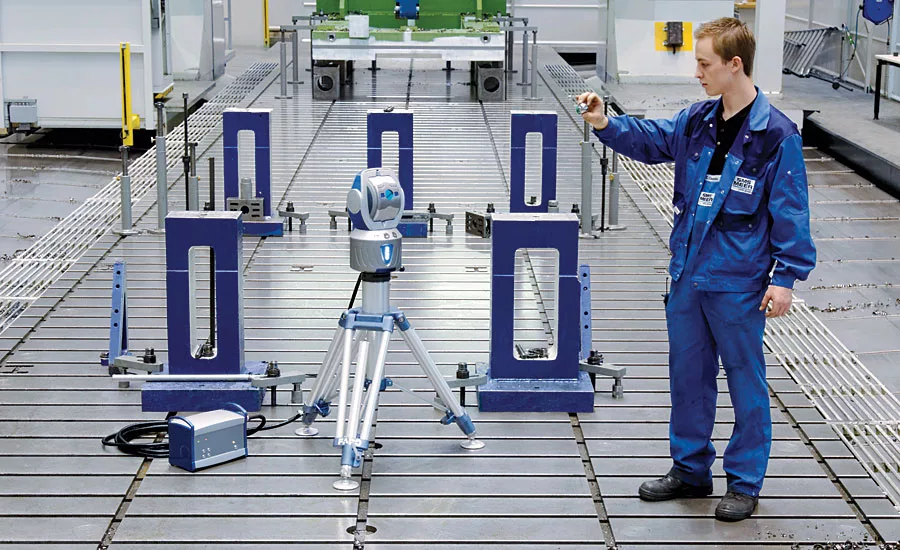
Portable, User-Friendly Metrology — Devices such as cable-free laser trackers enable on-the-spot verification of large assemblies, with humans making final interpretive decisions.
These tools turn metrology rooms into real-time decision centers, bridging inspection and production while aligning with Industry 5.0’s emphasis on adaptability and human empowerment.
The Transforming Role of CMMs
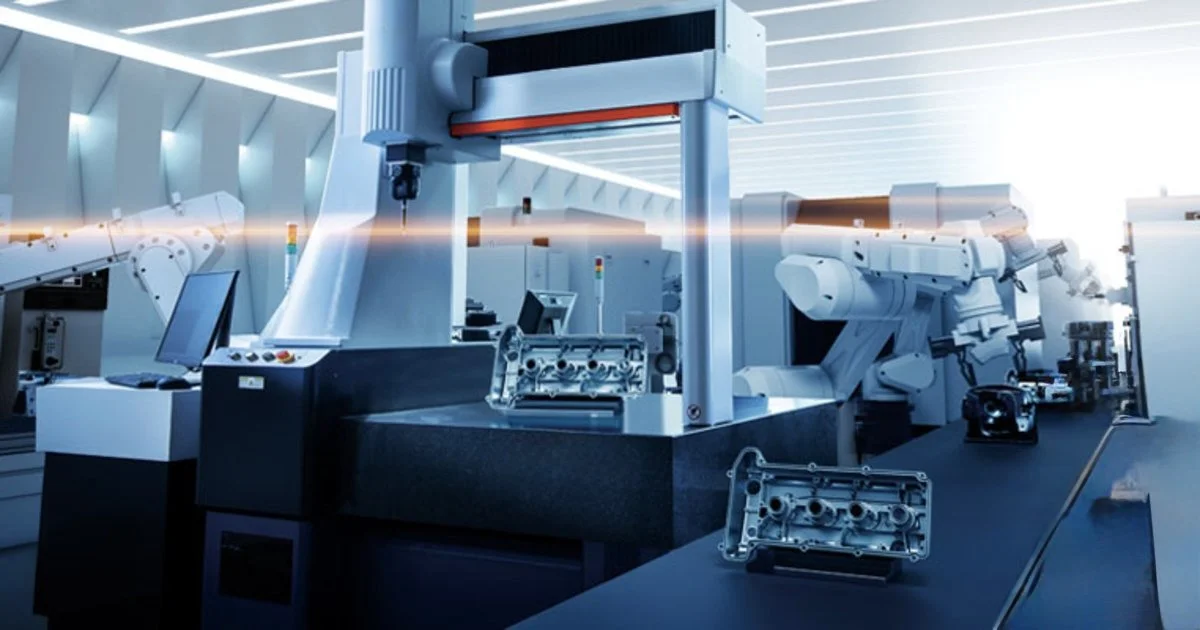
Modern CMMs—equipped with hybrid sensors (tactile, optical, laser), robotic integration, and AI—now support real-time SPC, defect prediction, and rapid quality adjustments. Platforms like Metrology Gate exemplify this: plug-and-play compatibility with software such as TouchDMIS delivers dashboards, downtime analysis, waste reduction, regulatory compliance, and predictive maintenance. Its “5.0 evaluation mode” offers factory-to-web optimization, directly advancing human-centric, sustainable, and resilient manufacturing.
Portable systems complement traditional CMMs. The API iLT laser tracker (under 5 kg, cable-free) allows engineers to verify large parts on the shop floor instantly, while the 9D LADAR scanner on autonomous robots delivers real-time 3D point clouds for immediate human review—embodying the “AI flags it; human decides” philosophy of Quality 5.0.
Source: Quality Magazine
Current Case Studies: Quality 5.0 in Action
Saab Aeronautics (Aerospace Metrology)
At its new West Lafayette, Indiana facility, Saab implemented the Nikon APDIS MV430E laser radar for automated measurement of the eT7-A aircraft aft body. Using digital twins and simulation software for offline programming and calibration, the system slashed programming time from weeks to hours, cut measurement cycles by 25%, and improved repeatability. Skilled metrologists were freed for higher-value tasks, while the digital thread ensured traceability—demonstrating how Quality 5.0 technologies enhance precision, speed, and human focus in high-stakes aerospace production.
Haier Hefei Air Conditioner Lighthouse Factory (WEF Global Lighthouse)
Haier integrated AI, digital twins, and knowledge graphs across R&D, production, and testing. Results included a 58% reduction in defect rates, 33% improvement in energy efficiency, 49% boost in labor productivity, and 22% lower unit costs. Another Haier facility achieved a 40% error-rate drop and 72% QA cost reduction through intelligent monitoring and AI-driven leak detection. These outcomes highlight Quality 5.0’s power to combine predictive analytics with human oversight for dramatic quality and sustainability gains.
BMW & Siemens Digital Factory Initiatives
BMW deploys cobots alongside human operators for customized vehicle assembly, maintaining exceptional quality and safety while enabling rapid personalization. Siemens leverages AI and IoT in its Digital Factory to optimize processes, reduce energy consumption, and adapt flexibly to market demands—directly supporting sustainable quality outcomes.

Source: Seimens
These real-world examples—spanning aerospace, appliances, automotive, and smart factories—prove Quality 5.0 delivers measurable ROI through defect reduction, efficiency gains, and empowered teams.
Benefits, Challenges, and Implementation Tips
Benefits include micron-level precision with flexibility for customization, up to 60% drops in customer complaints, significant waste and energy savings, higher employee satisfaction, and faster time-to-market. Challenges involve workforce upskilling, initial investment, cybersecurity, and cultural shifts toward collaboration.
CMM professionals can start by:
Integrating monitoring platforms for real-time insights.
Piloting portable or robotic systems.
Training teams on AI interpretation and digital twins.
Tracking energy metrics for sustainability reporting.
The Future Outlook for CMM Quarterly Readers
As Industry 5.0 matures, expect CMMs to incorporate augmented reality overlays, advanced cognitive automation, and full cyber-physical integration. Metrology will become truly adaptive—anticipating needs, learning from human feedback, and driving circular economies. The CMM will not only measure but inspire innovation, positioning quality leaders as strategic partners in resilient, sustainable manufacturing.
Quality 5.0 is not a distant vision—it is here today, redefining excellence through the powerful synergy of human ingenuity and machine precision. For CMM users and quality professionals, embracing this paradigm offers a competitive edge, elevated roles, and a more fulfilling, impactful future in manufacturing. The revolution begins on the shop floor—where your CMM already stands ready to lead the way.