Portable Coordinate Measuring Machines (CMMs) have evolved from niche tools into indispensable assets for on-site, shop-floor, and field-based metrology. Unlike traditional bridge or gantry CMMs confined to climate-controlled labs, today’s portable systems—articulated arms, laser trackers, optical probes, and wireless handheld scanners—deliver metrology-grade accuracy directly where parts are manufactured, assembled, or serviced. This shift supports Industry 4.0/5.0 demands for rapid inspection of large components, mass customization, reverse engineering, and zero-defect production in aerospace, automotive, energy, and heavy machinery sectors.
As of early 2026, key innovations focus on accuracy gains rivaling fixed CMMs, extreme portability, multi-sensor hybridization, wireless operation, environmental ruggedness, and AI-driven usability. Market growth reflects this: portable and non-contact CMM adoption is accelerating, with systems now capable of measuring everything from small precision parts to structures spanning 25+ meters.
Articulated Arm Advancements: Higher Accuracy and True Shop-Floor Readiness
Articulated-arm CMMs remain the workhorse of portable metrology, and recent releases have closed the accuracy gap with fixed systems while adding production-floor resilience.
FARO’s Quantum X FaroArm Series (launched October 2024) delivers up to 15% better accuracy than prior generations across probing and scanning. Configurable in five reach lengths (2.0–4.0 m) and three performance tiers, the arms pair with an expanded FaroBlu Laser Line Probe family—including high-speed (2.6× faster double-coverage scanning), high-precision small-feature, and balanced variants. Continuous Light Rectification handles dark, reflective, or translucent surfaces reliably. The optional 8-Axis Max rotary table reduces measurement time by up to 40% by rotating the part instead of repositioning the arm. Wireless connectivity, hot-swappable batteries, internal counterbalancing, and integrated overload/temperature sensors make these systems genuinely production-ready.

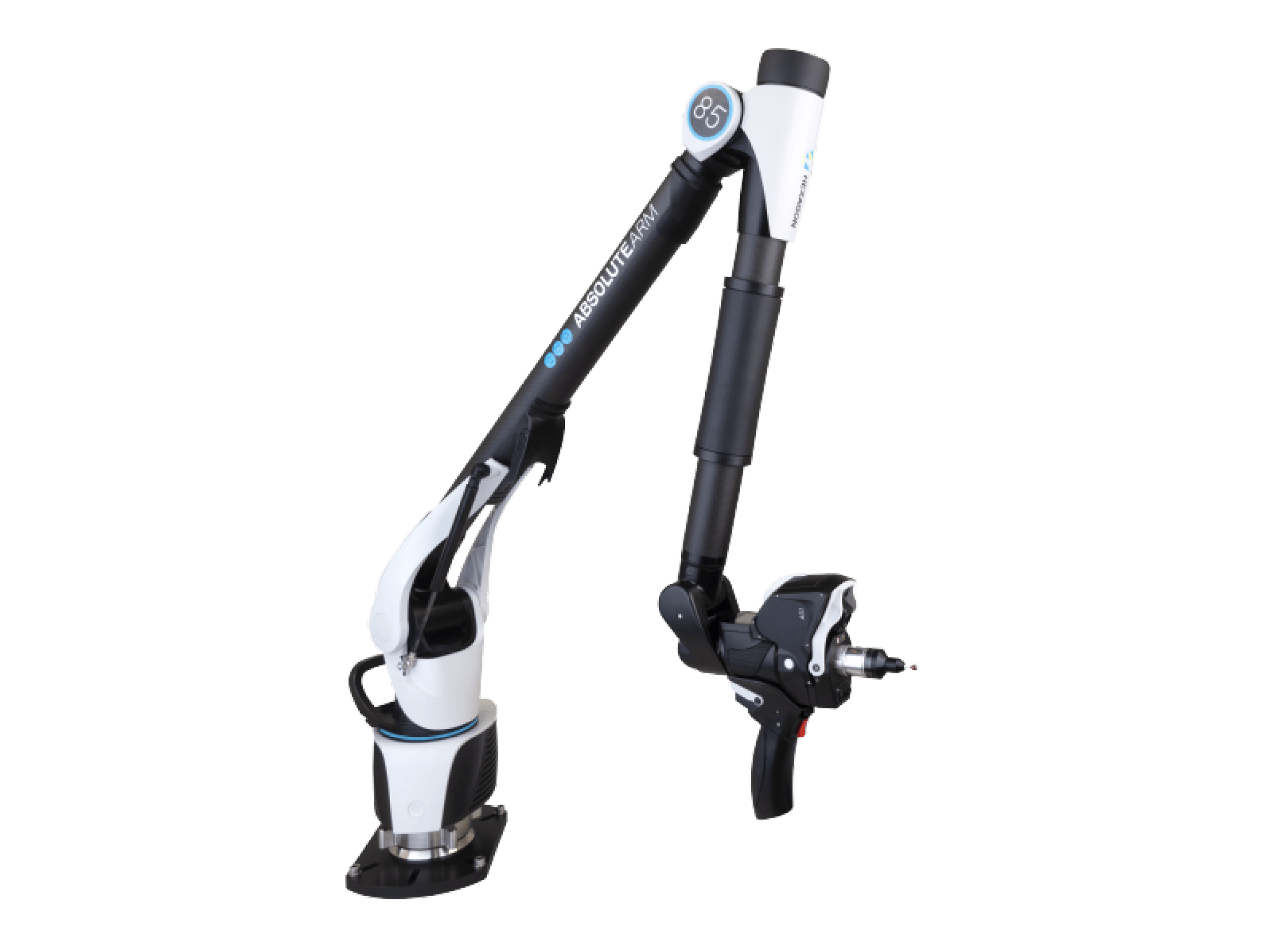
Hexagon’s Absolute Arm family (incorporating the legacy ROMER line) leads in environmental toughness. The Absolute Arm Compact is the world’s first IP54-rated portable arm—dust- and splash-proof for direct CNC-machine or harsh-shop use. All models feature absolute encoders (no warm-up or homing required) and ergonomic designs with intuitive wrist displays. The 7-Axis variants excel at hybrid tactile probing plus high-speed laser scanning; 6-Axis models prioritize ultra-high single-point accuracy. Carbon-fiber construction and advanced thermal compensation maintain performance across wide temperature swings.
Optical and Tracker-Based Systems: Arm-Free Freedom for Large-Scale Inspection
Eliminating the physical arm opens new possibilities for reach, speed, and vibration immunity.
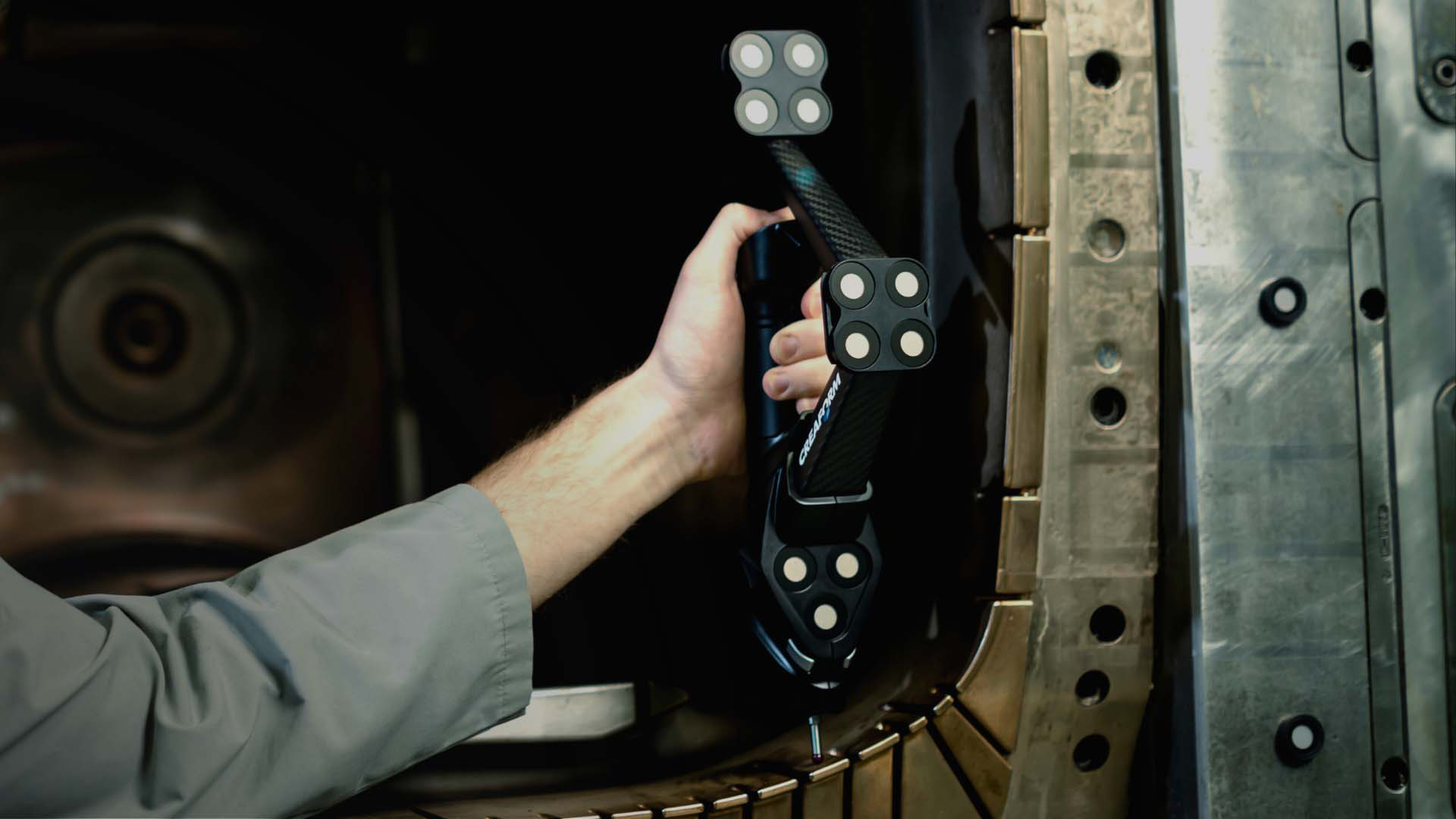
Creaform’s HandyPROBE Next (and related optical systems) uses dynamic referencing via a C-Track camera and reflective targets. Accuracy remains stable even if the part or sensor moves due to vibration or thermal drift—ideal for true shop-floor or in-situ measurement of massive assemblies. The wireless, arm-free probe offers exceptional portability and automatic alignment for repetitive inspections.
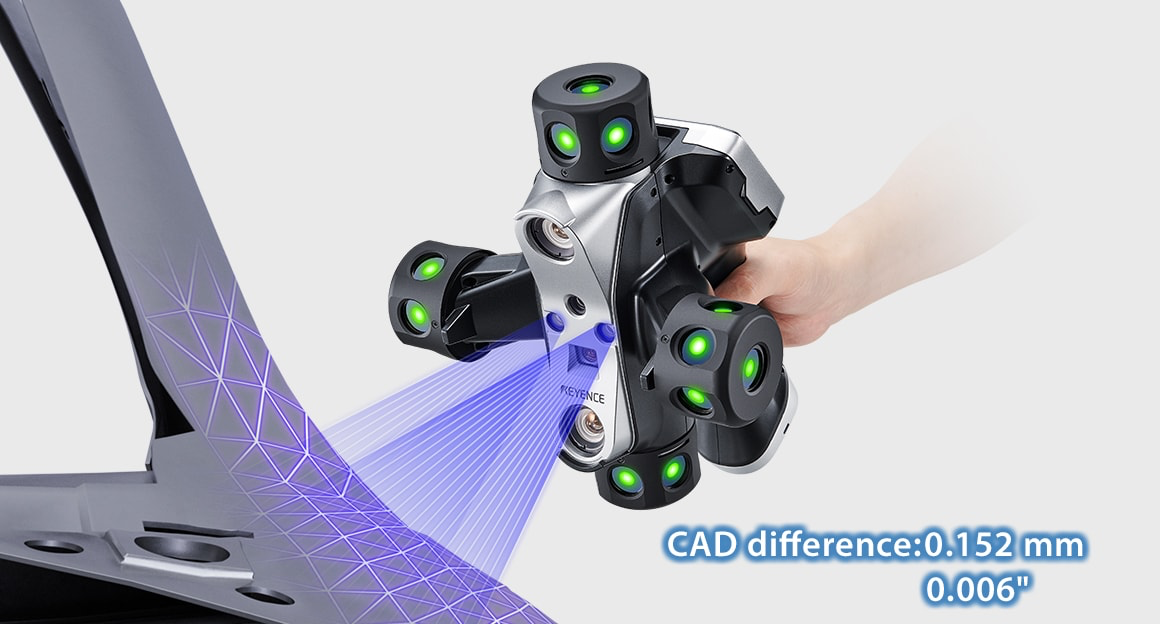
Keyence’s WM-6000 Wide Area CMM (and XM handheld series) revolutionizes usability. These solid-state, wireless systems require minimal training—operators follow augmented-reality guidance on the probe itself. The WM series measures targets up to 25 meters with laser tracking and minimal setup, combining tactile probing and 3D scanning. Automatic report generation and on-site calibration further reduce downtime.
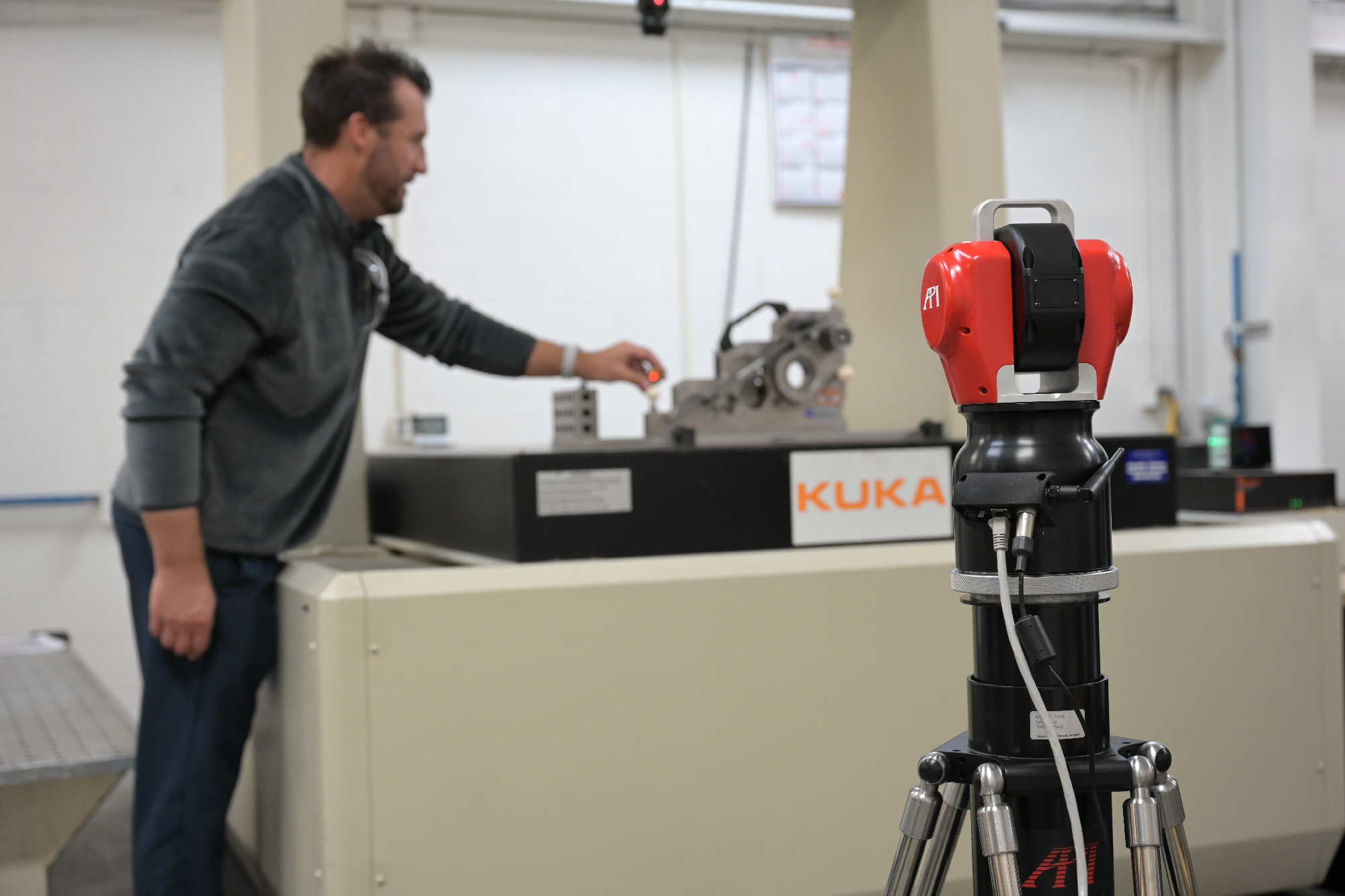
Laser trackers have also miniaturized dramatically. Automated Precision Inc.’s iLT Integrated Laser Tracker (2025) weighs just 4.9 kg—the smallest and lightest ever—yet delivers lab-grade accuracy on the shop floor. AI-enhanced vision enables faster, more reliable SMR (spherically mounted retroreflector) lock-on in dynamic environments. Wireless and battery options expand its use for large-volume applications like wind-turbine blades or aircraft assembly.
Wireless, AI-Driven, and Hybrid Optical Scanners
Fully wireless, target-free scanners blur the line between portable CMMs and advanced 3D imaging:
Artec Leo — An all-in-one handheld device with onboard computer, touchscreen, and battery. It captures up to 35 million points per second with AI-driven processing and real-time feedback—no external PC or targets required.
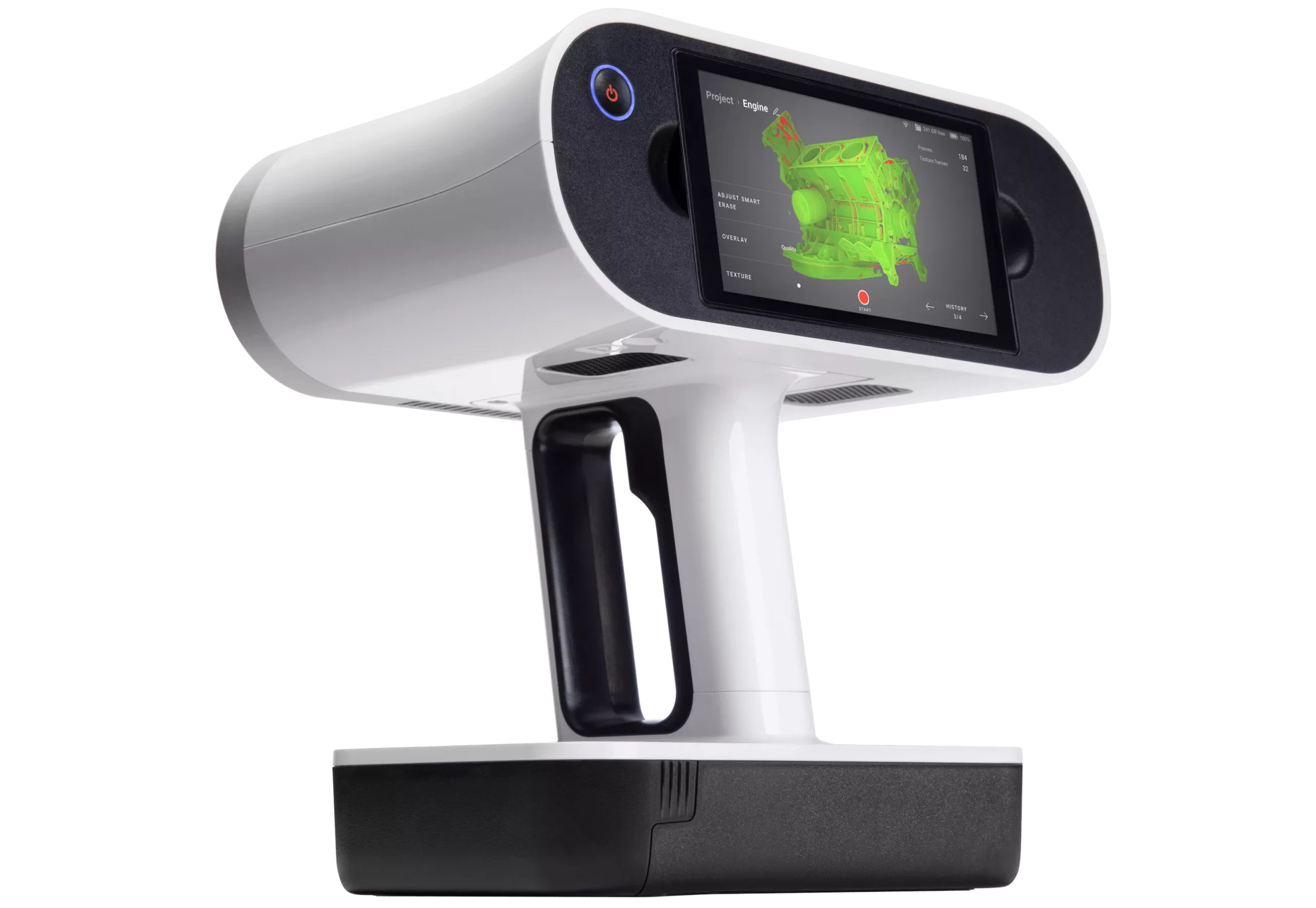
Scanology NimbleTrack Gen2 and similar systems combine wireless optical tracking with high-speed scanning for completely cable-free operation.
Cross-platform innovations include:
Hybrid tactile + non-contact measurement on a single device
Ruggedization (IP54+, advanced thermal/vibration compensation)
Smart software with AI-automated feature recognition, AR overlays, CAD comparison, and direct MES/digital-twin integration
Battery life and hot-swappable power for all-day operation
Real-World Impact and the Road Ahead
These innovations deliver measurable ROI: in-situ inspection of large aerospace structures eliminates costly disassembly and transport; field service on heavy equipment or wind turbines happens without production halts; reverse engineering of legacy parts accelerates dramatically. Accuracy now routinely reaches microns, while measurement times drop 30–70% versus traditional methods.
Looking to 2027 and beyond, expect deeper cobot integration for automated portable cells, multi-line blue-laser scanners for even denser data capture, and AI predictive analytics that flag process drifts before defects occur. As portable systems achieve parity with fixed CMMs in precision—while vastly outperforming them in flexibility—they are becoming the default choice for agile, sustainable manufacturing.
Portable CMMs are no longer “alternative” metrology tools—they are the intelligent, adaptive future of precision quality control. For manufacturers facing complex geometries, tight timelines, and variable environments, these innovations provide the speed, reach, and intelligence required to stay competitive.