Introduction
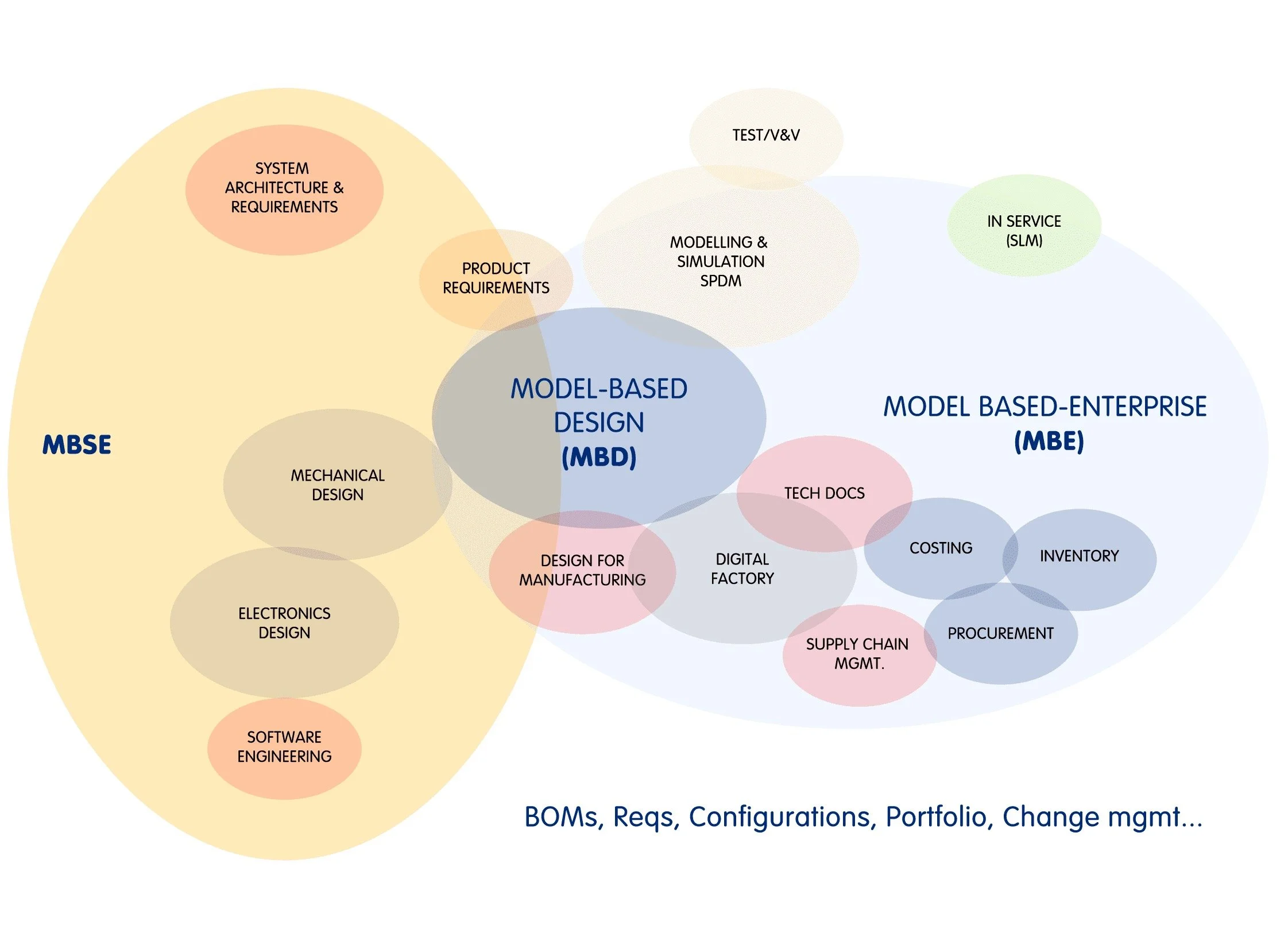
In modern manufacturing, Model-Based Enterprise (MBE) has emerged as a pivotal paradigm shift, replacing traditional paper-based processes with fully digital, model-centric approaches. This transformation is driven by the need for greater efficiency, accuracy, and collaboration across the product lifecycle. The technical presentation and paper titled “Advanced MBE Methods that Inform Bidirectional Communication Between Manufacturing and Quality Disciplines,” presented by Tom Groff of Kotem, explores how sophisticated MBE techniques facilitate seamless interactions between manufacturing and quality assurance teams. Featured at prominent industry events such as the 2025 Coordinate Metrology Society Conference (CMSC), the MBE & QIF Summit, and the Global Product Data Interoperability Summit (GPDIS), this work underscores the importance of machine-readable data in optimizing cross-disciplinary workflows. [1, 2, 3, 5, 6, 7, 8]
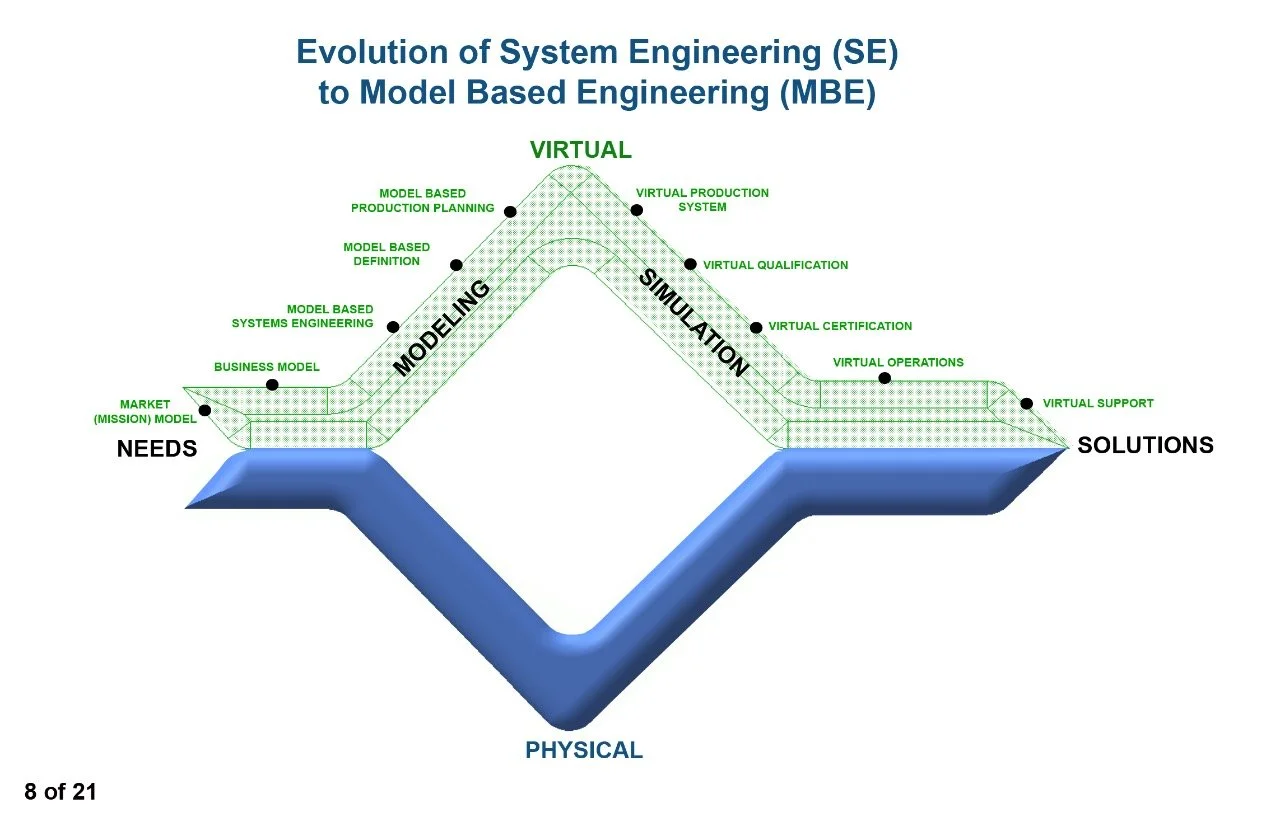
At its core, MBE leverages 3D digital models as the authoritative source of product information, eliminating ambiguities associated with 2D drawings. This approach not only streamlines design and production but also enhances quality control by ensuring data consistency. Central to this ecosystem is the digital thread—a comprehensive, integrated data flow that connects all phases of the product lifecycle. By focusing on bidirectional communication, these advanced methods enable manufacturing to incorporate real-time quality insights and vice versa, leading to improved decision-making, reduced errors, and enhanced operational performance. [1, 3, 4, 6]
Understanding the Digital Thread
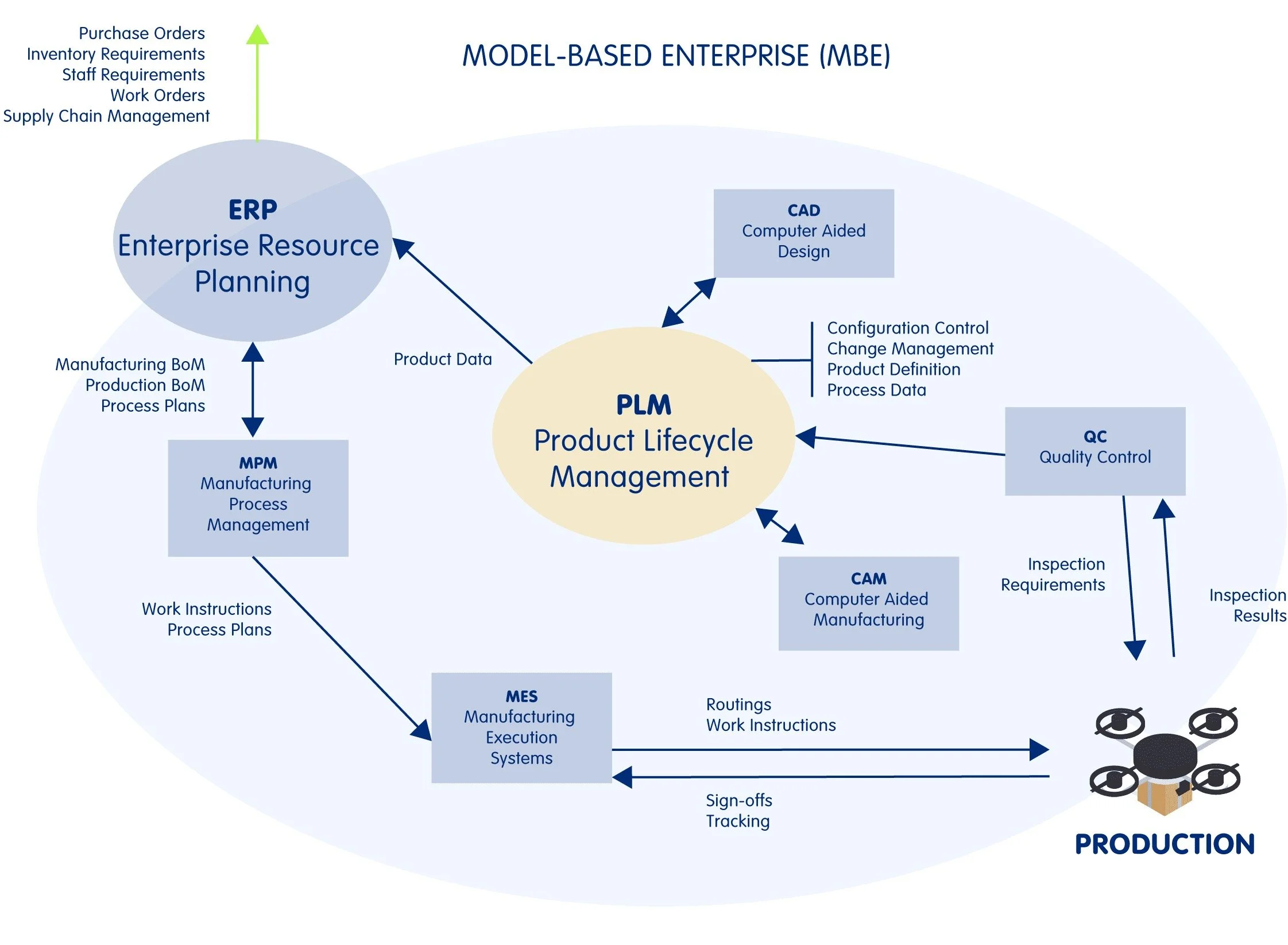
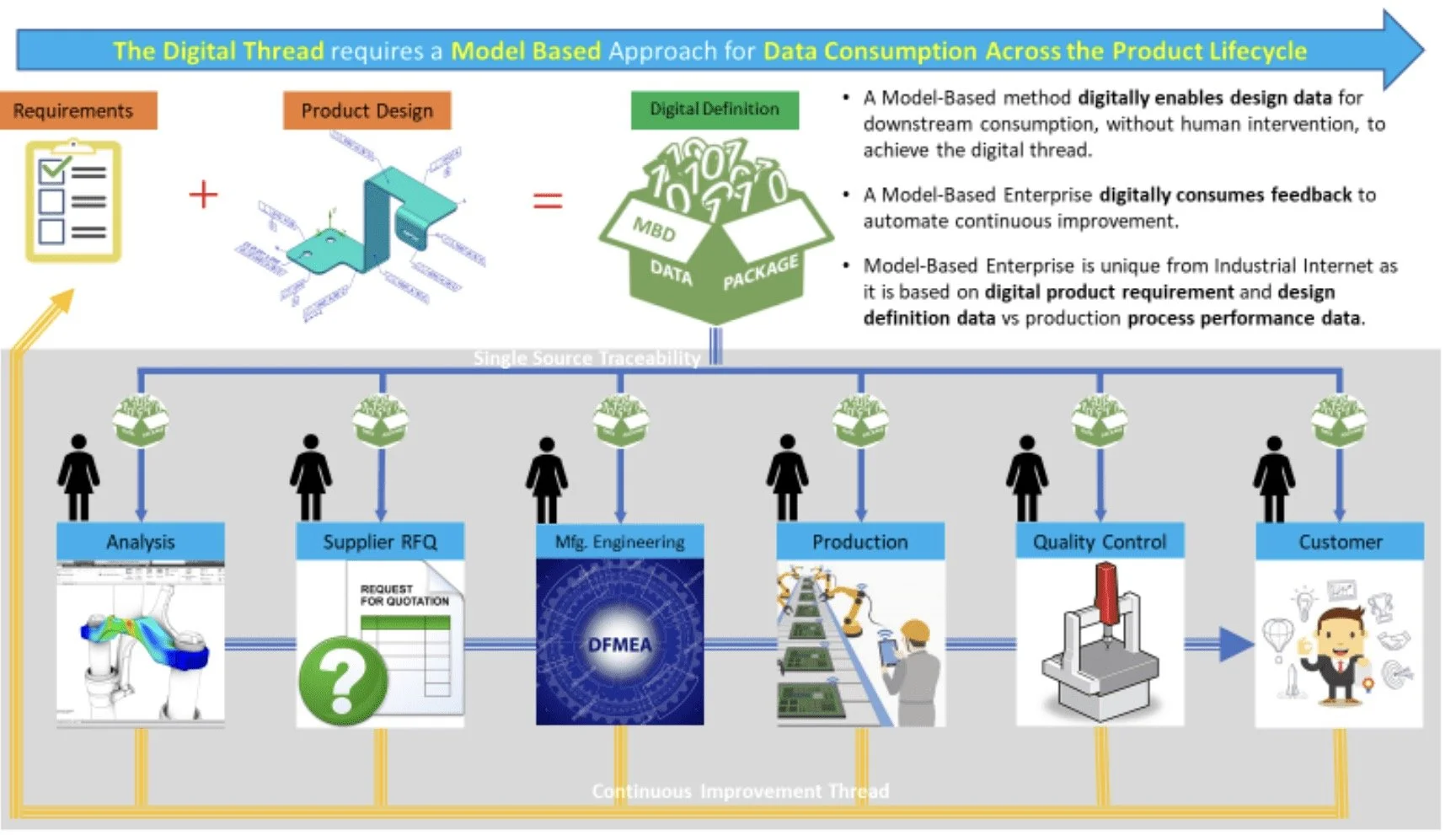
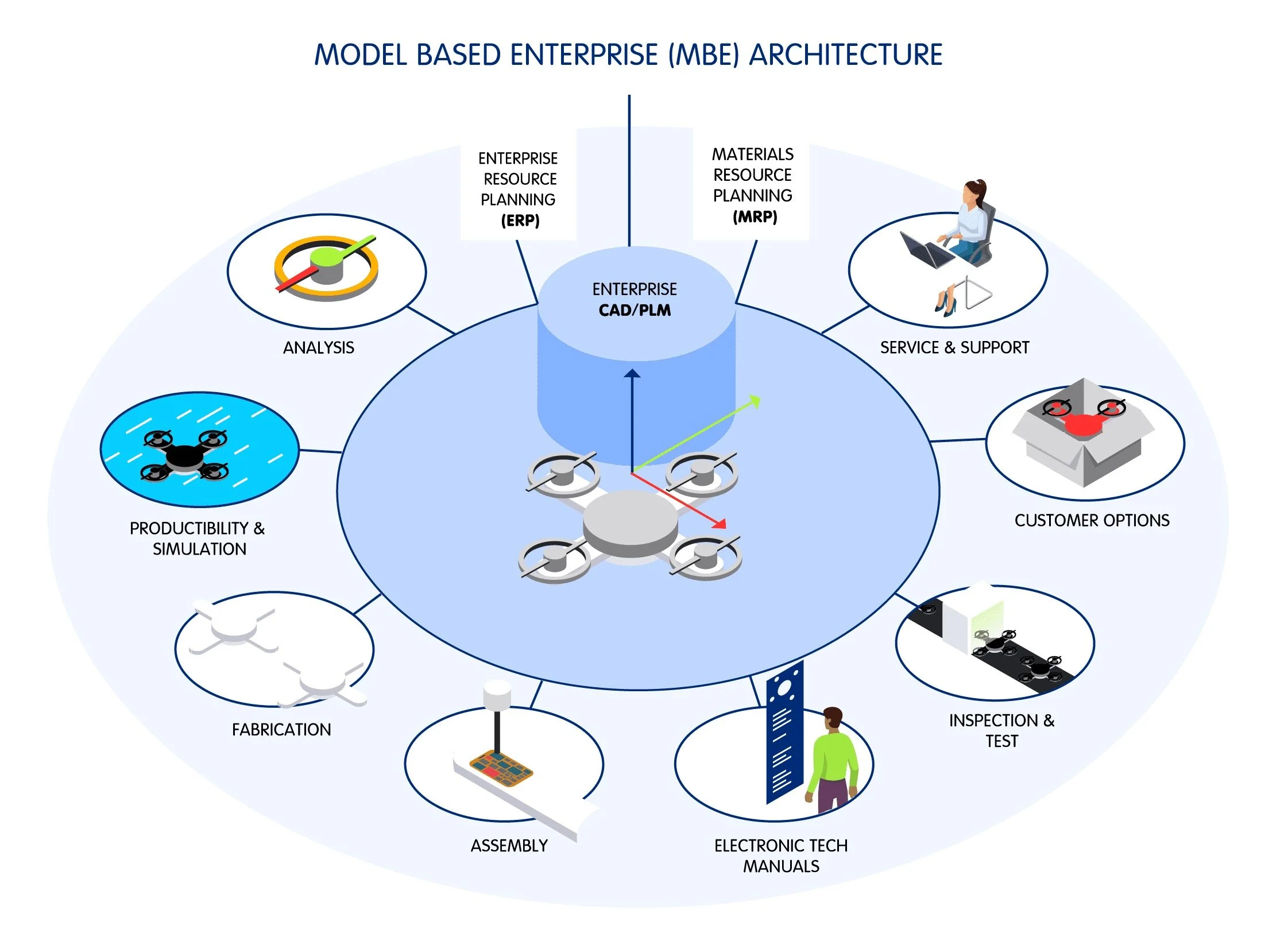
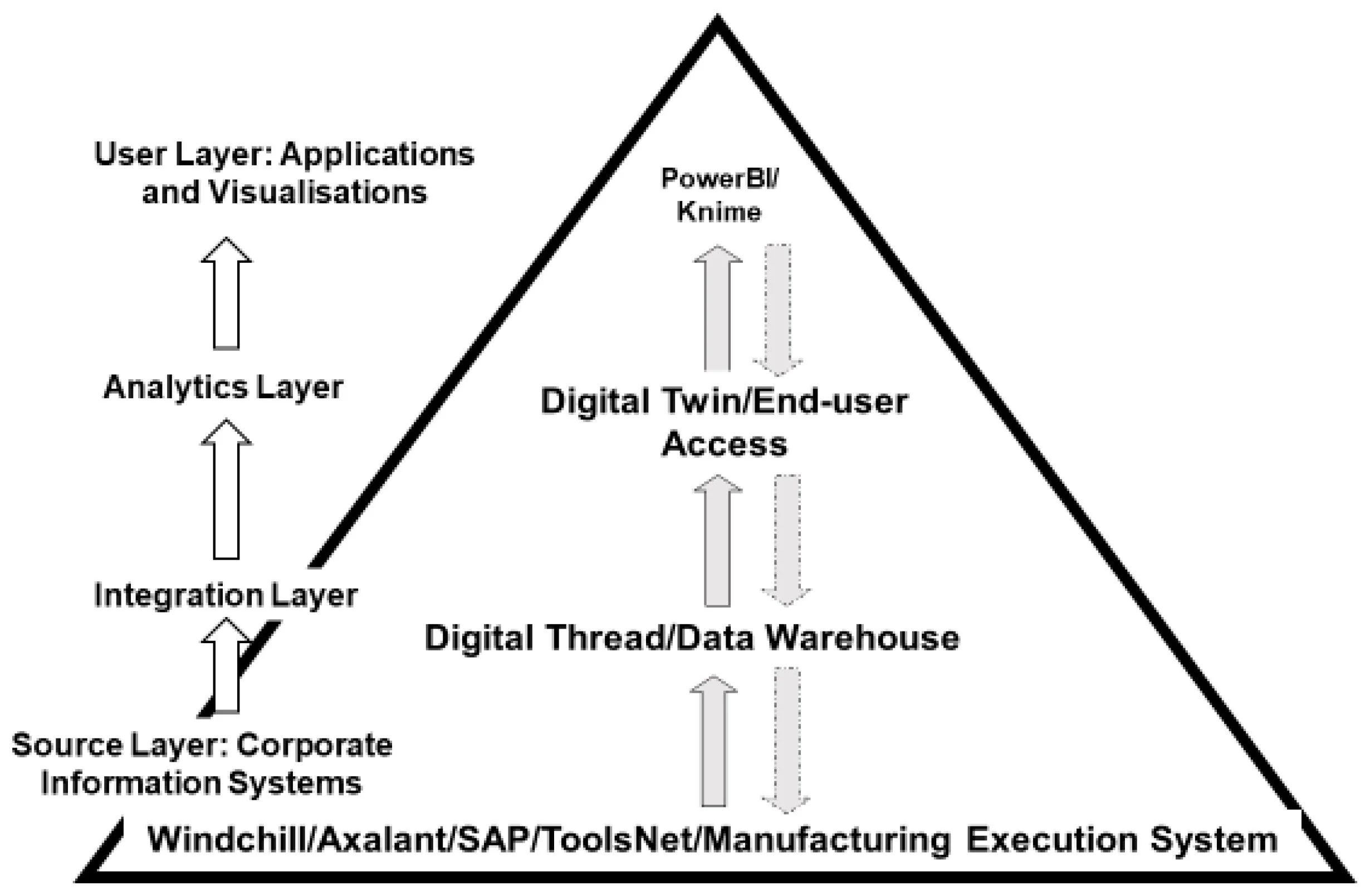
The digital thread serves as the foundational communication backbone in a Model-Based Enterprise, acting as a seamless, bidirectional conduit for data across the entire product lifecycle. Unlike traditional siloed systems where data is fragmented and often recreated at each stage, the digital thread ensures that information is created once and reused by all downstream consumers, promoting consistency and traceability. [11, 12, 13, 15, 17] It integrates data from design, engineering, manufacturing, quality assurance, supply chain, and even post-production activities like maintenance, repair, and overhaul (MRO). [14, 18, 19]
In detail, the digital thread encompasses several key elements:
Data Integration and Flow: It begins with Model-Based Definition (MBD), where product geometry, tolerances, and specifications are embedded directly into 3D models. This data flows downstream to manufacturing processes via Computer-Aided Manufacturing (CAM) systems, and further to quality inspection tools. Feedback loops allow upstream adjustments based on real-world outcomes, such as detected defects or process variations. [12, 14, 15]
Machine-Readable Formats: Utilizing standards like Quality Information Framework (QIF) and STEP (Standard for the Exchange of Product model data), the digital thread ensures data is machine-readable, enabling automated processes and reducing human interpretation errors. For instance, inspection results can be automatically fed back into manufacturing simulations for predictive adjustments. [1, 6]
Lifecycle Coverage: From conceptual design to end-of-life disposal, the digital thread maintains a “single source of truth.” In manufacturing, it captures operational parameters; in quality, it records metrology data. This holistic view supports advanced analytics, such as AI-driven predictive maintenance, and facilitates compliance with regulatory requirements. [13, 15, 17, 18]
Challenges and Maturity: Implementing a robust digital thread requires overcoming interoperability issues between legacy systems and new digital tools. Maturity models, as explored in industry studies, assess capabilities in areas like data governance, security, and real-time collaboration. Companies like Lockheed Martin and Boeing have developed playbooks and strategies to propagate upstream design decisions through the thread, ensuring enterprise-wide innovation. [11, 16]
Visually, the digital thread can be represented as a connected chain of data nodes, illustrating the flow from design to disposal.
Digital Twin Applications in MBE
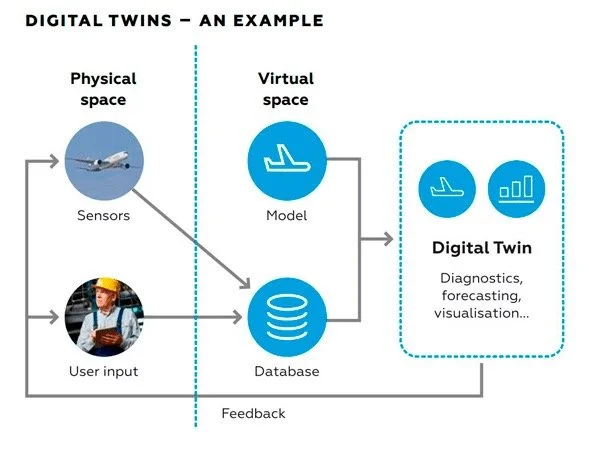
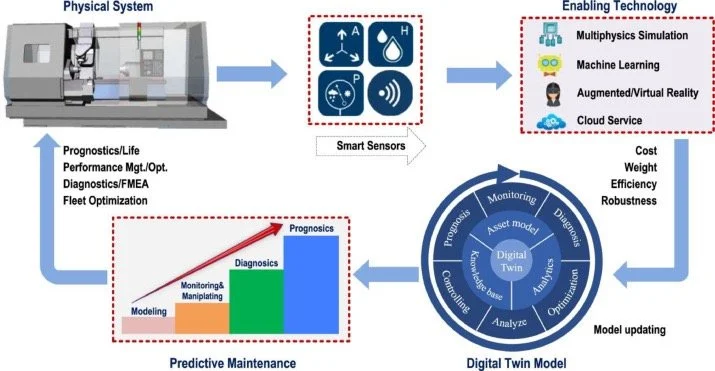
Digital twins represent a critical extension of MBE, serving as dynamic virtual replicas of physical assets, processes, or systems that mirror their real-world counterparts in real-time. By integrating sensor data, simulation models, and analytics, digital twins enable predictive insights, optimization, and virtual testing within the manufacturing and quality domains. In the context of MBE, digital twins leverage the digital thread to create a unified, data-driven environment where virtual models inform physical operations and vice versa. [20, 21, 22, 23, 24, 25, 29]
Key applications include:
Product Design and Development: Digital twins allow for virtual prototyping, where designs can be simulated under various conditions to identify potential flaws early, reducing physical iterations and accelerating time-to-market. For instance, in aerospace or automotive industries, twins model component performance to optimize for durability and efficiency. [23, 24, 27]
Production and Manufacturing Optimization: In manufacturing, digital twins monitor equipment and processes in real-time, enabling predictive maintenance to prevent downtime. They simulate production lines to test process changes, optimize workflows, and minimize waste, leading to higher throughput and cost savings. [20, 22, 23, 26, 28]
Quality Assurance and Inspection: For quality disciplines, digital twins facilitate virtual inspections and defect prediction by comparing real-time data against ideal models. This bidirectional integration with manufacturing data allows for proactive quality adjustments, such as refining tolerances based on simulated outcomes, ensuring compliance and reducing rework. [20, 24, 28]
Supply Chain and Service Management: Extending beyond the factory floor, digital twins model entire supply chains for better forecasting and risk management. In service phases, they support remote monitoring and maintenance, enhancing product lifecycle management. [21, 25, 26, 27]
These applications are classified across product, production, and service domains, providing a framework for implementation in multi-national corporations. By fostering a “single source of truth,” digital twins in MBE drive innovation, with examples from companies like Siemens and Deloitte highlighting their role in smart factories and AI integration. [21, 25, 26]
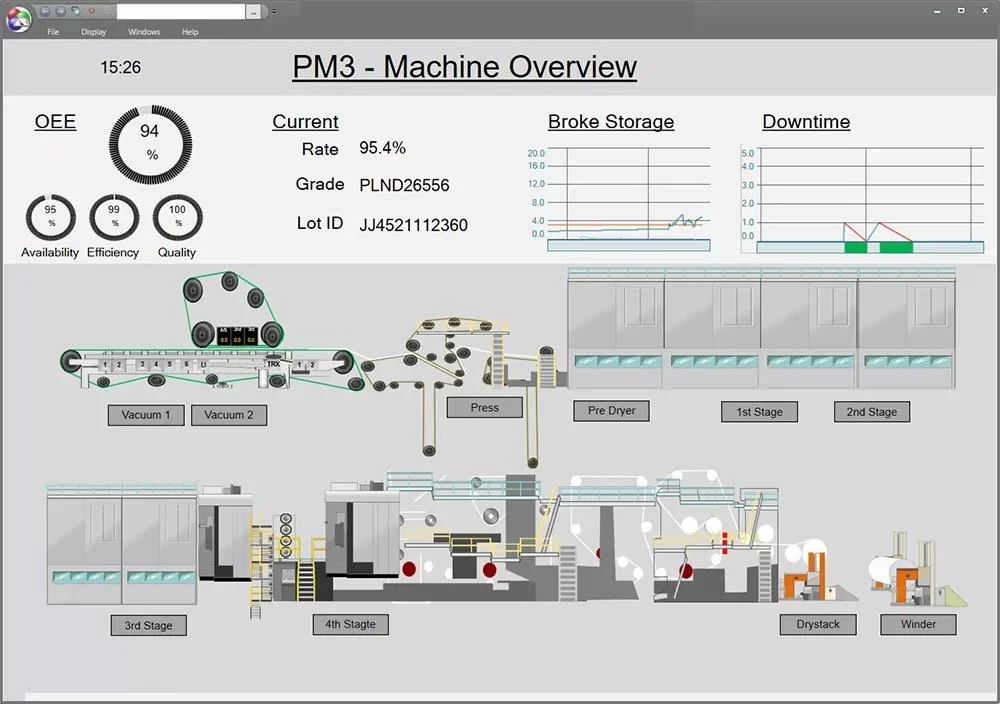
Illustrative diagrams of digital twin architectures in manufacturing showcase their interconnected nature.
Key MBE Methods and Concepts
Advanced MBE methods focus on identifying and incorporating specific machine-readable Model-Based Definition (MBD) data to optimize interactions. Manufacturing operations integrate details from CAM systems, such as tool paths and machining parameters, while quality assurance embeds inspection criteria and results directly into the MBE framework. This allows for comprehensive inputs and automated feedback to production equipment and software. [1, 3, 4, 9]
Core concepts include the use of digital twins—virtual replicas of physical assets—for simulation and validation, and the extension of the digital thread with model-based characteristics (MBC) to communicate complete technical descriptions of parts. [12, 24] These methods drive all aspects of the product lifecycle, from design to inspection, ensuring data reuse and minimizing rework. [11, 13]
Bidirectional Communication in Practice
Bidirectional communication within MBE transforms traditional one-way data flows into dynamic, interactive exchanges. Manufacturing benefits from quality data, such as inspection results and tolerance analyses, to adjust processes in real-time—reducing defects and optimizing machine settings. Conversely, quality teams leverage manufacturing data, like process parameters and material properties, to refine inspection protocols and employ predictive quality analytics. [1, 3, 4, 6]
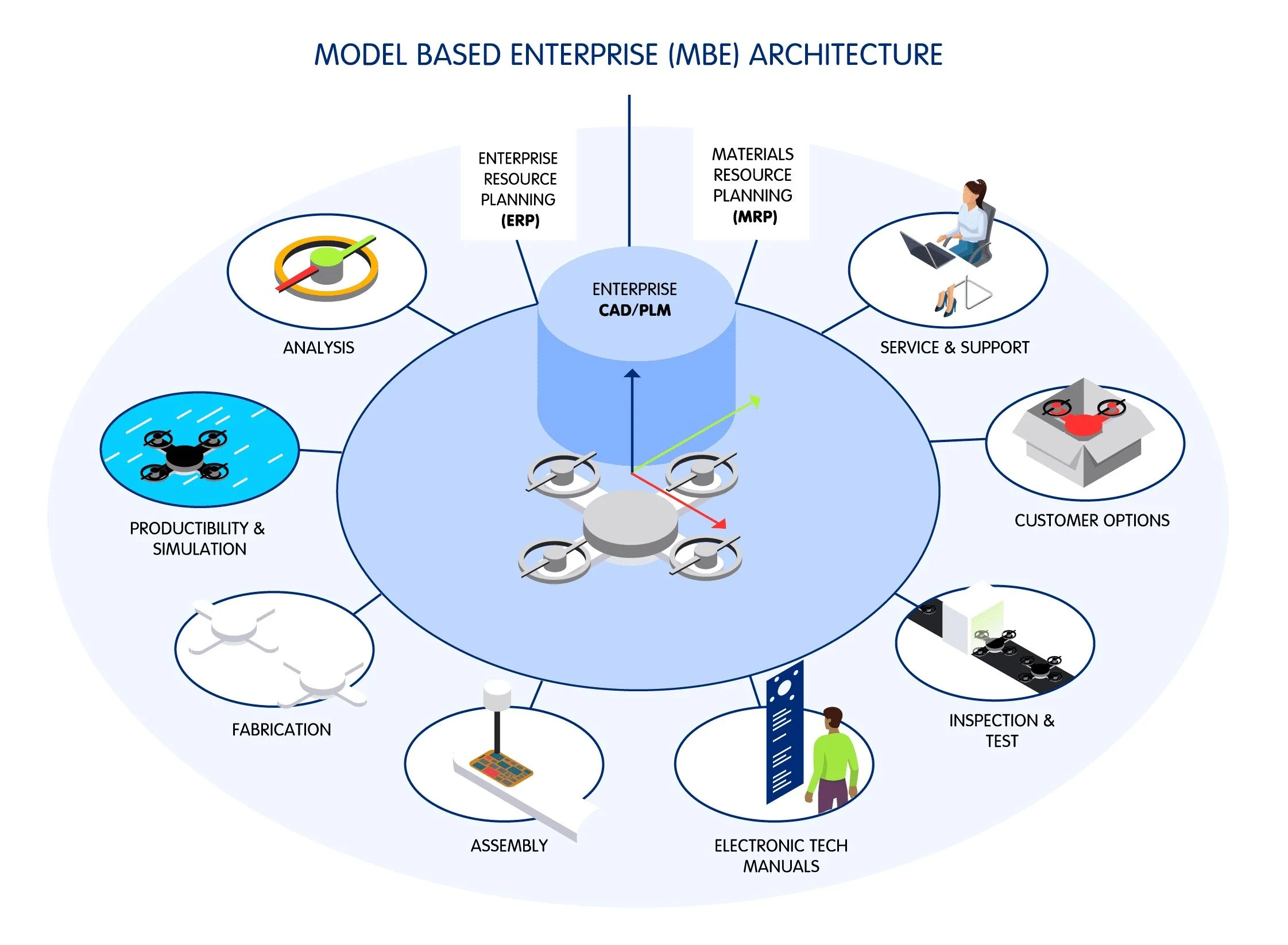
Practical examples include automated feedback loops where metrology data informs CAM reprogramming, or quality alerts trigger manufacturing halts for immediate corrections. This synergy is visualized in diagrams showing interconnected manufacturing and quality nodes.
Benefits and Outcomes
The adoption of these advanced MBE methods yields significant benefits: higher throughput through streamlined workflows, superior quality via data-driven adjustments, and cost optimization by minimizing waste and rework. Organizations achieve faster time-to-market, enhanced compliance, and greater agility in responding to market changes. [1, 9, 13, 20, 22] Long-term outcomes include improved supplier integration and enterprise-wide innovation. [11, 17]
Tools and Processes
Tools such as QIF-enabled software, digital twin platforms, and integrated PLM (Product Lifecycle Management) systems are essential. Processes involve standardizing data formats, implementing cybersecurity measures, and training teams on MBE practices to maximize the digital thread’s potential. [9,15, 25]
References and Supporting Documentation
Advanced MBE methods that inform Bidirectional Communication … - https://gpdisonline.com/sessions/advanced-mbe-methods-that-inform-bidirectional-communication-between-manufacturing-and-quality-disciplines/
Advanced MBE methods that inform Bidirectional Communication … - https://www.cmsc.org/advanced-mbe-methods-that-inform-bidirectional-communication-between-manufacturing-and-quality-disciplines
Advanced MBE Methods that Inform Bidirectional Communication … - https://www.mbeforum.se/presentation/advanced-mbe-methods-that-inform-bidirectional-communication-betweenmanufacturing-and-quality-disciplines/
Speaking on how manufacturing and quality disciplines consume … - https://www.facebook.com/qifstandard/posts/speaking-on-how-manufacturing-and-quality-disciplines-consume-and-publish-data-t/694230433136821/
2025 MBE & QIF Summit Agenda - DMSC - https://qifstandards.org/2025-mbe-qif-summit-agenda/
Register today for the 2025 MBE & QIF Summit MxD! Don’t miss this … - https://www.linkedin.com/posts/digital-metrology-standards-consortium_register-today-for-the-2025-mbe-qif-summit-activity-7311065225619808256-48kX
Tom Groff « GPDIS – Global Product Data Interoperability Summit - https://gpdisonline.com/speakers/tom-groff/
CMSC 2025: Schedule - https://cmsc2025.sched.com/
Processes, methods, and tools in model-based engineering—A … - https://www.sciencedirect.com/science/article/pii/S0164121223003382
[PDF] Nordic Model Based Enterprise Forum - Nordic MBE Forum - https://www.mbeforum.se/wp-content/uploads/2025/09/Agenda-250908-Final.pdf
Let’s Talk About the Model-Based Enterprise, Digital Threads, and … - https://aras.com/en/blog/let-s-talk-about-the-model-based-enterprise-digital-threads-and-relationships
Next generation Digital Thread: The Model-Based Enterprise Part 2 - https://www.ats-global.com/resources/blogs/next-generation-digital-thread-the-model-based-enterprise-part-2/
The Power of the Digital Thread in Manufacturing - https://www.eacpds.com/resource-center/power-digital-thread-manufacturing/
Testing the Digital Thread in Support of Model-Based Manufacturing … - https://pmc.ncbi.nlm.nih.gov/articles/PMC4904719/
Digital thread: redefining digital transformation | Siemens Software - https://www.sw.siemens.com/en-US/digital-thread/
Digital thread: What is it? | AMRC - https://www.amrc.co.uk/news/digital-thread-what-is-it
Digital Thread: Essential Enabler of Digital Transformation - PTC - https://www.ptc.com/en/industry-insights/digital-thread
What Is a Digital Thread in Manufacturing? Why It Matters for … - https://www.openbom.com/blog/what-is-a-digital-thread-in-manufacturing-why-it-matters-for-modern-manufacturing-processesand-how-openbom-connects-the-dots
Testing the Digital Thread in Support of Model-Based Manufacturing … - https://www.nist.gov/publications/testing-digital-thread-support-model-based-manufacturing-and-inspection
Digital Twins in Manufacturing Explained - dataPARC - https://www.dataparc.com/blog/digital-twin-manufacturing/
Digital twins in manufacturing: A unified conceptual framework - https://www.sciencedirect.com/science/article/pii/S1367578825000458
Digital Twin Manufacturing: Applications, Benefits, and Insights | Simio - https://www.simio.com/digital-twin-manufacturing-applications-benefits-and-industry-insights/
Digital twins: The next frontier of factory optimization - McKinsey - https://www.mckinsey.com/capabilities/operations/our-insights/digital-twins-the-next-frontier-of-factory-optimization
Model-Based Enterprise - Future of the Digital Twin - Metrology News - https://metrology.news/model-based-enterprise-future-of-the-digital-twin/
The Model-Based Enterprise and AI Revolution| Deloitte US - https://www.deloitte.com/us/en/alliances/siemens-alliance-model-based-enterprise.html
Digital twins in manufacturing: real-world examples and roadmap - https://xenoss.io/blog/digital-twins-manufacturing-implementation
20 Digital Twin Applications/ Use Cases by Industry in 2026 - https://research.aimultiple.com/digital-twin-applications/
Digital Twins: Elevating Manufacturing Standards and Reducing Errors - https://www.qualitymag.com/articles/98784-digital-twins-elevating-manufacturing-standards-and-reducing-errors
What is Digital Twin in Manufacturing? 10 Inspiring Industry Examples - https://litslink.com/blog/what-is-digital-twin-in-manufacturing-inspiring-industry-examples

