With today’s demanding manufacturing environments, where precision metrology, non-destructive testing, and high-volume quality control are essential, industrial computed tomography (CT) is emerging as a transformative technology. Lumafield is expanding its industrial X-ray CT platform with three innovative new systems—Neptune Performance, Saturn, and Mars—delivering high-speed metrology, comprehensive inspection of large and dense parts, and seamless inline production capabilities. These advancements, highlighted on www.lumafield.com, integrate seamlessly with the company’s Voyager AI-powered cloud analysis software to provide manufacturers with faster, more accurate, and fully actionable insights across the product lifecycle.
Neptune Performance: High-Speed Metrology-Grade CT Scanning
The new Neptune Performance configuration elevates the proven Neptune platform to true metrology-grade performance. It achieves scans up to 15 times faster while delivering four times the data quality, enabling reliable dimensional measurements of both internal and external features on complex geometries and challenging materials like transparent plastics or multi-material assemblies.
Engineers can now perform direct 3D measurements without destructive sectioning, fixturing, or extensive programming. This supports critical applications such as first-article inspection, root-cause analysis, GD&T verification, and CAD comparisons—bridging the gap between traditional coordinate measuring machines (CMMs) and volumetric inspection. Automated, repeatable studies in Voyager software further streamline workflows for quality labs and R&D teams.
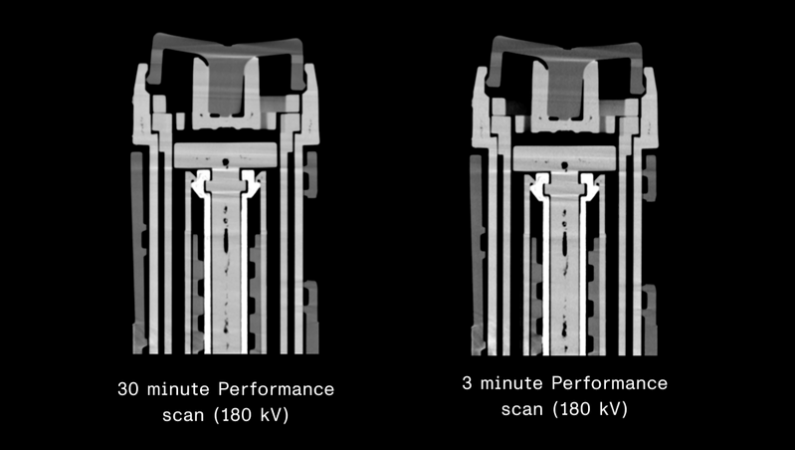
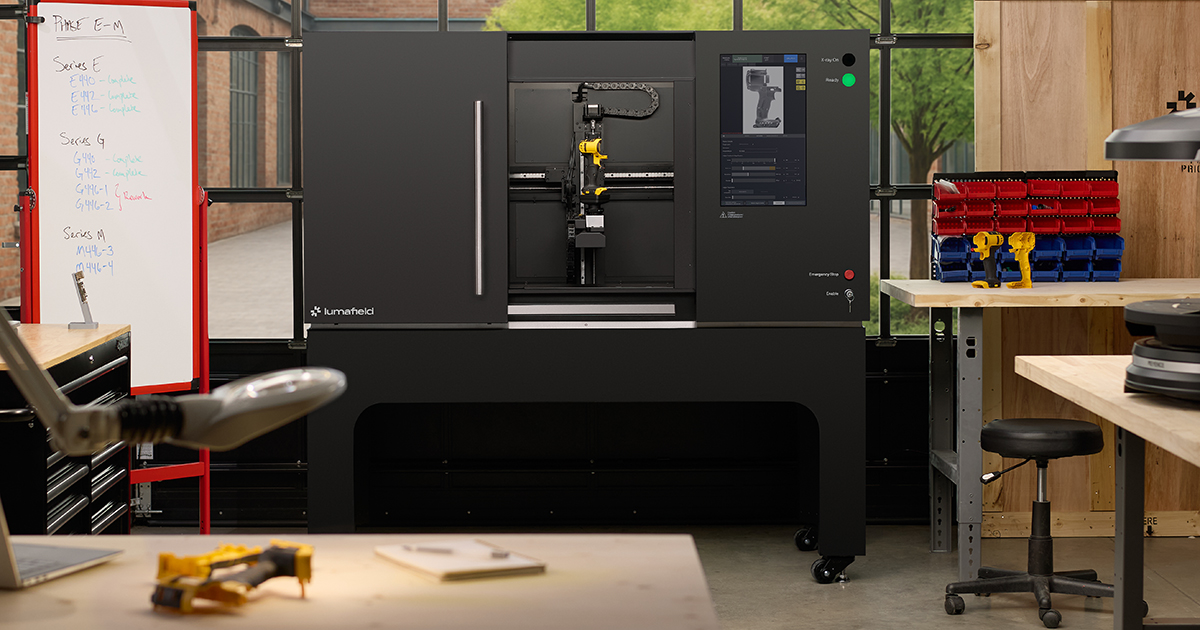
Side-by-side comparison of a 30-minute traditional scan versus a 3-minute high-speed scan on Neptune Performance demonstrates near-identical image quality (left). The compact Neptune scanner fits easily in labs or offices (right). Images courtesy of Lumafield product visuals at www.lumafield.com.
Saturn: Large-Format, High-Energy CT for Oversized and Dense Components
For manufacturers working with large or high-density parts, Saturn introduces an extended-capacity, high-energy industrial CT scanner with one of the largest scannable volumes available in a system that fits through a standard double door. This eliminates the need for facility modifications while allowing full, single-setup inspection of complete assemblies.
Saturn excels at revealing hidden internal features in aerospace castings, automotive structural components, additive-manufactured parts, EV battery packs, and other large-scale products. It provides comprehensive data on porosity, wall thickness, weld integrity, cracks, and assembly alignment—information that is often impossible to obtain with smaller CT systems or traditional methods.

Advanced porosity analysis on a complex casting, visualized with color-coded pore size mapping—ideal for large-part evaluation with Saturn. Image from Lumafield platform visuals at www.lumafield.com.
Mars: Inline X-Ray Inspection for High-Volume Production
Bringing CT-level insights directly to the factory floor, Mars is an inline X-ray inspection solution featuring multi-linear detector technology. It generates rich 2.5D scan data in a single high-speed pass as parts move along the production line, offering superior defect detection compared to conventional 2D radiography without sacrificing throughput.
Mars supports 100% automated screening with real-time go/no-go decisions, configurable sorting or rejection, and integration into existing automation systems. Ideal for electronics, medical devices, consumer packaging, and automotive components, it minimizes field failures and production downtime while feeding rich data back into Voyager for trend analysis and continuous process improvement.
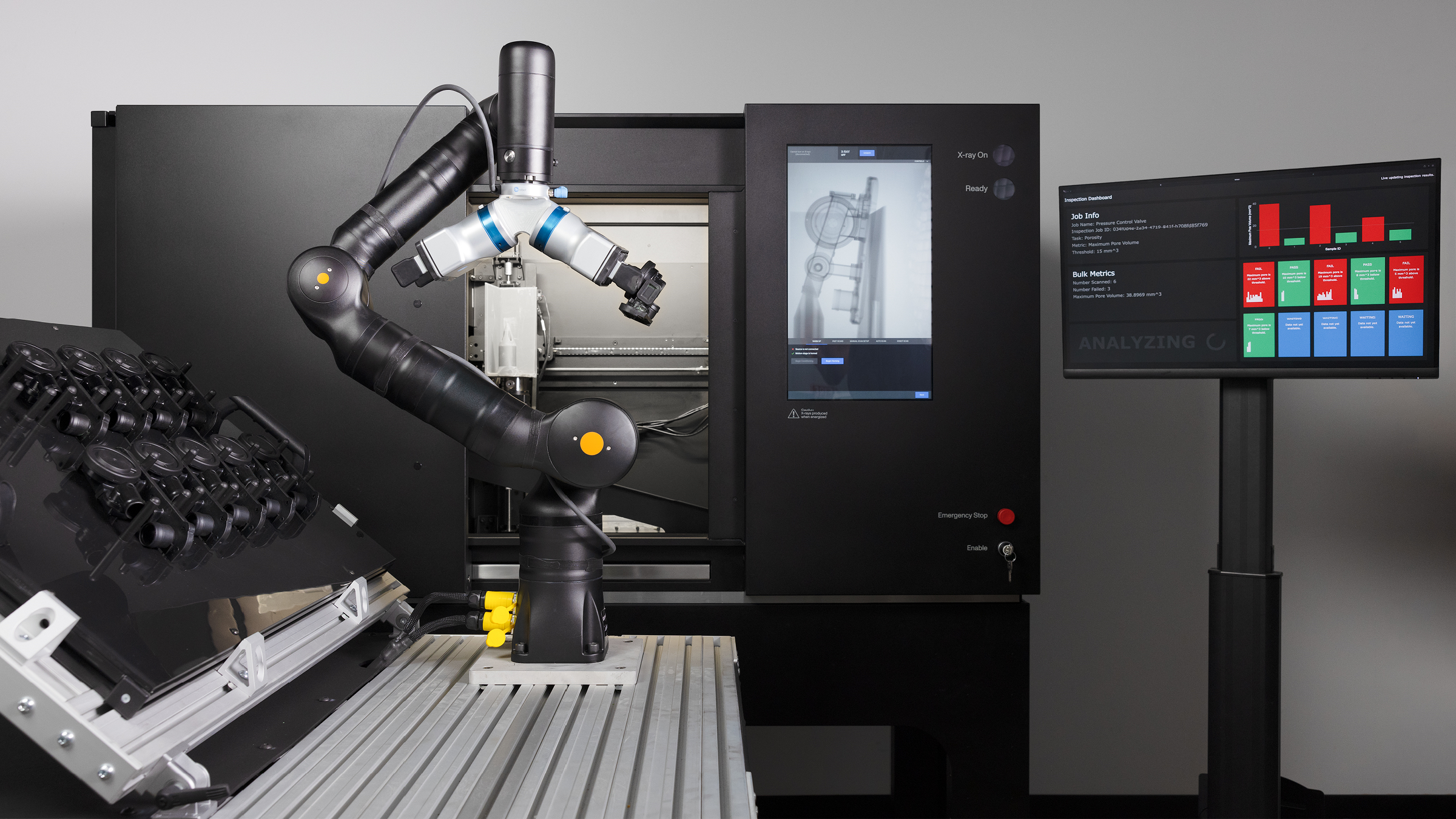
Production-ready inline inspection setup with automated handling—representative of Mars capabilities for high-volume quality control. Image from Lumafield platform visuals at www.lumafield.com.
Unified Analysis with Voyager AI-Powered Software
All three new systems—alongside existing Neptune and Triton solutions—connect to Lumafield’s browser-based Voyager platform. Powered by advanced AI (including the Atlas co-pilot), Voyager enables instant visualization, automated defect detection, dimensional studies, porosity analysis, wall-thickness mapping, and collaborative data sharing across global teams. Manufacturers gain centralized quality dashboards, statistical process control, and actionable insights without specialized on-site expertise.
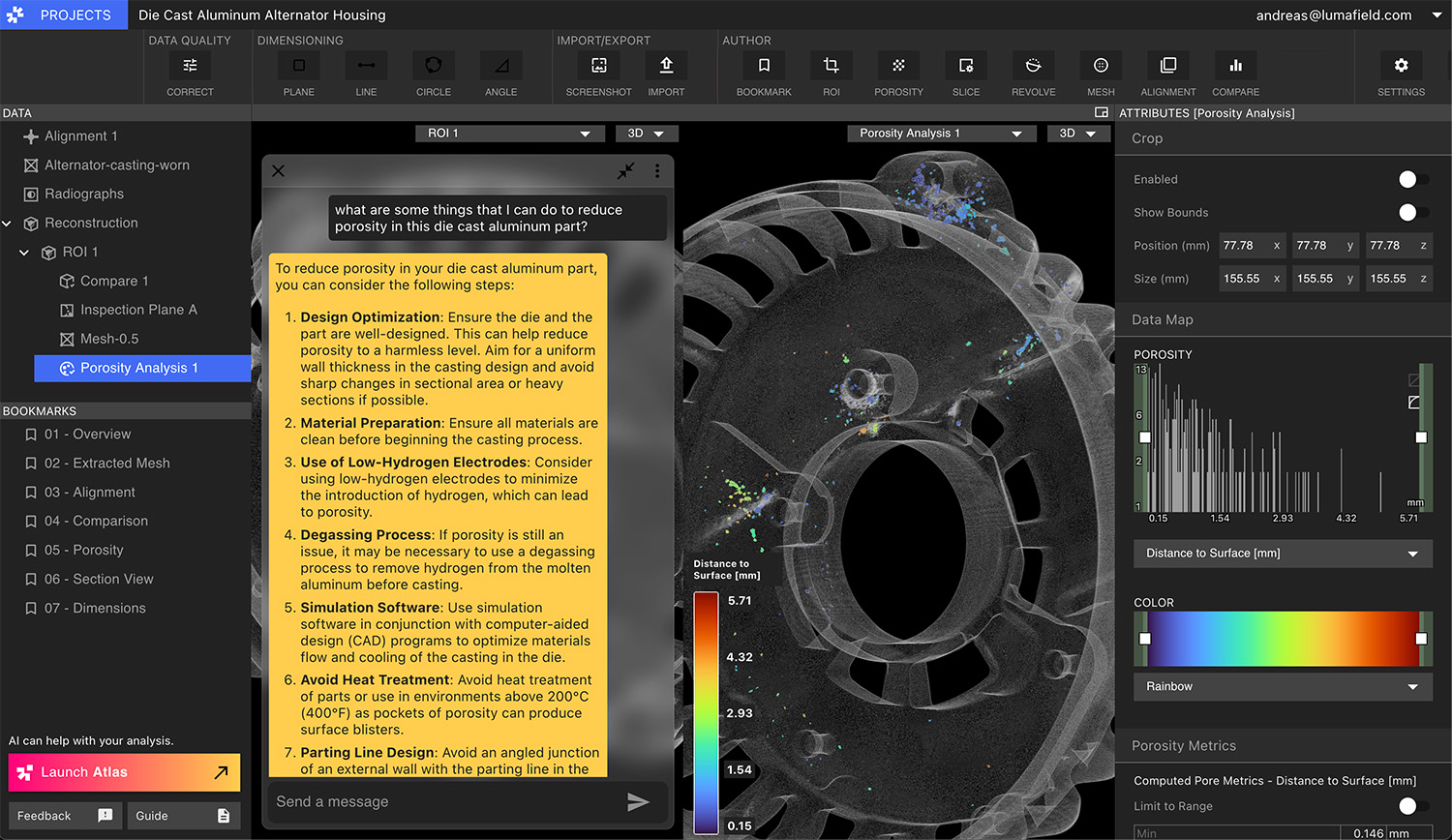
Voyager AI interface showing real-time porosity analysis and Atlas generative AI assistance—unifying data from Neptune Performance, Saturn, Mars, and the full Lumafield platform. Image from www.lumafield.com.
Empowering the Future of Metrology and Manufacturing
By addressing longstanding limitations in speed, part size, and production integration, Lumafield’s expanded CT platform makes high-resolution, non-destructive inspection practical and scalable for CMM professionals, quality engineers, and production teams alike. These solutions reduce inspection times dramatically, catch defects earlier, support sustainability through optimized material use, and accelerate innovation from prototype to full-scale production.
For complete specifications, configuration options, and to explore how Neptune Performance, Saturn, and Mars can transform your inspection processes, visit www.lumafield.com.
As industrial CT continues to evolve from a lab tool into a core manufacturing asset, Lumafield’s latest advancements position forward-thinking companies to stay ahead in precision, efficiency, and quality.