By Sam Jagger
In the fast-evolving world of coordinate metrology, where precision is paramount and technology advances at breakneck speed, staying ahead isn’t just an advantage—it’s a necessity. Coordinate Measuring Machines (CMMs) and related metrology tools are becoming more sophisticated, integrating AI, automation, and data analytics. For professionals in this field, continuous education, mentorship, and innovative training approaches are essential to maintain accuracy, efficiency, and compliance in manufacturing environments. This article explores these elements, highlighting their importance, diverse methods, and the tangible return on investment (ROI) they deliver for staff development.
The Importance of Continuous Education in Metrology
Continuous education ensures metrology professionals remain proficient amid rapid technological shifts. From updates in ISO standards to the integration of portable CMMs and laser scanners, ongoing learning prevents skill obsolescence and fosters innovation. In manufacturing, where even micron-level errors can lead to costly recalls, educated staff directly contribute to quality assurance and operational excellence.
Beyond technical skills, continuous education builds adaptability. Professionals who engage in regular training are better equipped to handle complex inspections, interpret data from advanced software like PC-DMIS or Calypso, and collaborate across interdisciplinary teams. Studies show that organizations investing in employee learning see improved retention rates and higher job satisfaction, reducing turnover costs in a field where experienced CMM operators are in short supply.
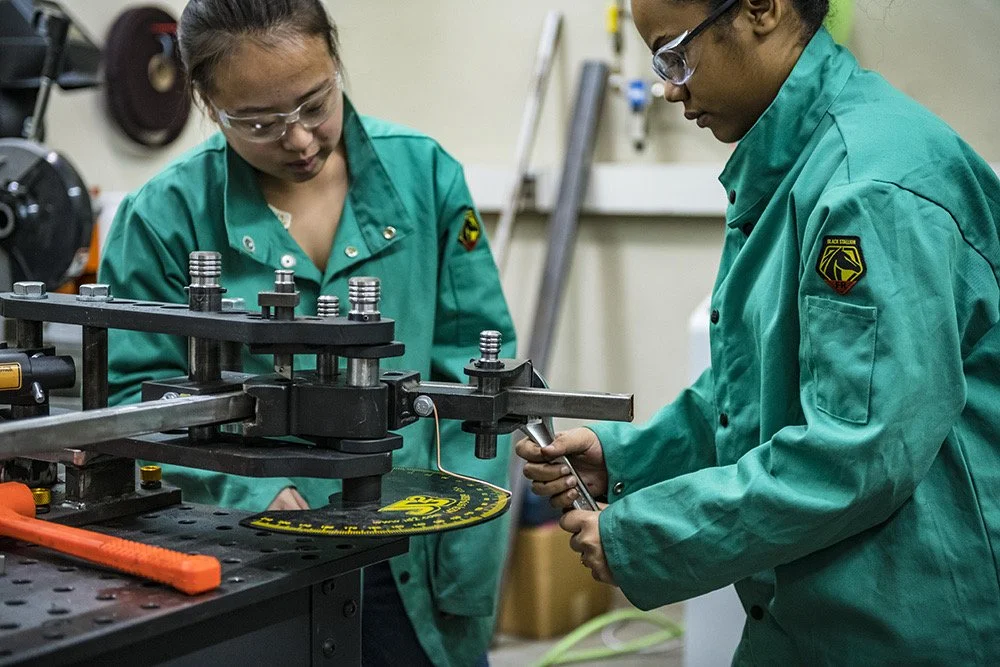
Image from MIT
The Power of Mentorship: Guiding the Next Generation
Mentorship bridges the gap between theoretical knowledge and real-world application in technical fields like engineering and metrology. A seasoned mentor can provide invaluable insights into troubleshooting CMM alignments, optimizing measurement routines, or navigating ethical dilemmas in quality reporting. This relationship accelerates career growth, with mentees often gaining confidence and visibility within their organizations.
In engineering workplaces, mentorship facilitates knowledge transfer, helping novices learn unspoken rules, manage challenging projects, and receive constructive feedback in a supportive environment. For metrology professionals, this might involve shadowing an expert during a high-stakes aerospace part inspection or discussing strategies for reducing measurement uncertainty. Effective mentorship programs also benefit organizations by fostering leadership pipelines and enhancing team dynamics, ultimately driving innovation in precision measurement techniques.

Image by ASME.org
Research underscores mentorship’s role in tech and engineering: it helps accelerate learning curves for juniors and builds resilience in mid-career professionals. In metrology, where hands-on experience is crucial, mentors can demystify complex concepts like geometric dimensioning and tolerancing (GD&T), ensuring the field’s future experts are well-prepared.
Diverse Approaches to Training: Tailoring for Maximum Impact
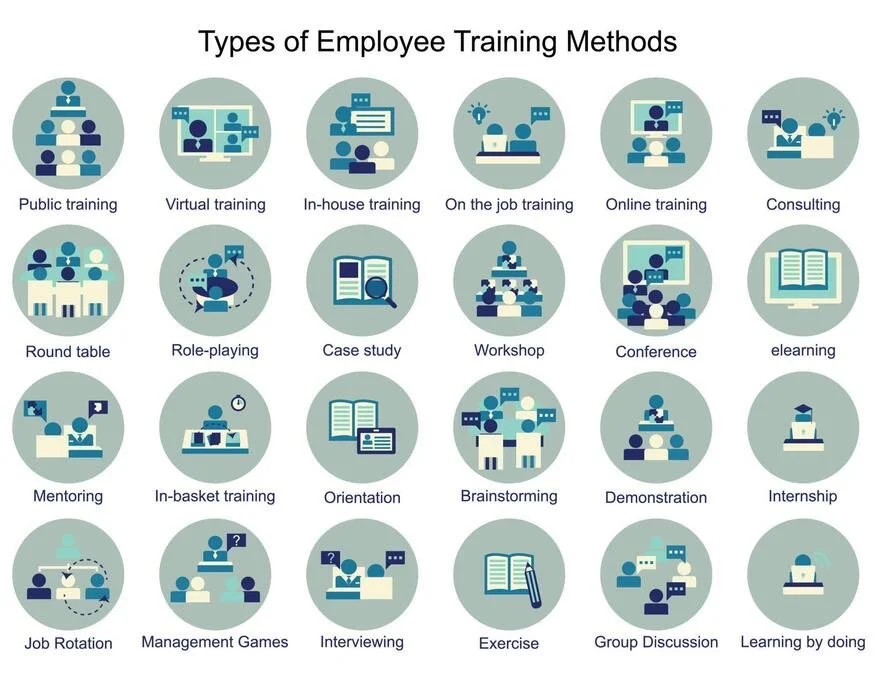
Training in metrology isn’t one-size-fits-all; different approaches cater to varying learning styles, schedules, and objectives. Traditional classroom-based training offers structured learning on fundamentals like CMM programming and calibration. However, blended methods—combining online modules with hands-on workshops—are gaining traction for their flexibility.
E-learning platforms allow professionals to study at their own pace, covering topics from basic probe selection to advanced 3D scanning. Virtual reality (VR) simulations provide immersive experiences, enabling safe practice of high-risk measurements without equipment downtime. On-the-job training, often paired with mentorship, reinforces skills in real manufacturing settings.
Other innovative approaches include micro-credentialing for specific competencies (e.g., laser tracker operation) and peer-led sessions for collaborative problem-solving. The key is alignment with organizational goals: for instance, a aerospace firm might prioritize GD&T workshops, while automotive manufacturers focus on statistical process control (SPC) integration.
Measuring ROI on Continuous Education and Staff Development
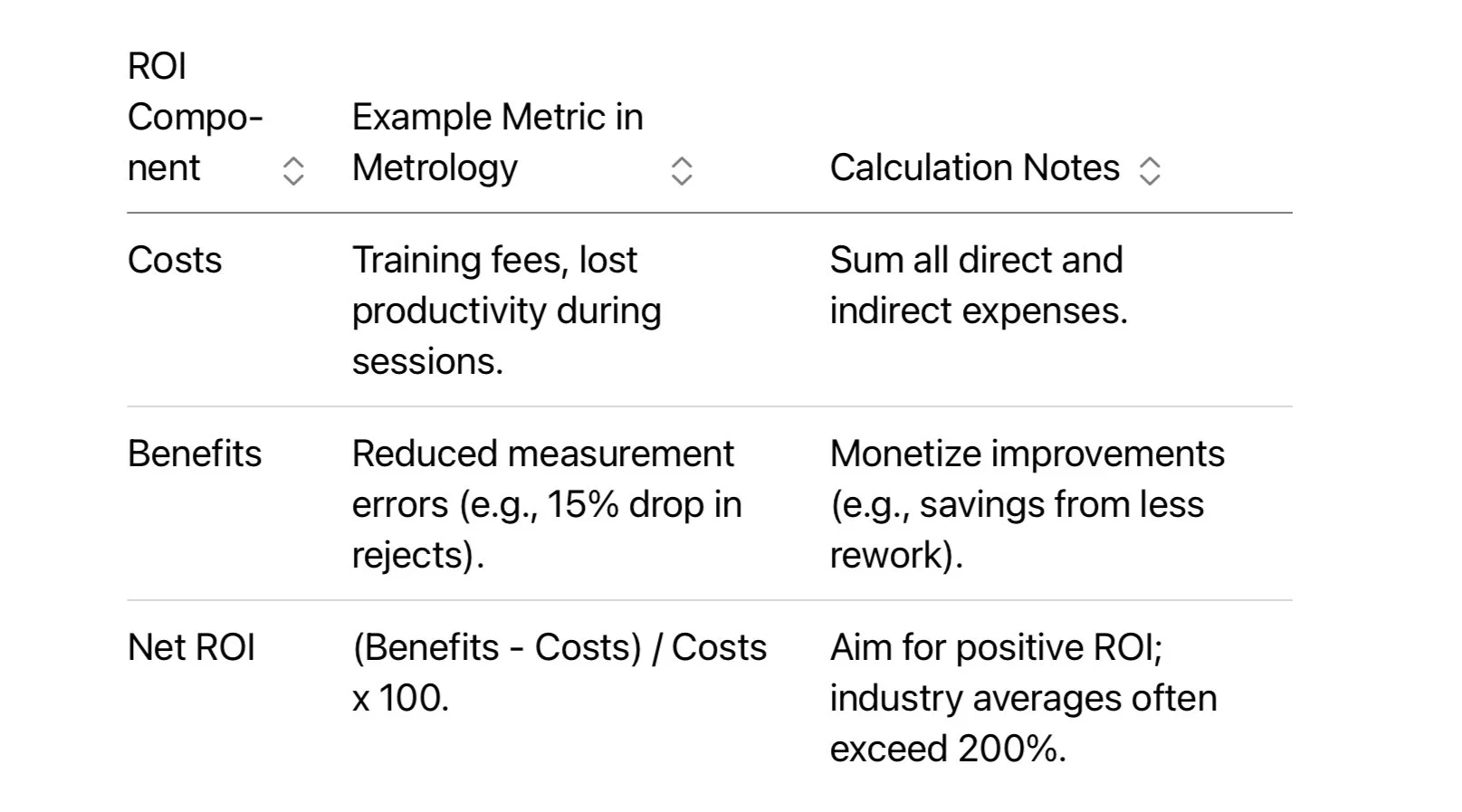
Investing in education and training yields measurable returns, but quantifying ROI is crucial for justifying budgets. The Phillips ROI Methodology provides a framework: evaluate reaction, learning, application, impact, and finally ROI by comparing benefits to costs. In manufacturing, effective training can boost productivity by 10% or more, as seen in programs that track pre- and post-training performance.
ROI calculation involves baseline metrics (e.g., error rates in measurements) versus post-training improvements (e.g., reduced scrap from better CMM accuracy). Benefits include increased efficiency, lower defects, and enhanced innovation, while costs encompass program fees, time off, and materials. A simple formula is: ROI = (Net Benefits / Costs) x 100.
In metrology, continuous learning aligns with continuous improvement, enabling clearer ROI through data-driven decisions. For staff development, ROI extends to intangible gains like higher morale and retention, but focus on trackable data: measure before and after to isolate training’s effect.
Conclusion: Building a Future-Proof Workforce
In the precision-driven realm of metrology, continuous education, mentorship, and varied training approaches are not luxuries—they’re investments in excellence. By prioritizing staff development, organizations not only enhance technical prowess but also realize substantial ROI through improved performance and innovation. As CMM technologies evolve, embracing these strategies will ensure metrology professionals lead the charge in manufacturing quality. Commit to learning today, and measure the precision of tomorrow.