This article is a rewritten summary of the original research paper by Hamidreza Samadi, Md Manjurul Ahsan, and Shivakumar Raman from the University of Oklahoma. The original work, titled “Hybrid Machine Learning Framework for Predicting Geometric Deviations from 3D Surface Metrology,” is available on arXiv at https://arxiv.org/html/2508.06845v1. All credit for the concepts, data, and findings goes to the authors.
Authors
Hamidreza Samadi (hamidreza.samadi@ou.edu)
Md Manjurul Ahsan (ahsan@ou.edu)
Shivakumar Raman (raman@ou.edu)
Industrial and Systems Engineering, University of Oklahoma, Norman, Oklahoma-73019
Abstract
As the authors explain, “This study addresses the difficulty of precisely forecasting geometric discrepancies in produced parts via sophisticated 3D surface analysis. Notwithstanding progress in contemporary production, preserving dimensional precision continues to be challenging, particularly for complicated geometries.” They introduce a method using the KEYENCE 3D scanner to collect high-resolution data from 237 parts across batches. This involves multi-angle scanning, data alignment in GOM Correlate software, and a hybrid ML model combining CNNs for feature extraction and gradient-boosted trees for prediction. Trained on real scan data, the model predicts deviations with ±0.012 mm accuracy at 95% confidence, a 73% improvement over traditional SPC. It also uncovers hidden links between production factors and errors. The approach advances automated quality control, maintenance, and design in manufacturing, providing a foundation for future modeling where geometry affects performance.
Keywords: 3D Surface Metrology · Geometric Deviations · Dimensional Accuracy · Predictive Modeling · Convolutional Neural Networks · Gradient-Boosted Decision Trees · Hybrid Machine Learning · Point Cloud Processing
1 Introduction
Precise 3D surface measurement is essential in precision manufacturing, where tiny deviations impact functionality, safety, and longevity. In fields like aerospace, medical devices, and automotive, accuracy affects performance, compliance, and costs [1]. Despite tech advances [2], precision for complex shapes remains tough.
Traditional methods like SPC and CMMs limit speed and coverage for 3D surfaces. Optical tech, including structured light systems, has revolutionized this by capturing dense point clouds [3]. The KEYENCE 3D scanner excels with ±0.005 mm resolution and 2,000,000 points/second (see illustration below).
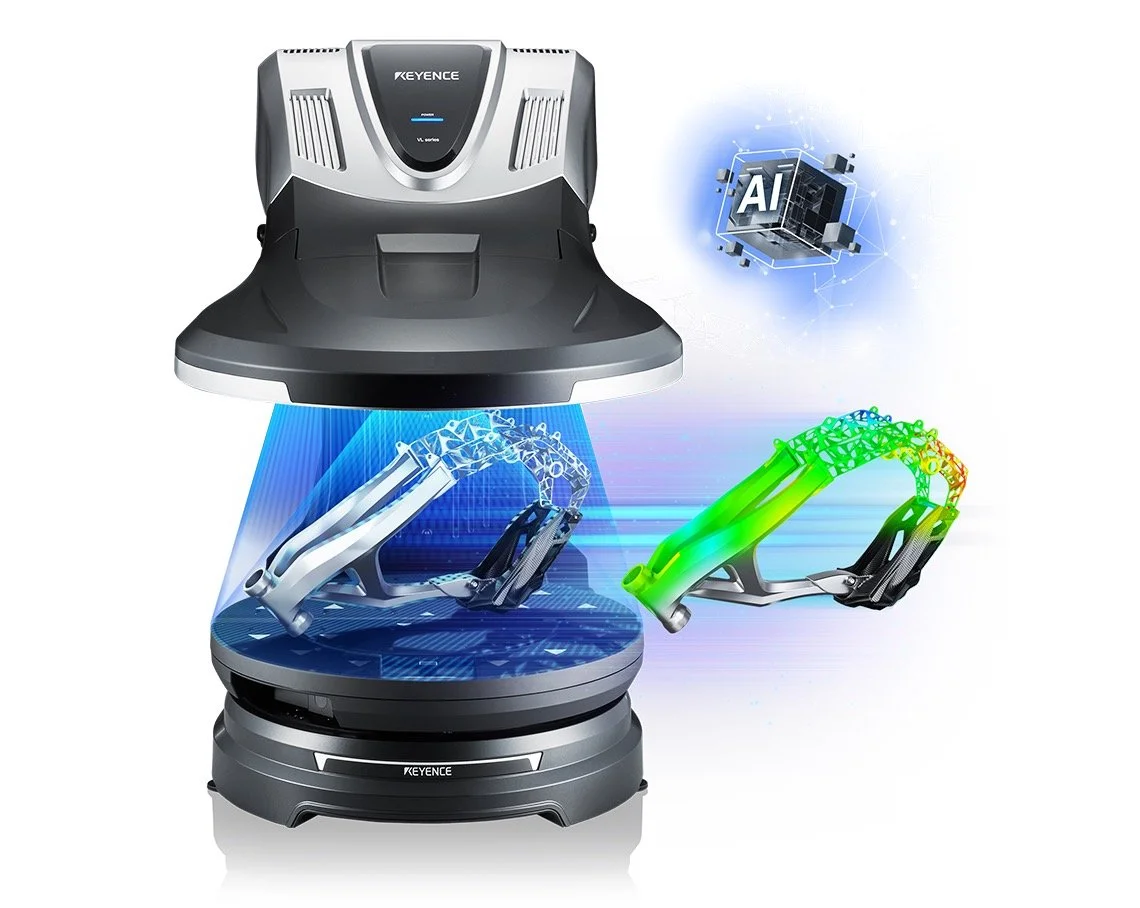
However, these systems face issues with surface finish, environment, and data volume [4]. Research notes challenges in scan alignment [5], despite ICP improvements [6]. Hybrid systems boost fidelity [7], but turning data into insights is a hurdle.
ML reveals patterns in data-rich areas [8]. Early ML like SVMs and random forests detected defects [9,10], with CNNs exceeding 90% accuracy [11]. Direct point-cloud processing preserves detail [12]. Yet, predicting deviations is underexplored; regressions work for simple shapes but need large datasets [13-15].
Dataset acquisition is key; sampling and longitudinal methods capture variability [16,17], but high-res datasets across batches are scarce [19].
To tackle this, the authors “develop and validate a hybrid methodology that combines the high-accuracy, non-contact measurement capabilities of the KEYENCE 3D scanner with advanced ML models to forecast geometric deviations in machined components across multiple production batches.” Their workflow—from scanning to prediction—turns point clouds into quality insights (see below).
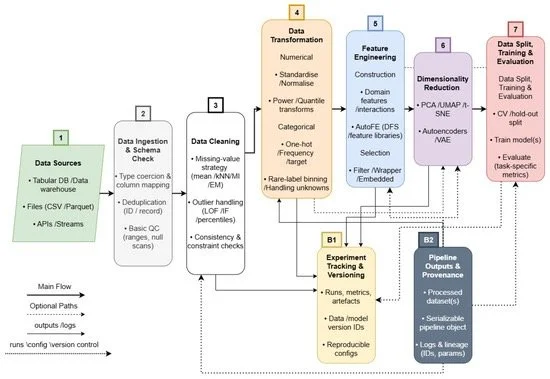
Contributions include: a scanning workflow for ML, a hybrid framework with sub-0.015 mm accuracy, validation on 237 parts, and new correlations for process improvements.
2 Materials and Methods
2.1 Data Collection
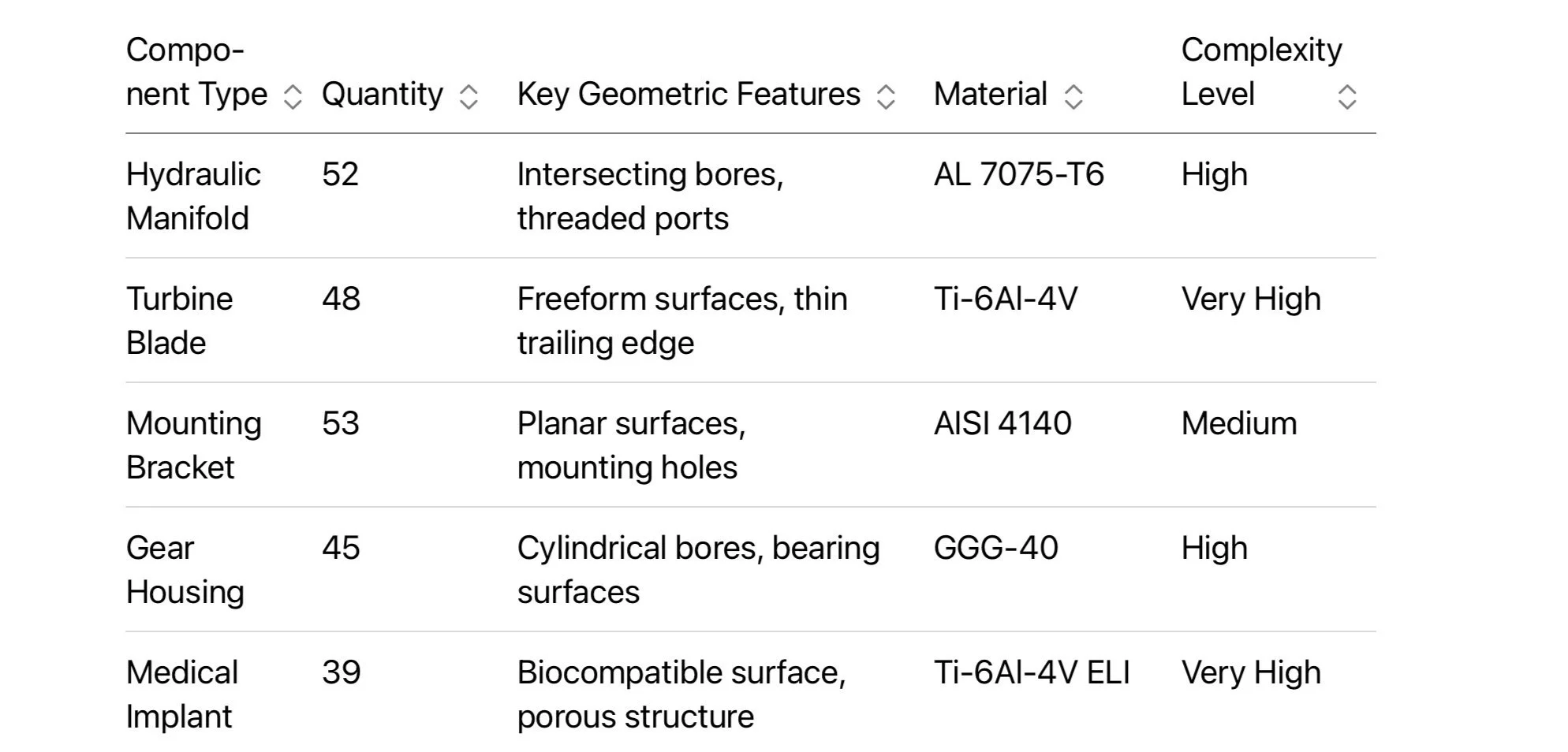
237 components from five types were analyzed over six months, capturing real variability.
Table 1: Component Selection for 3D Scanning Analysis
2.2 Image Acquisition and Preprocessing
Scans used KEYENCE KY-8500 on a robotic arm for consistency, with 0.025 mm resolution and ±0.005 mm accuracy. Conditions: 20±1°C, 50±5% humidity. Multi-angle scans registered via ICP:

Convergence at 10^{-6} error.
2.3 Component Manufacturing
Made on Haas VF-5/40XT CNC (±0.0025 mm accuracy) with probe. Parameters like speed (v_c), feed (f), etc., recorded for analysis.
2.4 Data Processing
Processed in GOM Correlate: merge via ICP, outlier removal:
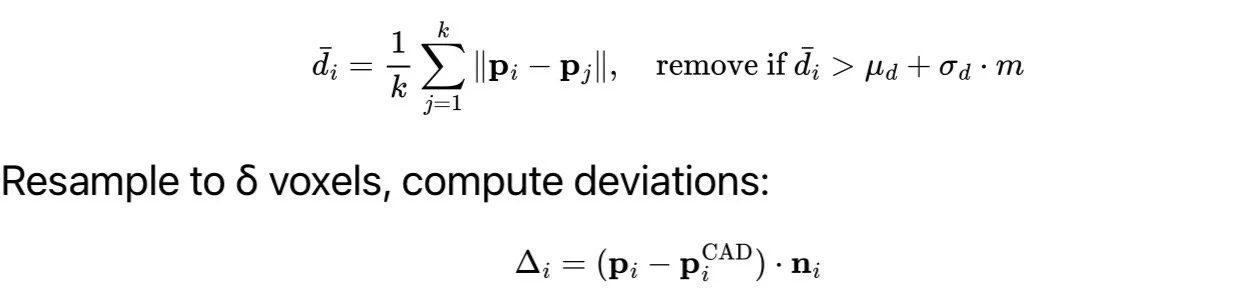
2.5 Feature Extraction
148 features extracted: dimensions, forms, surfaces. Deviation maps voxelized. Stats (mean, std, percentiles) calculated. Correlations |r|>0.3 flagged.
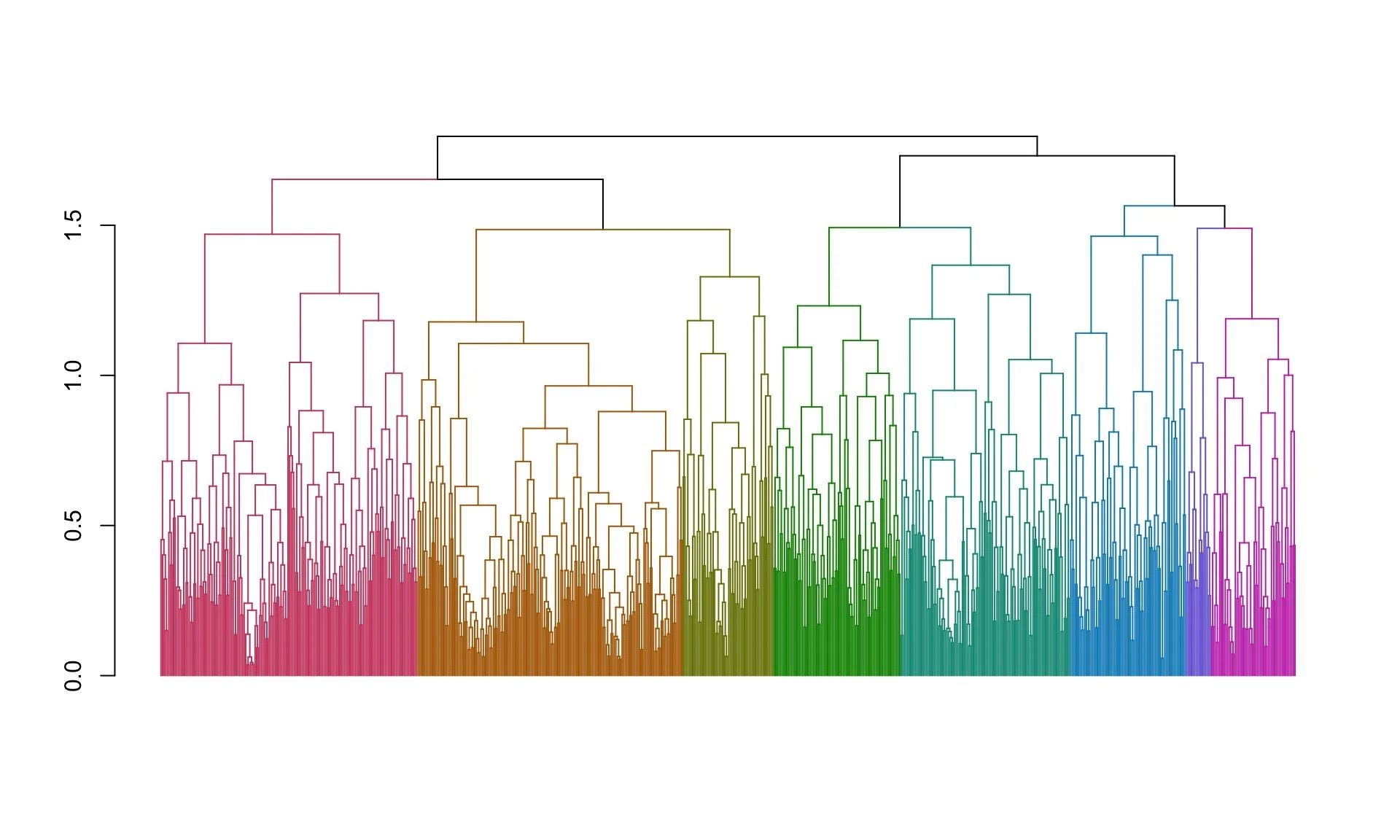
The correlation matrix via hierarchical clustering shows redundancies (illustration below).
2.6 Data Partitioning
Stratified: 70% train (166), 15% validation (35), 15% test (36). No batch leakage.
2.7 Hybrid Architecture: CNN + Gradient-Boosted Trees
CNN (4 conv layers: 32-256 filters, 3x3x3 kernels) extracts f ∈ ℝ^{128} from 128^3 voxels. Concatenated with features for GBDT (XGBoost: 500 estimators, depth 8, η=0.01).
Pretrain CNN on MSE:

Then train GBDT. 5-fold CV, Bayesian optimization, dropout 0.3, early stopping.
Validation: blind test, time-forward, sensitivity. Metrics: MAE, RMSE, R², 95% CI.
3 Results
3.0.1 Surface Coverage and Data Quality
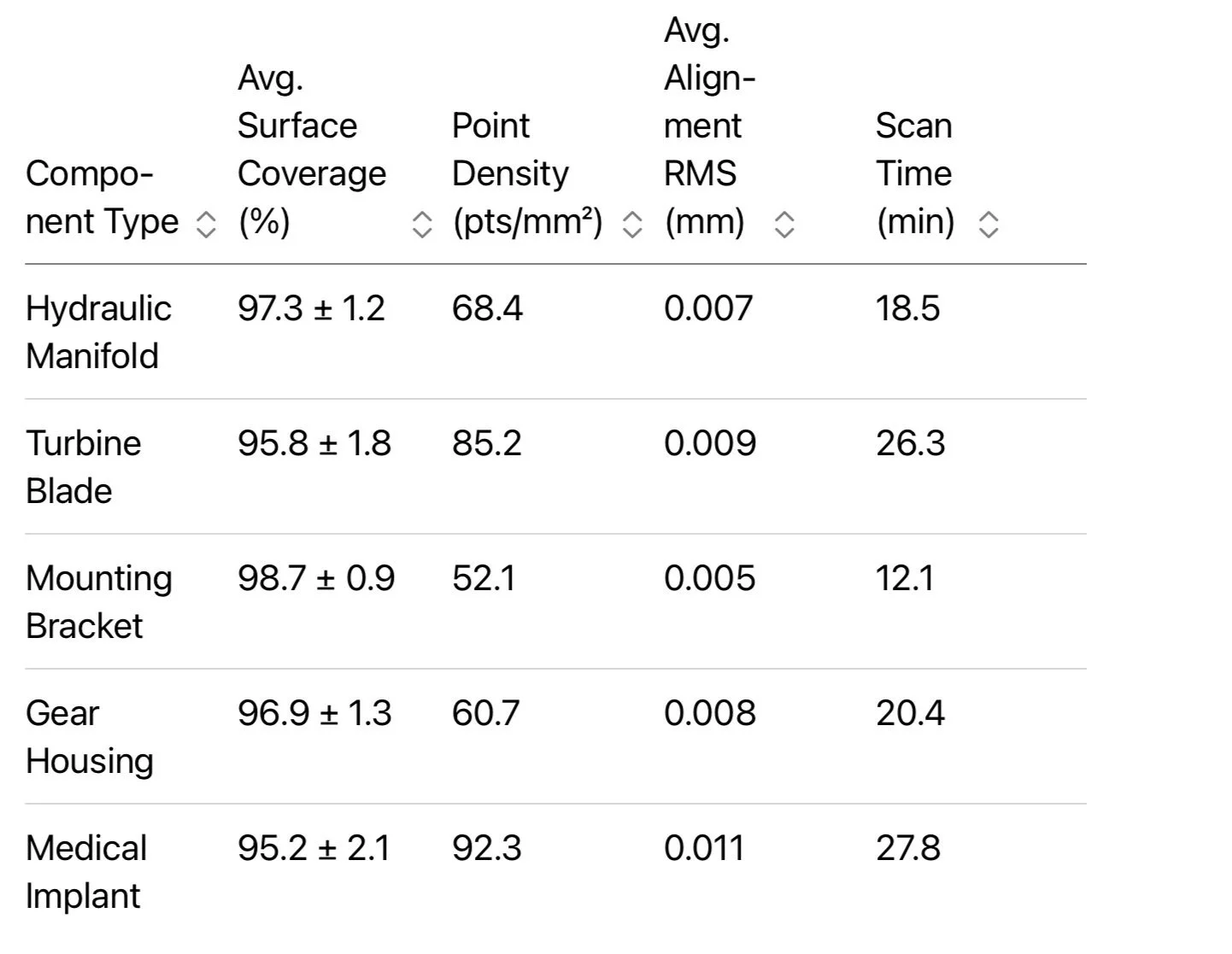
Multi-angles ensured >95% coverage; complex parts needed 8+ angles.
Table 2: Surface Coverage and Data Quality Metrics by Component Type
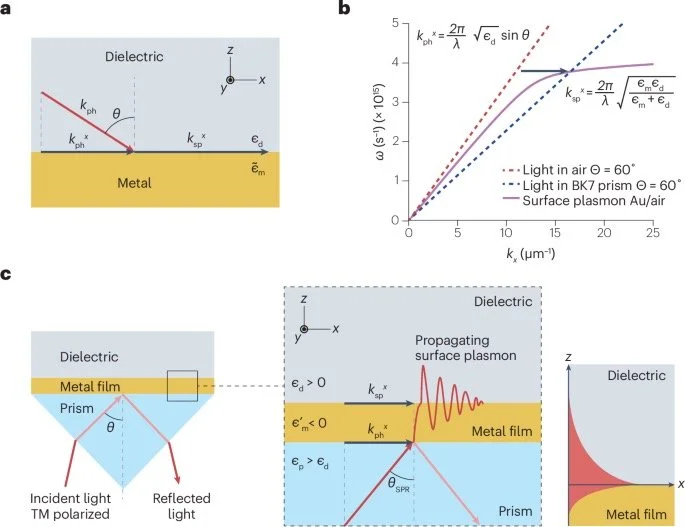
Graph shows asymptotic relation (below).
3.0.2 Processing Efficiency
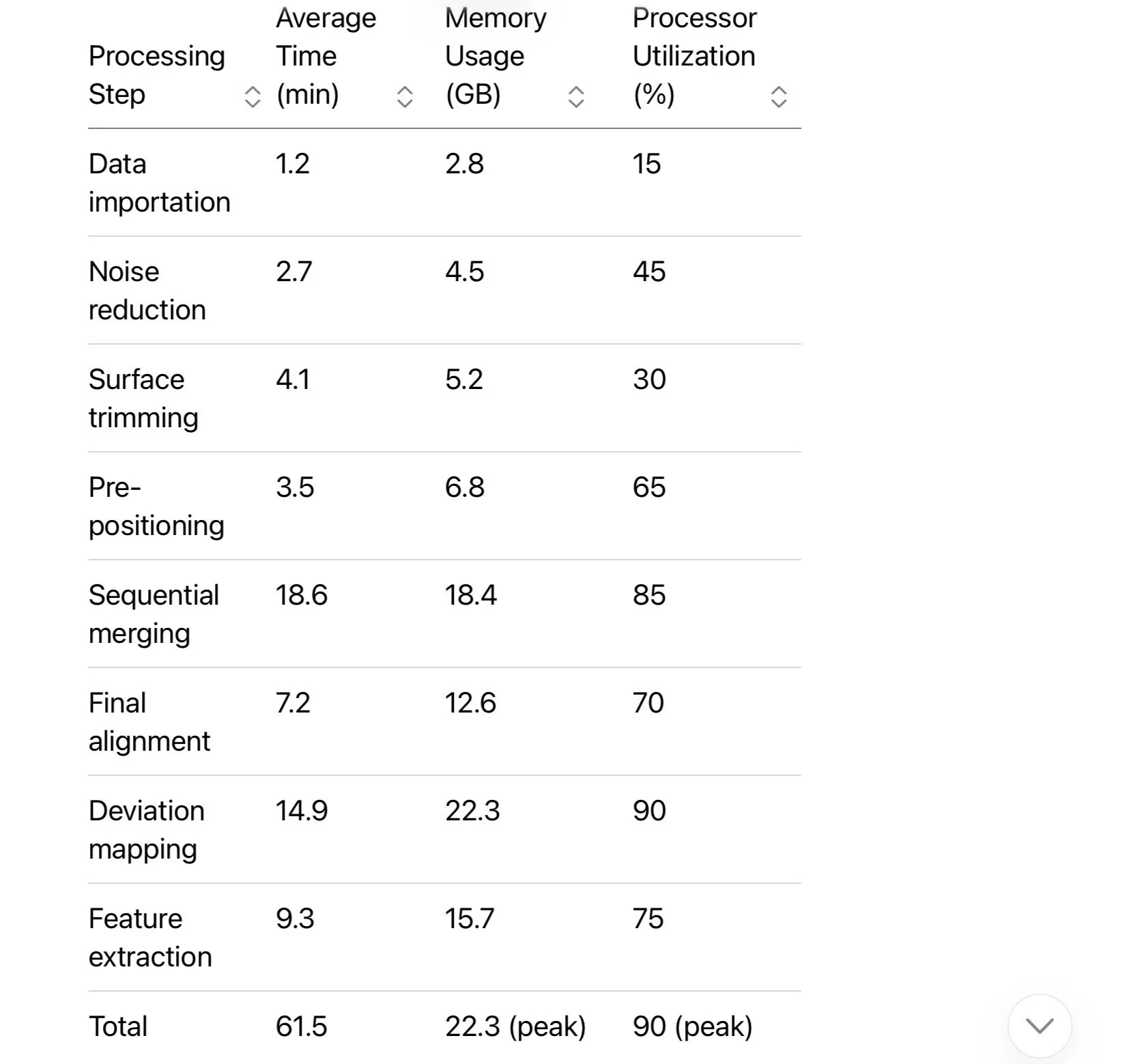
Workflow: 61.5 min avg, merging/mapping 65%.
Table 3: Computational Performance for Data Processing Steps
3.0.3 Geometric Feature Analysis
148 features; PCA: 25 components = 85% variance. 5 clusters identified.
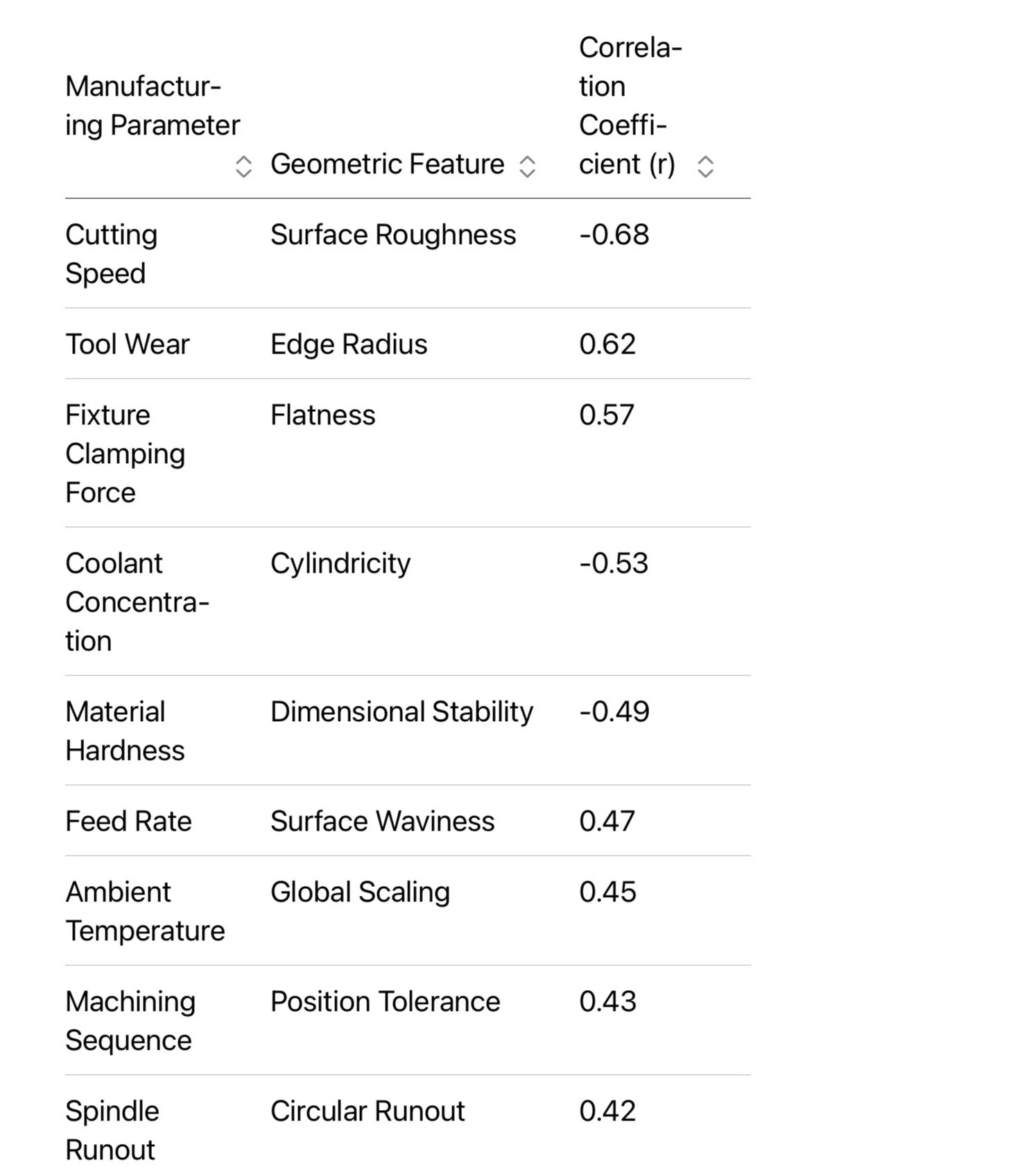
3.0.4 Manufacturing Parameter Correlation
Significant links, e.g., coolant-cylindricity r=-0.53.
Table 4: Top Manufacturing Parameters Correlated with Geometric Outcome
3.1 Machine Learning Model Performance
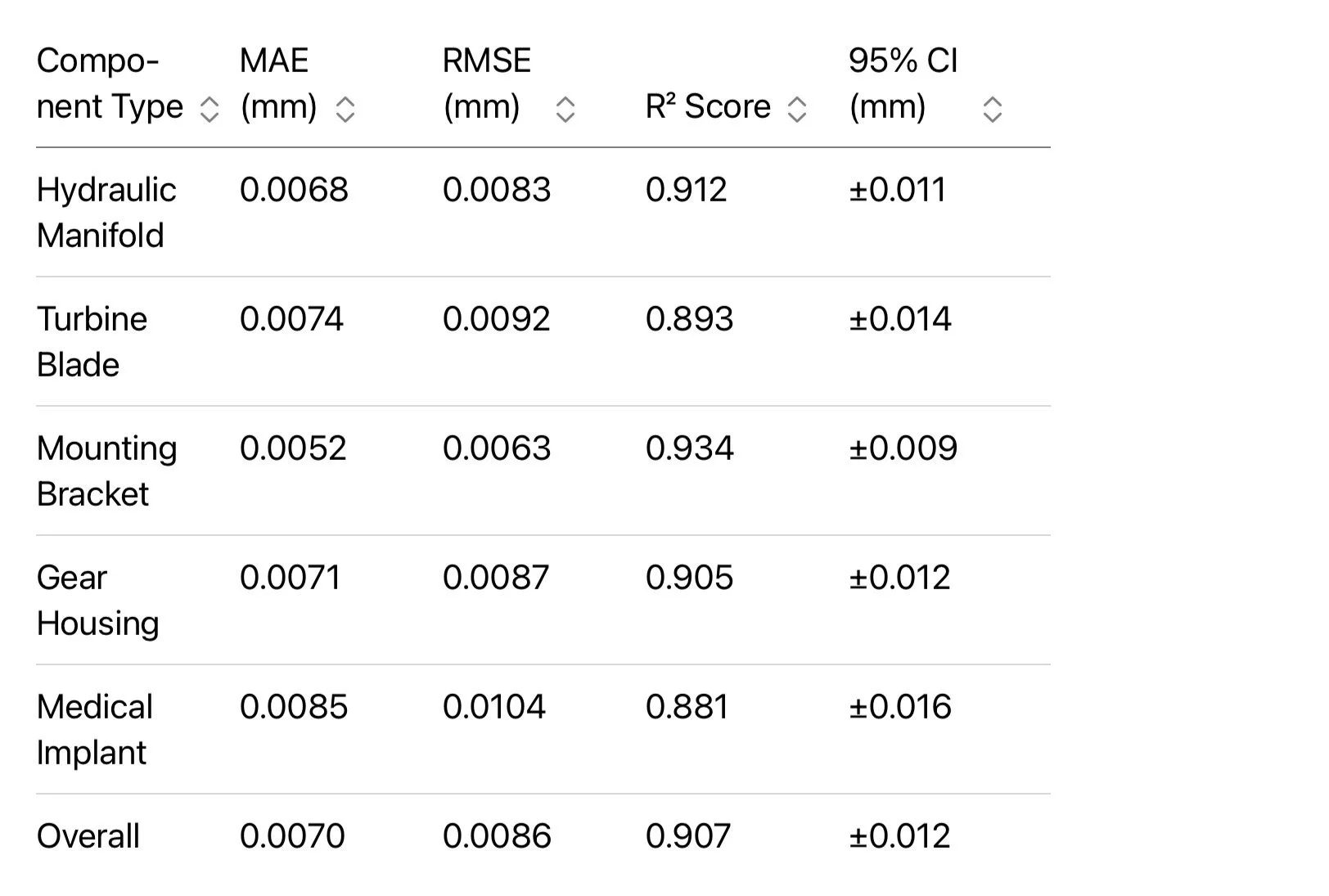
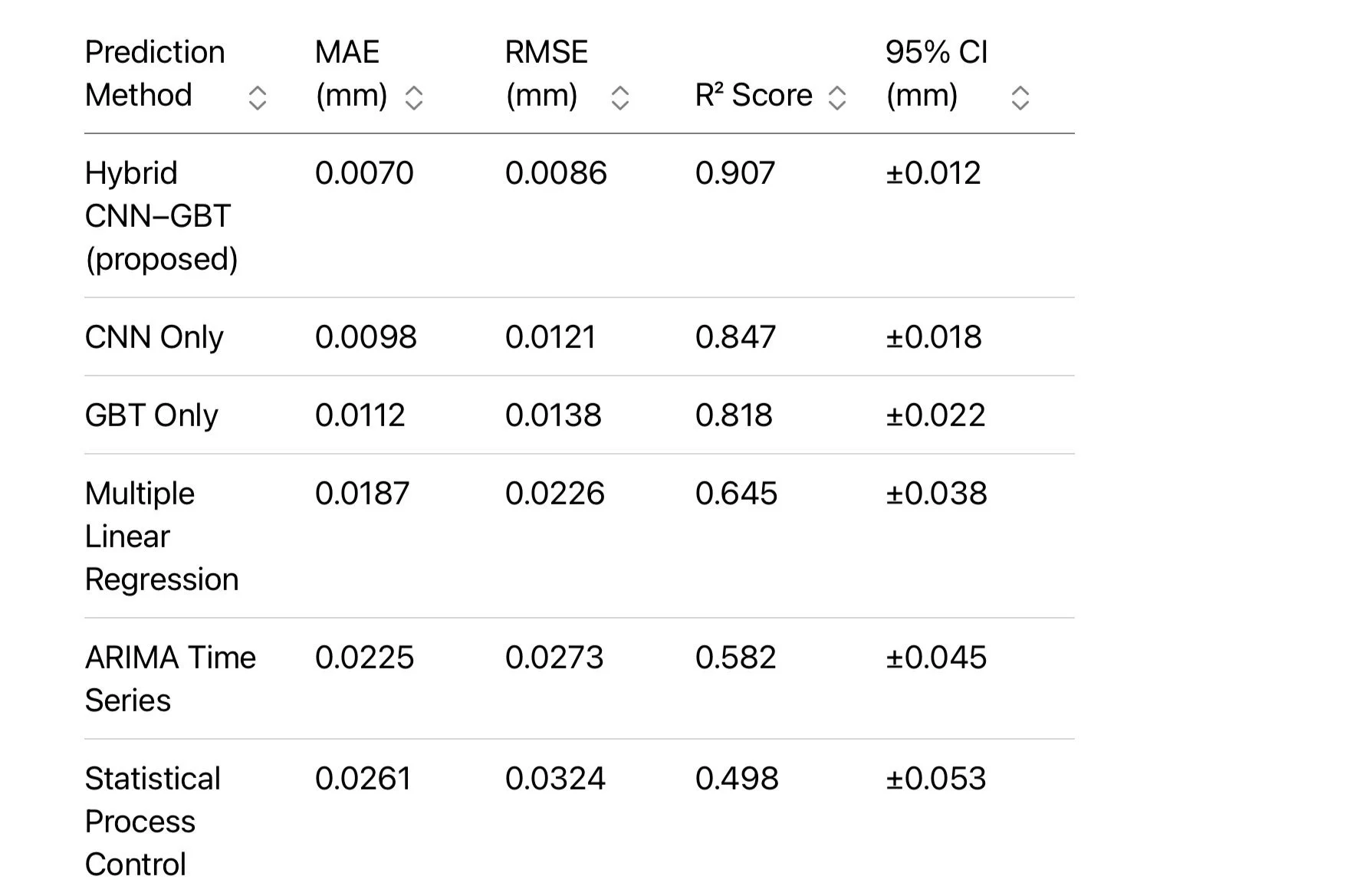
Hybrid: MAE 0.0070 mm, RMSE 0.0086 mm, R² 0.907, 95% CI ±0.012 mm.
Table 5: Prediction Accuracy by Component Type
Outperforms baselines (73% better than SPC).
Table 6: Comparative Performance of Different Prediction Methods
Feature importance: 7/15 from CNN (below).
Validations confirm robustness. Trial: 58% deviation reduction (below).
4 Discussion
The framework improves prediction via scanning, analysis, and ML. “The hybrid CNN–GBDT predictive model achieved an accuracy of ±0.012 mm at a 95% confidence level, representing a 73% improvement over baseline statistical process control methods,” per authors. It enables predictive control, aligning with digital twins [25,26]. Transferable to other processes; future: expand dataset, add uncertainty.
4.1 Limitations and Future Directions
Limited to 237 machined parts; processing time high; accuracy drops over time. Future: optimize algorithms, continual learning, transfer learning, adaptive scanning, data fusion, digital twin integration.
5 Conclusion
This integrated framework predicts deviations with ±0.012 mm accuracy, 73% better than SPC. Scanning >95% coverage, features explain 85% variance, strong correlations found. Extends to other processes with future enhancements.
Conflict of Interest
The authors declare no conflict of interest.
References
[1] Llion Marc Evans, Emrah Sözümert, Bethany E Keenan, Charles E Wood, and Anton du Plessis. A review of image-based simulation applications in high-value manufacturing. Archives of Computational Methods in Engineering, 30(3):1495, 2023.
[2] Zhiyu Zhang, Jiwang Yan, and Tsunemoto Kuriyagawa. Manufacturing technologies toward extreme precision. International Journal of Extreme Manufacturing, 1(2):022001, 2019.
[3] Clint Saidy, Kaishu Xia, Anil Kircaliali, Ramy Harik, and Abdel Bayoumi. The application of statistical quality control methods in predictive maintenance 4.0: An unconventional use of statistical process control (spc) charts in health monitoring and predictive analytics. In Advances in Asset Management and Condition Monitoring: COMADEM 2019, pages 1051–1061. Springer, 2020.
[4] Natalia Lishchenko, Ján Pitel’, and Vasily Larshin. Online monitoring of surface quality for diagnostic features in 3d printing. Machines, 10(7):541, 2022.
[5] Haiqing Si, Jingxuan Qiu, and Yao Li. A review of point cloud registration algorithms for laser scanners: applications in large-scale aircraft measurement. Applied Sciences, 12(20):10247, 2022.
[6] Wantao He, Zhongwei Li, Yanyan Guo, Xu Cheng, Kai Zhong, and Yusheng Shi. A robust and accurate automated registration method for turbine blade precision metrology. The International Journal of Advanced Manufacturing Technology, 97(9):3711–3721, 2018.
[7] Michele Rudari, Joseph Breuer, Hannes Lauer, Lukas Stepien, Elena Lopez, Adrian Dragu, and Seyed A Alawi. Accuracy of three-dimensional scan technology and its possible function in the field of hand surgery. Plastic and Reconstructive Surgery–Global Open, 12(4):e5745, 2024.
[8] Michael I Jordan and Tom M Mitchell. Machine learning: Trends, perspectives, and prospects. Science, 349(6245):255–260, 2015.
[9] Zhiyuan Wang and Dahu Zhu. An accurate detection method for surface defects of complex components based on support vector machine and spreading algorithm. Measurement, 147:106886, 2019.
[10] M Prakash, U Gowsika, and S Sathiyapriya. An identification of abnormalities in dental with support vector machine using image processing. In Emerging Research in Computing, Information, Communication and Applications: ERCICA 2015, Volume 1, pages 29–40. Springer, 2015.
[11] Majid Memari, Praveen Shakya, Mohammad Shekaramiz, Abdennour C Seibi, and Mohammad AS Masoum. Review on the advancements in wind turbine blade inspection: Integrating drone and deep learning technologies for enhanced defect detection. IEEE Access, 12:33236–33282, 2024.
[12] Qian Wang, Yi Tan, and Zhongya Mei. Computational methods of acquisition and processing of 3d point cloud data for construction applications. Archives of computational methods in engineering, 27(2):479–499, 2020.
[13] Temesgen Batu, Hirpa G Lemu, and Hailu Shimels. Application of artificial intelligence for surface roughness prediction of additively manufactured components. Materials, 16(18):6266, 2023.
[14] Yusra Abdulrahman. Defects Detection and Classification in Low Conductive Materials using Artificial Neural Network and Principal Component Analysis. PhD thesis, Khalifa University of Science, 2020.
[15] Catalin Ionescu, Dragos Papava, Vlad Olaru, and Cristian Sminchisescu. Human3.6m: Large scale datasets and predictive methods for 3d human sensing in natural environments. IEEE transactions on pattern analysis and machine intelligence, 36(7):1325–1339, 2013.
[16] Richard P Dick, David R Thomas, and Jonathan J Halvorson. Standardized methods, sampling, and sample pretreatment. Methods for assessing soil quality, 49:107–121, 1997.
[17] Robert E Ployhart and Robert J Vandenberg. Longitudinal research: The theory, design, and analysis of change. Journal of management, 36(1):94–120, 2010.
[18] Fred Douglis, Michael Branson, Kirsten Hildrum, Bin Rong, and Fan Ye. Multi-site cooperative data stream analysis. ACM SIGOPS Operating Systems Review, 40(3):31–37, 2006.
[19] H ElMaraghy, A Azab, G Schuh, and C Pulz. Managing variations in products, processes and manufacturing systems. CIRP annals, 58(1):441–446, 2009.
[20] Paul J Besl and Neil D McKay. A method for registration of 3-d shapes. IEEE Transactions on Pattern Analysis and Machine Intelligence, 14(2):239–256, 1992.
[21] Rohit Vaidya and Sam Anand. Image processing assisted tools for pre-and post-processing operations in additive manufacturing. In Procedia Manufacturing, volume 5, pages 958–973. Elsevier, 2016.
[22] Radu Bogdan Rusu and Stephen Cousins. 3d is here: Point cloud library (pcl). In 2011 IEEE International Conference on Robotics and Automation, pages 1–4. IEEE, 2011.
[23] Tianqi Chen and Carlos Guestrin. Xgboost: A scalable tree boosting system. In Proceedings of the 22nd ACM SIGKDD International Conference on Knowledge Discovery and Data Mining, pages 785–794. ACM, 2016.
[24] Ralf B Bergmann, Michael Kalms, and Claas Falldorf. Optical in-process measurement: Concepts for precise, fast and robust optical metrology for complex measurement situations. Applied Sciences, 11(22):10533, 2021.
[25] Francesco Flammini. Digital twins as run-time predictive models for the resilience of cyber-physical systems: a conceptual framework. Philosophical Transactions of the Royal Society A, 379(2207):20200369, 2021.
[26] Md Manjurul Ahsan, Yingtao Liu, Shivakumar Raman, and Zahed Siddique. Digital twins in additive manufacturing: A systematic review. Internet of Things, page 101692, 2025.
