Geometric Dimensioning and Tolerancing (GD&T) has always been the most precise way to communicate design intent. In the age of Model-Based Definition, GD&T becomes even more powerful.
What is GD&T?
GD&T is a standardized symbolic language (governed primarily by ASME Y14.5) used to define the allowable variation in a part’s geometry. Instead of relying solely on ± tolerances, it controls critical characteristics such as:
Form (flatness, straightness, circularity, cylindricity)
Orientation (parallelism, perpendicularity, angularity)
Location (position, concentricity, symmetry)
Profile and Runout
It uses datum features as reference points/planes and feature control frames to clearly specify tolerance zones.
Traditional GD&T vs. GD&T in MBD
In the old drawing-centric world, GD&T annotations live on 2D blueprints. These drawings often become disconnected from the 3D CAD model, leading to version conflicts and interpretation errors.
In Model-Based Definition, GD&T is embedded directly into the 3D CAD model as Product Manufacturing Information (PMI). The 3D model becomes the single authoritative source of truth—no separate drawing required (or the drawing becomes secondary).
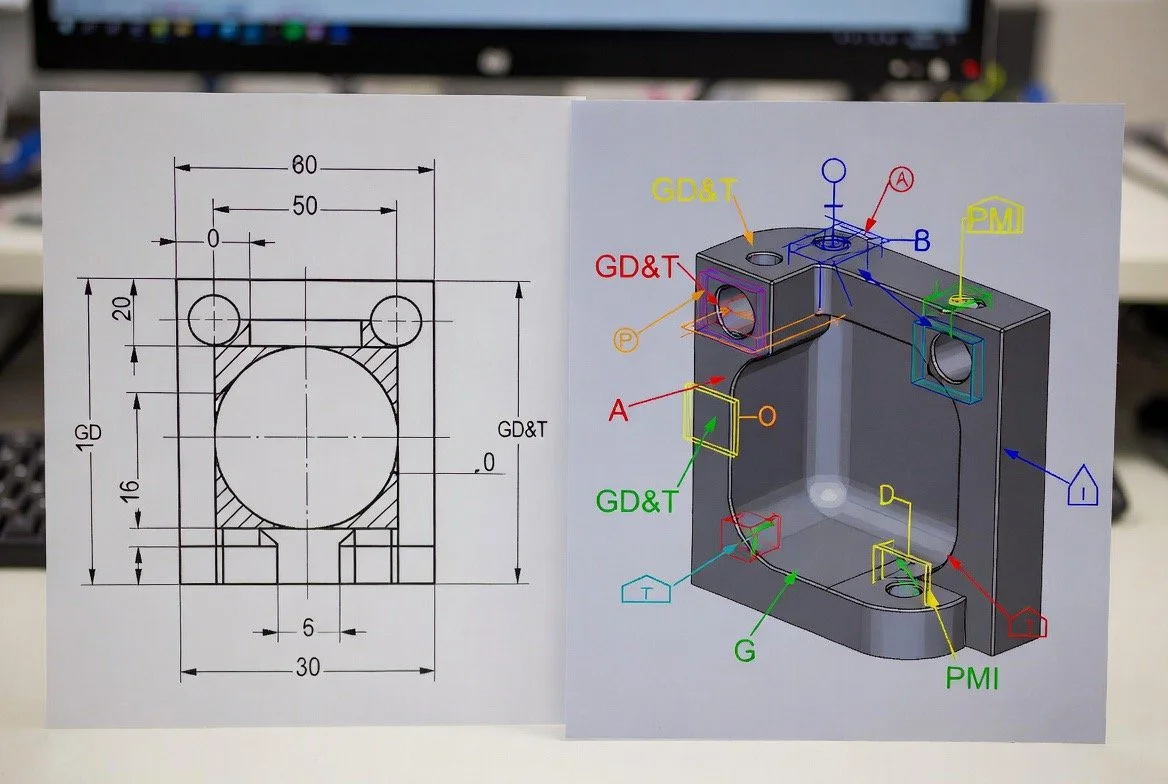
Figure 1: Traditional 2D GD&T versus semantic GD&T embedded in a 3D MBD model. The right side represents the future of intelligent, machine-readable product definition.
Semantic vs Non-Semantic Annotations: The Critical Difference
This is the most important distinction in MBD:
Non-semantic (Visual) PMI: Looks like traditional GD&T but is essentially a picture overlaid on the model. Downstream software cannot automatically “read” or use it.
Semantic PMI: Machine-readable and intelligent. The GD&T data is mathematically linked to the exact geometry it controls. Software can parse the tolerance values, datum references, material condition modifiers (MMC/LMC), and feature relationships automatically.
Semantic GD&T enables true automation across the digital thread.
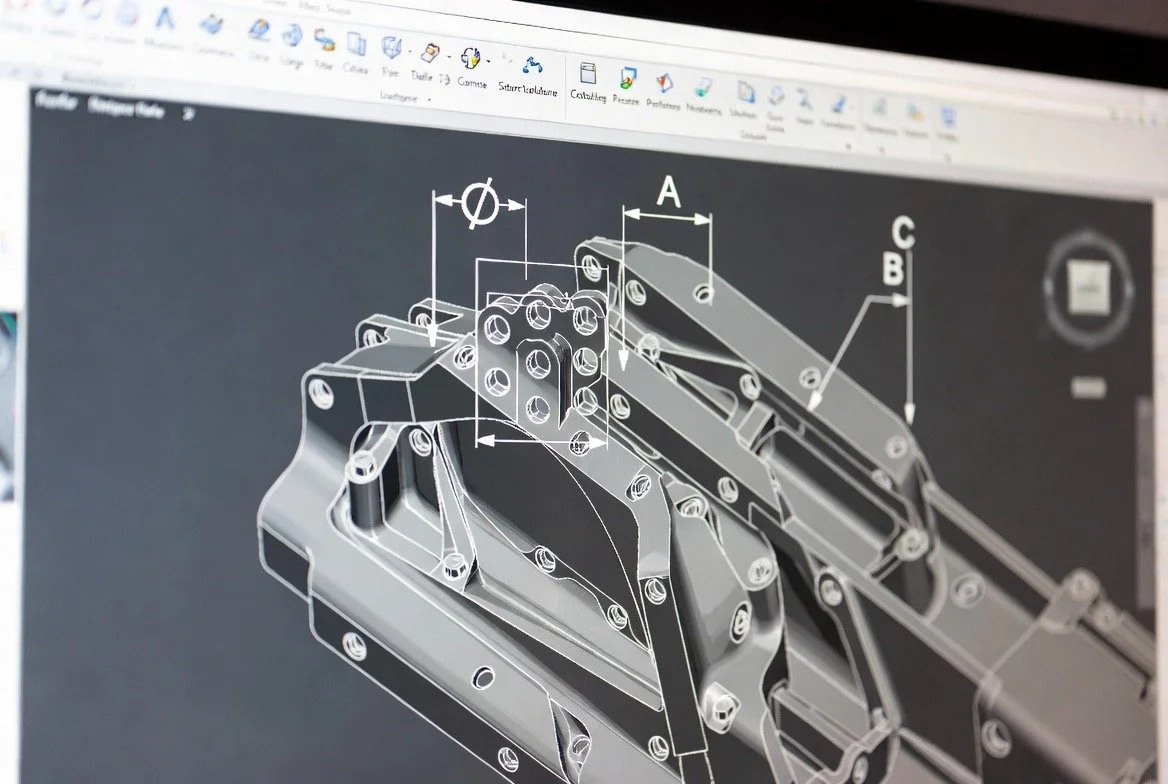
Figure 2: Semantic GD&T annotations directly attached to 3D geometry in an MBD environment. These intelligent PMI elements allow downstream CMM software to automatically generate inspection routines.
How GD&T Works in an MBD Environment
Application in CAD
Engineers select specific faces, edges, or axes on the 3D model. Datums are defined (often with datum feature symbols attached directly to geometry). Feature control frames are attached with leader lines or directly to the feature. Annotations are view-dependent or can be displayed in 3D space.Data Exchange
The model is saved with full PMI using standards like ASME Y14.41 and exported via STEP AP242 or QIF formats, preserving semantic intelligence.Downstream Consumption
CAM software reads GD&T for toolpath generation and in-process control. CMM and inspection software (PC-DMIS, Calypso, Verisurf, etc.) imports the model and automatically generates measurement sequences, alignment strategies, and tolerance evaluation routines directly from the semantic data.
Benefits for CMM Professionals
Dramatically faster programming — often cutting CMM setup time by 50-80%.
Elimination of manual dimension entry and potential transcription mistakes.
Direct comparison of measured results to exact design intent.
Improved traceability and compliance (especially valuable in aerospace and medical).
Better collaboration between design and quality teams.
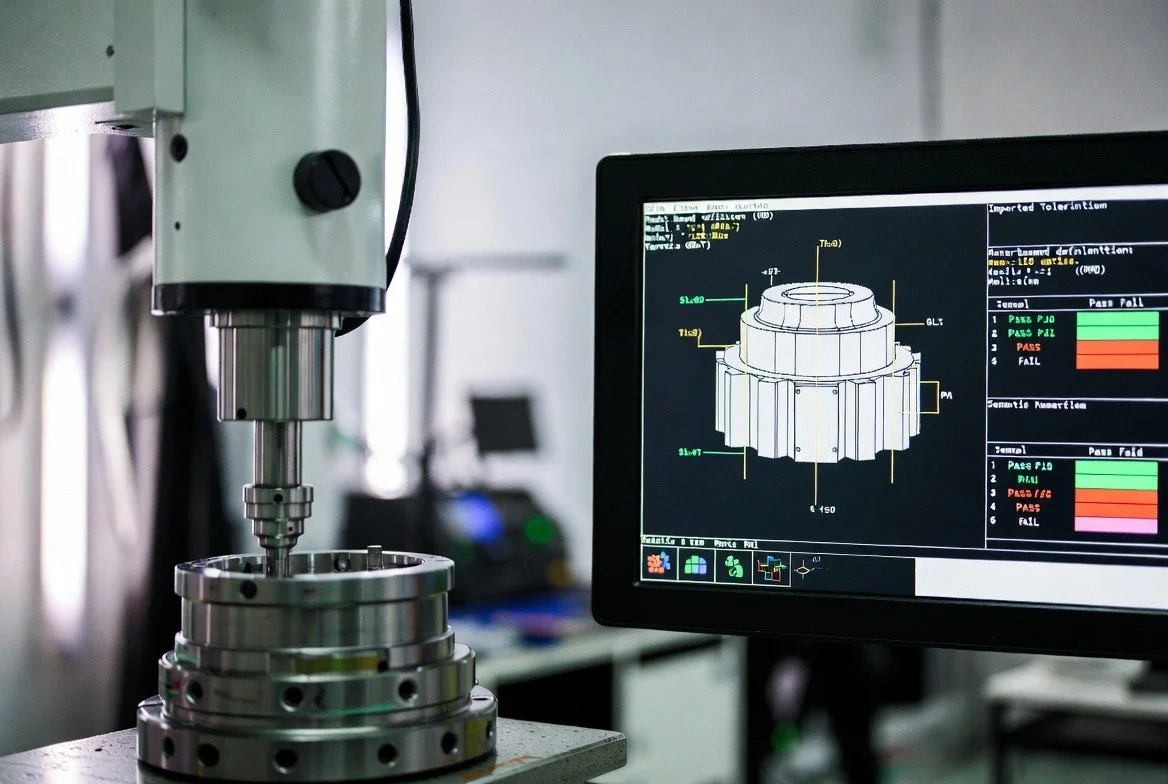
Figure 3: Model-based inspection in action. Semantic GD&T from the MBD model enables automated CMM programming and direct tolerance evaluation.
Example in Action
A position tolerance of Ø0.1 mm at MMC on a hole pattern referenced to datums A|B|C can be attached semantically to the cylinder features. CMM software instantly understands the datum reference frame, bonus tolerance rules, and can generate an optimized probe path without an engineer manually interpreting a drawing.
In short, when GD&T is properly implemented as semantic PMI inside MBD, it transforms from static ink on paper into intelligent, actionable data that drives faster, more accurate, and fully traceable CMM inspection—exactly what precision metrology teams need today.