In the precision-driven world of metrology—the science of measurement—artificial intelligence (AI) has emerged as a transformative force. No longer a futuristic concept, AI is actively reshaping how measurements are taken, analyzed, and applied in manufacturing, quality control, and beyond. As industries push for greater accuracy, efficiency, and automation, AI’s integration into metrology ensures that this field remains at the forefront of technological innovation. This article explores AI’s current impact on metrology, its promising near-term future, key industry leaders, practical ways to leverage AI in quality labs, and the broader efficiencies it brings.
Current Impacts of AI on Metrology
AI is already revolutionizing metrology by addressing longstanding challenges in data handling, accuracy, and process automation. In manufacturing, AI enhances predictive maintenance, reducing machinery downtime by up to 50% and extending equipment lifespan through data-driven insights. For instance, AI algorithms analyze historical data to forecast when measuring instruments might deviate from specifications, allowing for proactive interventions.
In quality control, AI-powered systems automate inspections, minimizing human error and handling complex imaging conditions. This includes reducing noise in computed tomography (CT) scans, leading to fewer false positives and more reliable results. Generative AI, in particular, is redefining data analytics by creating dynamic models that adapt in real-time, improving measurement precision and adaptability in high-stakes environments like semiconductor production. AI also optimizes calibration plans by analyzing vast datasets, speeding up processes and ensuring consistency.
Beyond hardware, AI fosters trust in systems through robust standards. National Metrology Institutes (NMIs) are using AI to build confidence in measurements, ensuring interoperability and traceability in digital infrastructures. In coordinate metrology, including nanoscale applications, AI enables classification, prediction, and decision-making, overcoming limitations of traditional physical methods.
Overall, AI’s current role is shifting metrology from reactive to proactive, enhancing efficiency and reliability across sectors like aerospace, automotive, and healthcare.
The Near Future of AI in Metrology
Looking ahead, AI will propel metrology toward fully autonomous, integrated systems. Predictive calibration—where AI customizes processes based on usage and environmental factors—will become standard, expanding capabilities beyond static models. Autonomous metrology suites, like those simplifying coordinate measuring machine (CMM) workflows, could reduce programming time from days to hours, addressing skilled labor shortages.
Integration with Industry 4.0 technologies, including IoT and digital twins, will enable real-time monitoring and “dark factories” with minimal human intervention. AI will drive prescriptive insights, preventing tolerance deviations faster than humans and supporting proactive quality management. In legal metrology, AI regulations like the EU’s 2024/1689 will ensure transparency in AI-assisted measurements, paving the way for self-regulating systems.
Cloud-based platforms will make advanced metrology accessible, fostering scalability and sustainability. As AI evolves, expect Ångström-level precision in semiconductor metrology and seamless multimodal data integration for defect detection. The future promises smarter, more adaptive metrology, with AI at its core.
These visuals depict futuristic AI-integrated factories, highlighting the intelligent automation expected in metrology.
Metrology Leaders in AI
Several companies are pioneering AI in metrology, blending hardware expertise with advanced software.
ZEISS: As a leader in industrial quality solutions, ZEISS uses AI for automated defect recognition and porosity analysis in CT data. Their systems reduce inspection times dramatically, as seen in applications for medical implants and automation.
Hexagon AB: Hexagon’s Autonomous Metrology Suite leverages cloud-based AI to automate CMM workflows, enhancing precision manufacturing. They’ve expanded through acquisitions like 3D Systems’ Geomagic suite for advanced 3D modeling.
Siemens: Through the acquisition of Canopus AI, Siemens advances computational metrology for semiconductors, enabling AI-driven wafer inspection and edge placement error measurement.
Keyence Corporation: Keyence integrates AI in vision systems and hybrid metrology tools, offering high-resolution inline measurements and pre-trained models for quality control.
Nikon: Nikon’s AI Reconstruction uses deep learning for CT image enhancement, tailored for industries like battery manufacturing.
Onto Innovation: Specializing in semiconductor metrology, they offer AI software like Discover AI for predictive insights across processes.
Gauss Labs: Their Panoptes platform uses AI for virtual metrology, predicting outcomes like film thickness in real-time for yield improvement.
These leaders are driving AI adoption, with a focus on scalability and industry-specific solutions.
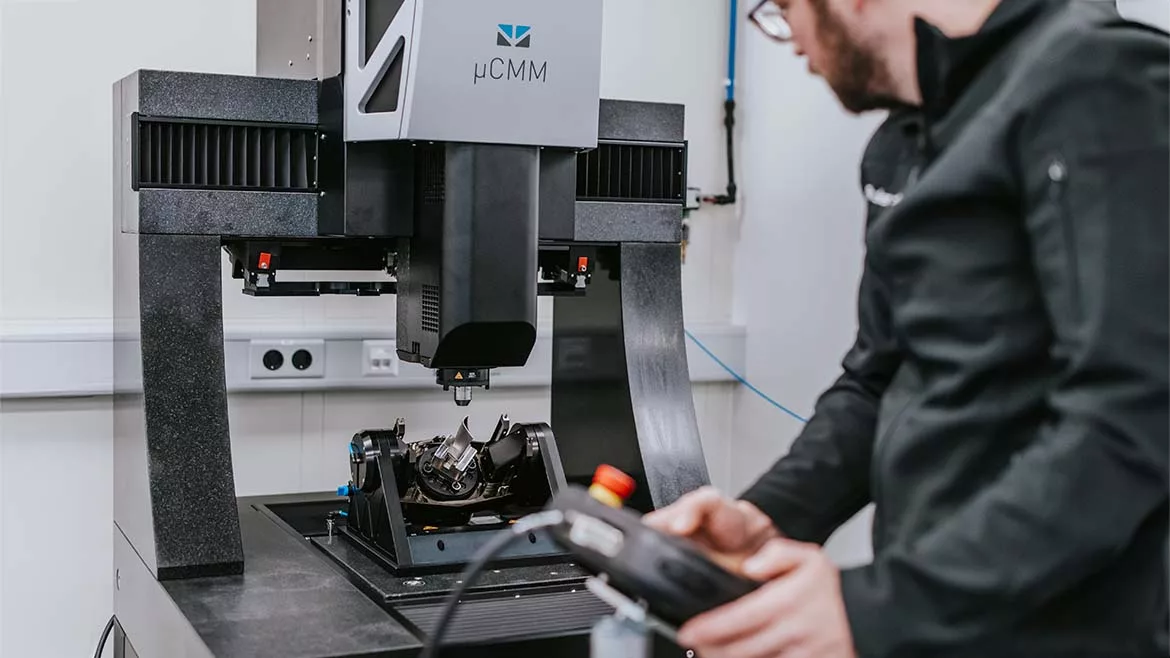
This photo shows a technician operating an advanced CMM, exemplifying AI-enhanced metrology tools from industry leaders
Leveraging AI in Your Quality Lab
To integrate AI effectively in a quality lab, start with targeted applications that address pain points.
Automated Inspections: Use AI software for feature detection on CAD models and intelligent path planning. This can reduce quality control time by up to 80% through real-time alerts and noise reduction in scans.
Predictive Analytics: Implement machine learning to analyze data patterns and predict defects before they occur. Tools like ZEISS’s AI features handle routine tasks, freeing experts for complex analysis.
Real-Time Monitoring: Deploy AI for continuous verification during production, flagging deviations instantly. Integrate with optical systems for defect segmentation, such as in laser-processed components.
Data Integration: Collect and analyze vast datasets from sensors and historical records. Ensure high-quality inputs for trustworthy models, incorporating uncertainty analysis.
Training and Adoption: Begin with pilot projects, like AI-optimized calibration, and scale up. Collaborate with NMIs for standards compliance.
By focusing on these steps, labs can streamline processes, boost accuracy, and minimize defects.
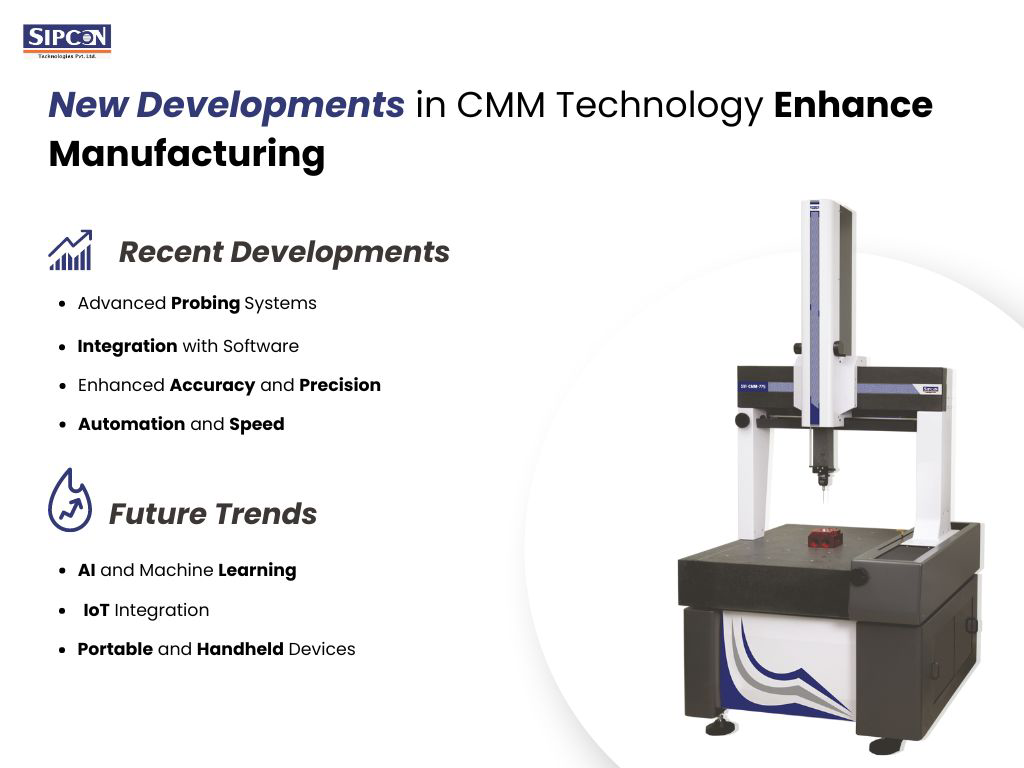
This graphic outlines recent developments in CMM technology, including AI integration for enhanced lab efficiency
General AI Efficiency in Metrology
AI’s overarching benefit in metrology is efficiency: it processes data faster, reduces costs, and improves outcomes. Generative AI synthesizes diverse sources for adaptive models, cutting inspection times tenfold in some cases. It enables virtual metrology, predicting results without physical tests, saving time and resources in semiconductor fabs.
Efficiency gains include automated compliance, predictive maintenance, and scalable cloud tools, making metrology accessible to smaller operations. AI also promotes sustainability by optimizing resources and reducing waste. However, success requires quality data and explainable models to maintain trust.
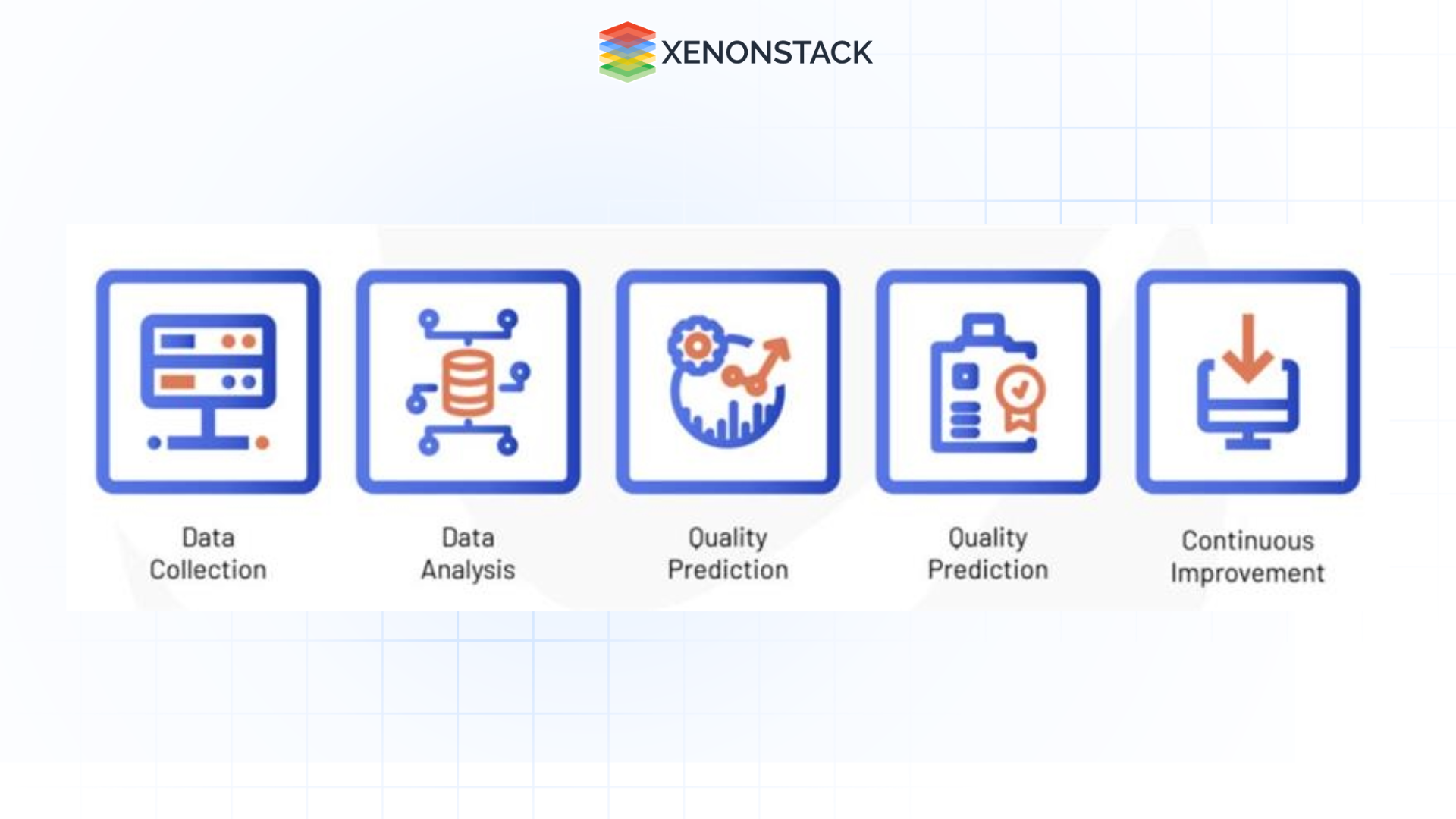
This diagram represents AI-driven quality control stages, from data collection to continuous improvement.
Conclusion
AI is not just a tool in metrology—it’s a permanent fixture, driving precision, automation, and innovation. As current applications mature and future technologies like autonomous systems emerge, metrology will become even more integral to smart manufacturing. By following leaders like ZEISS and Hexagon, and strategically leveraging AI in labs, organizations can achieve unprecedented efficiency. The message is clear: embrace AI now to measure up to tomorrow’s demands.

